.svg)
.svg)

Let’s stay in touch with the ShipHero Blog.


.png)
While your team is still walking aisles, your competitors are cutting pick times in half with automation. Guess who’s shipping faster and stealing market share?
Automation isn't the future anymore. It's the present. For growing eCommerce brands or fulfillment centers under pressure to deliver faster, cheaper, and more accurately, automated warehouse picking systems are no longer a luxury. They're a necessity.
In this guide, you'll learn how automated picking systems work, the types available, how to choose the right one, and how ShipHero can help you streamline fulfillment processes with confidence.
Automated warehouse picking systems use software, robotics, and real-time data to locate, retrieve, and prepare items for shipment, without relying solely on human labor. Instead of employees walking long distances and manually selecting items, automated systems bring items to workers or direct them with tools like lights, voice commands, or mobile robots.
For example, in the eCommerce space, brands use Goods-to-Person (GTP) systems to increase operational efficiency and efficiently handle large catalogs of SKUs. In retail, where seasonal order surges can overwhelm manual processes, automated solutions help companies double their picking speed and maintain consistent fulfillment even during peak demand.
The process is surprisingly seamless:
This flow is driven by smart software that integrates with warehouse management systems and supports key warehouse processes, including picking, packing, and tracking real-time inventory.
Want a deeper look at the tech behind it? Read this guide on warehouse automation software.
There’s no universal solution for warehouse automation. The best picking system depends on your space, order volume, and the variety of products you offer. Some work better for high-SKU, high-volume operations; others are ideal for smaller, more focused setups. Below, we break down the top systems and which warehouse types they’re best suited for.
GTP systems deliver inventory directly to a stationary picker, eliminating walking marathons. This setup enhances inventory management, reduces physical strain on workers, and improves worker safety.
It also optimizes order accuracy by minimizing human error. By minimizing walking time and keeping pickers in one place, GTP systems significantly boost pick rates while also cutting down on labor fatigue.
Pick-to-Light is an automated solution that uses LED light bars to guide workers to the right location for picking items, enhancing accuracy, speed, and efficiency while reducing errors.
When paired with Pack-to-Light and Receive-to-Light, your entire workflow is streamlined. Pack-to-Light ensures precise packing, while Receive-to-Light optimizes inventory storage and retrieval. Together, these technologies simplify inventory management, reduce labor costs, and accelerate fulfillment.
At ShipHero, we offer all three solutions, Pick-to-Light, Pack-to-Light, and Receive-to-Light, under one roof, seamlessly integrating with your existing systems to optimize warehouse operations. The combination can help boost efficiency by 20% while also cutting costs by up to 30% for batches of 10 to 30 orders.
Pickers wear headsets and follow voice commands to locate items, like a GPS for your warehouse. This hands-free approach automates repetitive tasks, shortens training time, and reduces picking errors, even in noisy environments. It also improves accuracy, even in noisy environments where traditional methods might fall short.
AMRs, or autonomous mobile robots, navigate the warehouse floor independently, delivering items or bins to human workers or packing stations.
Unlike fixed systems, AMRs offer greater flexibility and adapt to varying warehouse sizes, support scalable operations, and offer the flexibility to grow without major infrastructure changes. They’re also highly scalable, which makes them a smart choice for warehouses looking to grow or adjust operations without major infrastructure changes.
These are high-tech racking systems equipped with robotic cranes or shuttles that automatically store and retrieve inventory. They’re especially well-suited for large warehouses with high inventory turnover, where speed and space efficiency are critical.
Businesses that need to maximize vertical storage find these systems invaluable, and industries such as pharmaceuticals, automotive, and electronics often benefit the most from their precision and scalability.
Still not convinced? The real-world benefits speak for themselves. Automation significantly reduces human error, particularly in fast-paced warehouse environments where accuracy is crucial. It also speeds up fulfillment, often cutting pick times in half or more.
By streamlining operations, businesses can lower labor costs by either reducing headcount or reassigning team members to more valuable tasks.
By transitioning to automation, companies often see dramatic improvements in efficiency and cost savings. For example, automation can reduce warehouse labor costs by up to 60%, allowing businesses to reallocate resources and scale more effectively.
It’s not always smooth sailing when implementing automated picking systems. One of the biggest hurdles is the high initial investment, as hardware, software, and integration can come with a steep upfront cost.
Staff training is another challenge, as teams need time to learn how to use the new technology effectively. There can also be short-term disruption; installation and onboarding may temporarily slow down operations. But the long-term gains are often worth it.
For example, James Enterprise struggled with paper-based picking and processing delays before switching to ShipHero’s Warehouse Management System.
The transition required workflow changes and staff training, but with proper planning, such as going paperless, reorganizing their layout, and utilizing smart pick paths, they boosted productivity by 38%. New hires cut their pick time from 55 to 34 seconds in just five days, proving that smart automation pays off.
Finding the right automated picking system starts with understanding your specific needs. Warehouse size plays a big role, as larger spaces often benefit most from solutions like AMRs or AS/RS that can cover more ground efficiently. If your business manages a high variety of SKUs, systems like GTP or voice picking can offer the flexibility and accuracy you need.
For those working with tighter budgets, starting with light-based or voice-guided systems can provide a solid foundation without breaking the bank. Regardless of your starting point, scalability is crucial; your system should be able to grow in tandem with your business. Partnering with ShipHero ensures you get expert, customized guidance and future-proof solutions designed specifically for your operation.
Implementing warehouse picking automation isn’t just about installing new tech; it’s about doing it strategically. To get the most out of your investment and avoid common pitfalls, follow these proven best practices:
Best Practices for Successful Warehouse Picking Automation
For example, Black Wolf Nation and its 3PL arm, ONE23 Fulfillment, partnered with ShipHero to scale their operations. By adopting ShipHero's warehouse management software, they increased their order volume from 10,000 to over 25,000 per month in less than a year. This strategic implementation allowed them to efficiently manage growth and expand into the 3PL space.
Most companies see a return on investment within 12 to 24 months, depending on the system and order volume.
Yes. Many automated systems are designed to be scalable and cost-effective, which makes them ideal for small warehouses. Solutions like Pick-to-Light and voice picking can start small and expand as your operation grows.
Yes. Advanced systems feature adjustable grippers, sensors, and packaging logic to safely handle delicate or irregularly shaped products.
Warehouse management systems make daily warehouse operations efficient. And wave planning is at the heart of it.
As part of the supply chain industry where efficiency is of utmost importance, the fast-paced environment of warehouse management requires every aspect of operations to work on schedule. This is where wave planning comes into play and brings efficiency to the table.
It integrates with warehouse management systems and streamlines end-to-end warehouse operations to meet customer expectations of fast shipping and real-time updates.
Wave planning batches orders for optimized picking routes, shipping, and priority. It supports operational workflows and integrates with warehouse wave picking strategies to maximize productivity, reduce errors, and improve overall daily warehouse output.
This turns warehouse operations into an organized process of handling and systematizing hundreds of orders a day.
Applying the best practices for wave management allows for maximum efficiency in managing daily warehouse operations. Start with these:
Not all orders need to be shipped at the same time. Some can wait, others can’t. Strategic planning means prioritizing orders based on shipping deadlines to ensure they are shipped out and delivered on time. This increases customer satisfaction and overall operational efficiency. To better understand the core workflows that make this strategy effective, explore how we have explained the six key warehouse processes.
Accessing real-time data allows you to monitor every wave that’s happening, from orders getting picked up to those that are delayed. This lets you take action accordingly, especially when spotting issues as they are happening.
Downtimes are red flags in wave management. They are equal to unproductivity and possible shipment delays, both affecting operations to meet quotas and customer satisfaction.
Reduce idle time in operations with these methods:
High-demand periods like holidays, promotions, and occasional spikes can cause chaos, especially if you don’t have a plan in place. That chaos can overwhelm your normal operations and lead to delays and unsatisfied customers.
Avoid this by ensuring scalability for peak periods with effective wave planning:
If you’re preparing your warehouse for high-volume fulfillment, it may be worth exploring how automated warehouse picking systems can make wave execution more efficient and adaptable.
Warehouses have different zones to which pickers are assigned.
Having specific picking zones gives structure to the picking process, making it easier to execute even through high-volume orders.Having defined picking zones helps:
Wave management gives you the flexibility to adapt quickly when an unexpected change occurs during operations.
A common issue often faced in wave management is the sudden changes in order volume. This disrupts the flow of current waves and may have an avalanche effect on the whole operation if not solved immediately.
Here’s how wave management adjusts operations to meet demand fluctuations:
A warehouse management system creates an overall plan that controls the flow of a warehouse's production. Using tools and automation, a WMS simplifies and streamlines wave management to execute warehouse operations from fulfillment to packing and delivery.
The main difference between wave planning and wave management is that the former is where the strategizing happens, while the latter is the execution and overseeing that the plan takes place.
Wave planning is the strategic part of grouping what orders should be fulfilled together, setting the time for wave releases, and adjusting them based on warehouse capacity and labor availability.
Wave management is the main operational part where the production happens. It tracks the real-time progress of wave execution to ensure things are running smoothly according to plan.
The main difference between digital and wholesale waves lies in their order size, wave planning, and operational goal. Due to their differences, each wave type requires different planning and strategy.
Digital waves service the B2C channel, are high in volume, and often have small, single-item orders that require urgent or same-day deliveries. The wave strategy used is frequent and short for flexibility. For this wave type, warehouse managers use WMS-integrated mobile devices for tech support
Meanwhile, wholesale waves are for bulk orders, often for retail distribution, resellers, or B2B supply chains. Wholesale waves have a lower order volume with large shipments and more flexible timelines.
Yes, it can be used if they have large volumes of orders per day, orders with time-blocked pickups, or group orders with shipping deadlines.
Yes. eCommerce and retail, grocery and food distribution, healthcare and pharmaceutical, industrial supply, and consumer packaged goods industries are industries that benefit from wave planning. These are industries with high order volume, delivery sensitivity, and high operational complexity.
Yes, wave management is designed to make warehouse operations, including same-day shipping, possible. Wave management creates a structure that speeds up the order fulfillment, speeding up the process for all warehouse operations, such as same-day shipping.
Your warehouse isn’t slow because your team isn’t working hard. It’s slow because they’re working inefficiently. When every picker is chasing orders in random directions, you lose time, increase errors, and risk customer satisfaction.
Wave picking fixes that by turning chaos into coordination. By grouping orders for optimized picking routes and releasing them in scheduled “waves,” you can streamline picking, reduce walking time, and enhance picking speed, especially in high-volume eCommerce environments.
In this guide, we’ll explain what wave picking is, how it works, and how to use it to run a faster, leaner, and more accurate warehouse.
Wave picking is a warehouse picking strategy where orders are grouped and released in scheduled “waves” throughout the day. Each wave organizes orders based on factors like delivery time, product type, or warehouse zone, to help your team pick faster, move smarter, and stay organized. When paired with automated warehouse picking systems, wave picking becomes even more powerful, and minimizes manual effort while maximizing speed and accuracy.
For example, a warehouse might group all orders that need same-day shipping into a morning wave, while standard shipping orders are picked in the afternoon. This keeps the flow structured and reduces chaos on the floor.
Brands using wave picking have seen measurable results. A study published in Acta Logistica found that accurately batching and releasing orders in structured waves reduced cycle times by more than 13% compared to unplanned methods, proving how it standardizes warehouse processes and improves resource utilization. This demonstrates how even modest changes in picking structure can lead to significant gains in warehouse efficiency.
Wave picking operates through a structured, three-phase process: pre-wave, wave, and post-wave.
Each stage plays a critical role in coordinating order fulfillment, from organizing batches of orders to guiding pickers efficiently through the warehouse and ensuring fast, accurate packing and shipping. Understanding how each phase works is key to unlocking the full efficiency potential of wave picking.
Before picking begins, the warehouse management system (WMS) organizes inventory for efficiency by grouping orders into waves based on factors like shipping deadlines, SKU type, or zone. It then generates batch pick lists, allocates resources, and ensures that equipment and carts are ready, laying the groundwork for a smooth picking process using proven picking strategies.
Good Company, a 3PL provider, exemplified this by leveraging ShipHero's multi-item batch feature. This streamlined their pre-wave setup, enabling them to group multiple orders with shared items into single picking runs. This drastically reduced picker travel, and as they scaled from 500-600 to 6,000-10,000 units daily within 18 months, allowed them to halve their pick time. This demonstrates the immense power of an optimized pre-wave process.
Once a wave begins, pickers follow optimized routes through the warehouse to collect items. The goal is to reduce backtracking and congestion by assigning pickers to specific zones or paths.
E-Commerce Xpress, an eCommerce fulfillment provider, has significantly streamlined its picking process by adopting ShipHero's Warehouse Management System (WMS). Their previous manual methods caused inefficiencies and excessive picker travel. By using ShipHero's multi-batch order feature, they transformed their picking phase. This technology groups multiple orders into single runs, creating highly optimized routes and eliminating unnecessary trips. The result was profound: E-Commerce Xpress could fulfill 200 orders in just 2 hours with one person, a task that previously required four staff members 4-5 hours. This showcases how wave picking handles peak operational loads and supports multi-order fulfillment with ease.
After items are picked, they move to packing and shipping. This phase includes labeling, verifying accuracy, and dispatching the final product. A well-organized post-wave process ensures orders are completed on time and without mistakes.Consider Vareya, a 3PL and fulfillment company, which dramatically improved its post-wave efficiency and client satisfaction by adopting ShipHero's Warehouse Management System (WMS). Previously, Vareya struggled with disconnected systems, resulting in significant errors and excessive paperwork. By migrating to ShipHero, they automated workflows and shipping labels, ensuring efficiency and accuracy in packing and dispatch. This allowed them to triple business volume and meet customer service levels consistently.
To get the full benefits of wave picking, it’s essential to follow proven best practices that align your people, tools, and workflows. From using the right technology to organizing pick paths and handling carts efficiently, these core strategies—like those in our warehouse picking strategies guide—will help you maximize speed, accuracy, and productivity in every wave.
A powerful WMS like ShipHero automates wave creation, drives real-time decision-making, and optimizes paths. It ensures every wave is precisely executed and synced with inventory.
Calculating optimal picking routes is one of the most effective ways to reduce travel time on the warehouse floor, a major contributor to inefficiency. By using route optimization software, pickers follow the shortest and most logical paths through the facility, thereby avoiding unnecessary backtracking and congestion. This not only speeds up fulfillment but also reduces fatigue and boosts overall productivity, especially in high-volume environments where every second counts.
Efficient cart handling is key to successful wave picking. Organizing carts by order, zone, or SKU reduces sorting time and speeds up packing. This keeps the workflow smooth, reduces errors, and enhances overall fulfillment efficiency.
Wave picking comes in different forms, each suited to specific warehouse needs. Whether you’re handling large SKU volumes, urgent orders, or multiple zones, choosing the right strategy can boost speed, accuracy, and efficiency.
Organizing wave picking by product type allows warehouses to group similar SKUs into the same wave. This reduces picker travel time, as items are often stored near each other, and enables faster, more efficient picking by creating consistent, repeatable paths through the warehouse. It’s especially useful for high-assortment operations where grouping like products streamlines the process.
Wave picking by order priority ensures that urgent orders, such as express shipments or VIP customers, are grouped and processed first. By releasing these high-priority orders in the earliest waves, warehouses can ensure faster turnaround times and meet strict delivery deadlines, thereby maintaining high customer satisfaction and consistent service levels.
Dividing the warehouse into picking zones allows each wave to focus on a specific area, reducing unnecessary movement and streamlining the picking process. Assigning pickers to dedicated zones allows waves to run simultaneously in different zones, reducing congestion and enabling scalability in operations.
Wave picking is a fulfillment strategy designed to group orders into scheduled "waves" based on factors like shipping deadlines, product locations, or customer types.
This method is especially valuable in high-volume or time-sensitive operations where precision and speed are critical. Below are four key benefits of using wave picking in your warehouse:
Wave picking keeps operations structured, which allows you to process more orders per shift without expanding your physical footprint.
By reducing idle time and unnecessary movement, wave picking streamlines the entire fulfillment process. After adopting ShipHero’s WMS, American Tall saw a 275% increase in picking efficiency and cut fulfillment errors by 50%, allowing them to scale operations by 400%—clear proof of how structured picking methods lead to faster, more reliable order delivery.
With batch pick lists, scanning, and real-time tracking, wave picking drastically reduces errors in item selection and order completion.
Fewer errors, faster picks, and optimized labor use = lower costs. Wave picking helps you do more with fewer resources.
The main difference between wave picking and batch picking lies in their timing and level of structure. Wave picking organizes and releases orders at scheduled times throughout the day, which is ideal for high-volume warehouses where precise timing and a smooth workflow are essential. This method offers a structured approach that reduces errors and supports scalability, but it requires more upfront planning and a reliable warehouse management system.
In contrast, batch picking allows warehouse staff to pick multiple orders in a single trip without being tied to a specific schedule. It’s a simpler, more flexible method that’s well-suited for smaller operations with lower order complexity.
While batch picking is easy to implement and has a lower barrier to entry, it becomes less efficient when dealing with large volumes or time-sensitive orders. Choosing the right approach depends on your warehouse size, order volume, and fulfillment goals.
Yes. Wave picking can scale down for smaller operations to help them improve organization, reduce picker confusion, and streamline fulfillment.
No. Only certain WMS platforms, such as ShipHero, offer full wave picking functionality, including automated order grouping, routing, and inventory syncing.
Absolutely. Wave picking was designed for fast-paced, high-volume environments where timing, accuracy, and scalability are critical.
Thanks to recent technological advancements and the demands of omnichannel retail today, RFID technology is now seen in a whole new light within the speed-driven logistics landscape.
Here's what's driving all the attention: businesses today are under incredible pressure. Customers want their orders to be fast and accurate, and they want to know exactly where their order is at all times.
With rising costs, unpredictable supply chains, and customers who expect instant updates, businesses are increasingly turning to RFID technology for faster fulfillment, real-time accuracy, and smarter operations.
But is RFID truly the future of logistics? Or are we simply getting caught up in another tech trend?
In this article, we break down what RFID inventory management really is, how it works, and what makes it superior (or not) to traditional barcode systems. We'll also explore the benefits, challenges, and use cases that matter most to fast-scaling eCommerce businesses and 3PLs.
RFID (Radio Frequency Identification) inventory management uses radio waves to automate identification and tracking processes throughout a warehouse or supply chain. Compared to manual spreadsheets or barcode-based systems, RFID is faster, more scalable, and more dynamic.
Instead of having your team manually scan barcodes one by one, each item is tagged with a unique electronic identifier (RFID tag). This allows teams to track inventory wirelessly and with greater precision.
You don’t have to shut down your operations to do a cycle count or use math formulas to determine the ideal order quantity. With RFID, your team gains real-time, accurate insights into the location and quantity of everything. All without the need for line-of-sight scanning.
In short, RFID inventory management enhances accuracy in inventory management, reduces manual counting and human errors, and improves visibility across supply chains.
Here’s how an RFID inventory management system works in practice:
RFID makes an even more measurable impact when used for:
Before we dive deeper into RFID's benefits, let's break down the essential building blocks that make it all possible. Here are the three core components that power the system:
RFID tags are the identifiers attached to each inventory item. Tags can be embedded in labels, hangtags, or packaging and support item-level tracking for precise data.
They come in two main types:
RFID readers can be handheld devices or fixed-position scanners placed at warehouse entry points, loading docks, or packing stations.
Their ability to read data from multiple items simultaneously allows for faster cycle counts, pallet scanning, or outbound processing. However, its signal strength and reliability can be affected by nearby metal objects or liquids.
This is where all the raw tag information captured by RFID readers gets translated into actionable insights.
Modern RFID systems integrate with warehouse management systems and enable seamless integration with ERP systems, providing:
Very accurate, especially if implemented correctly. In fact, a study by Auburn University’s RFID Lab found that RFID systems can increase inventory accuracy from a rate of 63% to 95%.
This increased precision helps businesses:
Still, RFID isn't bulletproof.
Metal surfaces and liquid products can interfere with radio signal transmission, potentially causing read errors or missed detections. Although these issues are usually mitigated by strategic tag placement or the use of specialized tags designed for challenging environments.
Here’s how RFID stacks up against traditional barcode systems:
Ultimately, the choice between RFID and barcode technology depends on your operational requirements, budget constraints, and the value placed on automation versus initial investment costs.
RFID offers significant advantages. But like any tech investment, it comes with a few hurdles. If you're considering RFID for your warehouse or fulfillment center, it’s important to weigh both the benefits and the potential roadblocks.
RFID isn’t a plug-and-play solution. But for businesses with high throughput or complex inventory needs, the long-term ROI can outweigh the initial friction.
The total cost of a complete RFID system for most mid-sized businesses can range from $10,000 to over $100,000. But this can vary depending on the size and complexity of your operations. To give you an idea:
Yes, but with caveats. Metal and liquid materials can interfere with RFID signals. But specialized RFID tags, shielding materials, and strategic tag placement can address most of these challenges.
Yes, of course. RFID inventory management can benefit small businesses, particularly those handling high-value items and fast-moving inventory.
A phased implementation (starting with one location or SKU category) can make RFID more accessible for smaller operations.




Outsourcing some of your operations to other organizations is a necessary part of the growth of eCommerce companies. Engaging the services of third-party logistics (3PL) solutions providers is supposed to help you save time and money, but it has its challenges, especially in the beginning. Fortunately, technology can make the process easier. Your 3PL company should choose a WMS (Warehouse Management System) platform that meets your requirements and those of your team and clients. There are plenty of 3PL WMS systems out there, but they differ in their efficiencies, integrations, and implementations. Choosing the best WMS software platforms can help you achieve success with your current clients and even attract a new, lucrative project.
A WMS (Warehouse Management System) is a software solution that manages and implements warehouse processes in real-time. It is more comprehensive than just using fulfillment software. Warehouse management systems provide you with many different warehouse operations, such as order fulfillment, storage of goods, the printing of shipping labels, and managing workflows such as FIFO. Choosing the right warehouse management software suite can help warehouses operate more efficiently so that they can serve their customers more effectively.
3PL stands for third-party logistics, and it is a common way of doing business in the eCommerce industry. In a 3PL setup, the company makes and ships the products at a warehouse that the eCommerce retailer company does not own. The company that owns the warehouse (the “third party” in third-party logistics) is in charge of fulfilling the orders and other warehouse functions. All WMS systems collect a lot of data regarding tracking, distribution, and other aspects of the supply chain. They also automate tasks to reduce labor costs and prevent miscommunications among workers. Some of them even have features that enable the software to make planning decisions, such as when to reorder certain products. Warehouses that engage in third-party logistics functionalities need WMS to serve their clients and their client’s customers efficiently so that they can stay competitive in the market.
WMS is important for 3PLs because a machine can keep track of more information at one time than a human being can, even a human being with a prodigious mind. When a warehouse implements WMS software, the WMS sends the relevant information to each employee’s mobile device. If your task today is order fulfillment in the shoe aisle, then your dashboard only shows you which shoeboxes you are responsible for picking, where to find them, and which truck to put them on so that the appropriate person can pack them. 3PL companies are also often in charge of ordering supplies, shipping orders to customers, and processing customer returns. Therefore, accuracy and traceability are of paramount importance for 3PL WMS.
Choosing a WMS for your 3PL company is not something that you should do on a whim. You should research several 3PL WMS products from various companies before you make a decision. To do this, first, read some blog posts or a user guide or watch a demo video of the software’s features on the website of the WMS company. Write down the questions that come to your mind after your preliminary search for information about WMS products. Then call some WMS companies and ask your questions to someone in the sales or customer service department. Interacting with the company that makes the WMS is an important step because you want to make sure that the people who will help you set up and troubleshoot the WMS are helpful.
WMS helps you be more accurate and efficient in the execution of your warehouse processes, even if you operate multiple 3PL warehouses in different parts of the country. You can use data to ensure that customers are receiving the package in record time. The WMS is always collecting and analyzing data about transportation costs and times so that the packages can reach the customers after the fewest number of steps and with the fewest errors. A WMS can do this as easily for just a few types of products as for a whole warehouse, and it can do it as seamlessly for multiple shipments of varying sizes as it can for a single order. Best of all, when there are glitches in the supply chain, the WMS can offer quick fixes, so you can easily work with the materials you have to meet the demands of the market.
The best WMS for 3PLs integrates easily with a variety of business software platforms. You don't have to buy the rights to access multiple new applications just to add WMS to your 3PL operation. If you use different software for invoices, charges, billing, reports, or other aspects of your business, WMS for 3PLs will integrate smoothly with your other software. WMS for 3PL plays well with others. When you implement WMS for 3PL, your warehouse employees will not notice any difference in their work device usage except that they will see the WMS logo on their portals and a longer list of options when they look at their dashboards.
Your mission as a 3PL service provider is to partner with different companies in different areas of the country that use your warehouse location as a piece of their supply chain. Your clients have the goal of providing customer satisfaction and affordable prices for their customers, and your warehouse operations are tools that enable them to achieve that goal. Most 3PL providers store products belonging to a range of different companies in the same warehouse. Therefore, you must meet the needs of multiple clients simultaneously and ensure the timely delivery of all of their products. WMS for 3PL can help you fulfill that mission.
The most significant relief that WMS brings to 3PL providers is that it enables warehouse managers to see what is going on in multiple areas of multiple warehouses all at the same time. WMS for 3PL gives you a bird’s eye view of the entire supply chain. You can see what is going on in different marketplaces, and you can use these insights to make wise decisions that benefit you and your clients. The real-time visibility that you get with WMS and transportation management systems (TMS) for 3PL can help you reduce errors and save on costs.
Warehouse jobs have a reputation for being boring, monotonous, and dangerous, but automating some of your warehouse processes can help keep workers away from safety hazards and reorient their work toward tasks that require human judgment and communication while leaving the truly monotonous tasks to the robots. With WMS for 3PL, workers can enter input on devices, or simply watch the robots do their work as the machines do predictable tasks such as counting and stacking items or kitting products that customers frequently order together.
Frequently reevaluating and modifying your warehouse workflows can help your warehouse stay efficient and competitive. For example, you can pick nonperishable products on a first in first out (FIFO) basis, while picking and shipping perishable food items, including those with a fairly long shelf life, on a first-expire-first-out (FEFO) basis. WMS can easily keep track of the complex organization of your warehouse and clearly and efficiently communicate it to workers on their devices.
Even the simplest WMS suites have robust reporting and analytics features. You can generate reports on demand or at regular intervals, and you can even watch the data update itself in real-time. You can use the reports generated by your WMS to make decisions about warehouse layout, reordering, pricing, and transportation routes, among other matters. You can even authorize the software to make certain decisions on its own based on the data. For example, you can rely on it to reorder a certain item whenever the stock level gets below a certain point.
The most complete WMS for 3PL has a web portal not only for managers and employees but also for customers. Consumers who order products stored at your warehouse can track their orders in real-time. The customer portal can also help customers navigate the return process and provide necessary feedback.
Business owners are familiar with the ups and downs of implementing new software or installing new devices at work. With the best WMS for 3PL, getting started working with the new WMS is as easy as downloading a game on your mobile phone and playing it. The user experience of WMS for 3PL is intuitive for employees and customers alike.
Even though it is easy to get used to the new WMS, many employees find it beneficial to have someone explain to them live how to use the features of the WMS. In addition to online training videos, we offer in-person training to help the employees in your warehouse and your company get used to using the WMS features that they will be using in their work on a regular basis.
Different industries have different warehouse management needs. WMS suites are available that are suited to different industries, such as raw materials, wholesale goods, and retail distribution centers. If your 3PL company is in charge of various parts of the supply chain, then you should choose a WMS that is equipped to manage the processes of various kinds of warehouses.
Most companies that seek to implement WMS are not small startups that have just recently gotten the idea that they want to store and distribute products. Rather, they are established 3PL service providers that have been in the supply chain logistics industry for years. They already use business software that works for them, so they need a WMS that integrates well with it.
The days of installing software onto each individual device in your network from a CD-ROM are long gone. Not only is implementing business software, including WMS for 3PL, much faster than it used to be, but it is also less expensive. WMS for 3PL is available for a monthly subscription fee, with different packages available at different price points.
WMS can help 3PLs save on labor costs and shipping times because they enable warehouse managers to see what is going on at all parts of the supply chain. They reduce human error and lack of efficiency by tracking the progress of the work in real-time and updating the information on workers’ devices on an ongoing basis.
Once you get started with WMS, you will wonder how your warehouses ever managed to operate without it. All new software programs involve a learning curve, but it should not take long before the employees of your warehouse get used to using the new WMS.
Automation and analytics are key to operating a warehouse efficiently and ensuring that the supply chain operates in a streamlined manner. WMS can help your warehouse or 3PL operation reduce labor costs and increase the speed and accuracy of work.

These are some common questions that 3PL service providers ask about warehouse management systems.
ERP stands for enterprise resource planning. Warehouse management systems (WMS) are only one aspect of ERP.
An extensive 3PL warehouse manager costs a monthly subscription fee that is higher than the subscription fee that you would pay for a simpler one.
3PL software packages are available for businesses of all sizes. You can choose a 3PL WMS suite that fits the needs and size of your business.
Contact ShipHero today for a demo.
.svg)
The right software applications can provide solutions to many of the challenges that small or medium-sized businesses face. Software as a service is not new; since its first implementation several decades ago, it has become one of the most valuable resources to which businesses have access. Your company should put as much thought into the cloud-based services it engages as into the computer hardware that it buys. If you are operating a third-party logistics operation, then the right warehouse management system can help support the teams in your warehouse as they perform the warehouse processes for which your organizations are responsible.
A warehouse management system (WMS) is a software platform that warehouses use to help them with inventory management and order fulfillment. Its various functions help you with warehouse operations such as putaway, cycle counting, barcode scanning of items, and picking. It can improve inventory accuracy, labor productivity, and customer satisfaction.
The WMS is the operating system of the entire warehouse, but each employee and each piece of equipment interacts with the WMS functions in a different way. An employee in charge of bar code scanning will look at his or her dashboard to find the locations of the bins which are the focus of today’s assignment. As the barcoding employee scans each item to get it ready to pack or stock, the WMS automatically updates as each piece of input that comes in. When the employee finishes one task, the WMS displays new tasks on the employee’s mobile device.
NetSuite is a leader in business software and software as a service industry. It has been helping companies achieve success since the old days when computers were huge and software had to be installed onto a device from a floppy disk and then launched in multiple steps. NetSuite has evolved with improvements in computer technology, and today it remains a leader in a world where business software operates with much greater efficiency than it did in the days when people used to try to resolve computer issues by blowing on a floppy disk or a computer mouse to remove dust.
NetSuite WMS is only one of the many software products that NetSuite offers. Its other tools include software suites for accounting, payroll, customer relationship management, procurement, human resources management, and eCommerce. Its business software helps small startups meet their growth goals and enables medium-sized businesses to meet customer expectations about costs and value so that these companies can compete with mega-corporations.
In its many years of developing its products, NetSuite has adapted to meet the needs and requirements of its users so that they can better serve their customers. Different industries have different software needs, though. If you are operating a third-party logistics (3PL) warehouse, then you need a WMS module. The dashboards, spreadsheets, and task management on a software module designed for a hotel or restaurant would not be an adequate substitute. Instead, you need software that compiles and analyzes inventory data efficiently so that you can know how many goods your warehouse has space for. You also need the WMS to optimize inventory visibility, so that it will be easy for the warehouse employees to see the products they are trying to find. WMS implementations are not interchangeable with other business software applications, so your 3PL operation should not use generic business software.
If you only use the Microsoft applications that came included on your devices, or if you are constantly searching the web for free online templates of business documents, then you will be amazed at what NetSuite business software can do for your company’s operations, whether you are a small eCommerce business that only sells footwear or a distribution and fulfillment provider that serves multiple clients and operates multiple warehouses. The variety of NetSuite’s business software applications and packages is too large to list here, but the beauty of them is that they all automate the processes that can be done automatically and share relevant information with the appropriate parties across applications within the organization. Every time a customer makes a transaction or the WMS software makes a replenishment order, the employees who need access to this information to complete their tasks find this out immediately. NetSuite software reduces human error and enables people and devices to work more efficiently.
NetSuite is not the only business software out there, but its user-friendly setup sets it apart. It provides an intuitive user experience. It also offers customer support where live people will answer your questions about transactions, data analytics, automation of warehouse processes, and more. Much like Sage Intacct, NetSuite offers cloud-based software solutions. Software platforms that store data on a cloud instead of on your devices offer better protection against computer viruses and data theft.
NetSuite products offer many opportunities for eCommerce businesses to streamline their operations and save on costs. It enables eCommerce vendors to partner with warehouses and third-party logistics providers. It can also help eCommerce companies with advertising and billing. For companies that handle their own shipping, NetSuite’s eCommerce software can track your shipments and keep customers up to date on the progress of their orders. It can also produce analytics reports about market trends and customer satisfaction, among other topics.
Third-party logistics (3PL) providers can benefit immensely from NetSuite business software applications. Some of NetSuite’s software suites are designed specifically for the 3PL industry. 3PL is where a company uses its warehouse to store and distribute products that belong to other eCommerce companies. All except the smallest eCommerce companies rely on 3PL to help them get their products to consumers. 3PL accounts for a growing share of NetSuite’s business software customers. Check out NetSuite’s blog for updates about what is new in the world of business software for 3PL providers.
NetSuite offers a vast array of business software products, but ShipHero WMS is the best choice for 3PL providers. It has features specific to all the tasks that 3PL warehouse employees do, and it integrates beautifully with the other NetSuite business software applications that you already use.
Analytics is one of the strong points of ShipHero WMS. It collects all the data you could ever want to know about your warehouse and the supply chain. ShipHero WMS compiles retrospective reports and can also engage in predictive analytics.
Automating warehouse processes is another commonly cited goal of clients who use ShipHero WMS. For example, it enables you to automate cycle counting, which would otherwise be a time-consuming process. It also enables you to automate replenishment. You can simply instruct the software to reorder a certain product when the stock level gets below a certain point.
The ShipHero website includes case studies about clients in the United States and Canada who have implemented ShipHero WMS. These include eCommerce companies that sell everything from clothing to tires to musical instruments.
If warehouses play any role in your business activities, even if yours is only a small eCommerce store, then ShipHero WMS is just what you need. It integrates smoothly with other NetSuite software suites, which are a popular choice for small and medium-sized businesses. User-friendliness, analytics, and automation are among the greatest strengths of ShipHero WMS.
Each business that engages the services of ShipHero WMS has unique needs. These are some common questions that 3PL providers and eCommerce businesses have about ShipHero Warehouse Management Software for NetSuite.
When you install ShipHero WMS, it automatically knows how to interact with NetSuite. The two platforms have been designed to work together. Therefore, you do not have to overhaul all of your business software simply because you have started using ShipHero WMS for NetSuite.
NetSuite uses cloud-based data storage and was one of the first software companies in the world to implement this type of data storage. Since NetSuite stores your data on a cloud instead of on the hard drives of your devices, it gives you an extra layer of protection against cyber attacks. Besides cloud storage, NetSuite also has other robust cybersecurity features.
Oracle has a WMS system, namely ShipHero WMS for NetSuite. NetSuite has been a subsidiary of Oracle since 2016.
Contact ShipHero today for a demo.
Once your company grows large enough that you cannot meet the needs of all of your clients simply by fulfilling orders from your garage, you will have to outsource some services to other businesses. Whether this means choosing a fulfillment partner or finding a warehouse that provides inventory management to store your eCommerce products, or simply outsourcing shipping or customer service, third-party logistics (3PL) is a complex process.
Plenty of warehouses are willing to store your merchandise and handle your shipments, and people will claim to be experts on anything from sales and marketing to order fulfillment if it means that they can make a buck, but you can tell little about their handling of the execution of your fulfillment services just by listening to their sales pitches and watching their promotional videos.
Instead, you should thoroughly evaluate each vendor or service provider before you engage their services or pay them any money. You need a comprehensive 3PL evaluation template to get a realistic view of the service levels you can get from a prospective provider to see whether signing a contract to include this company in your supply chain logistics will be beneficial to your business.
Think of the 3PL evaluation template as a job application. When you engage the services of a 3PL provider, you are not becoming partners in the sense of owning a percentage of each other’s business. The selection process is more like an employer choosing from among job applicants. You need to find out the details about how well the company can do the aspects of logistics that you need them to do, whether that is integrations, freight delivery, or returns from customers.
Before you decide which company to hire, you should write a checklist of evaluation criteria on which to base your decision. The criteria should not be vague, such as “quality of work.” Start by thinking about your requirements. For example, “We need A, B, C, D, and E,” and then write a list of questions that will tell you how well the prospective logistics provider can perform the services you need them to perform.
A 3PL template is a list of questions that a company you’re thinking of outsourcing some of your logistics processes to should answer in its proposal to provide services for your company. Many companies include the 3PL evaluation template in their request for proposals (RFP), and the applicants’ responses form the bulk of the proposal. If the proposal seems promising, then your company visits the service provider to discuss more details of a prospective business relationship before you make a commitment to hire them. The 3PL evaluation template could be a form that you ask prospective vendors to fill out, or it could simply be a detailed list of instructions and elements for them to include in their proposal.
A 3PL template enables you to be organized in the process of choosing service providers for outsourcing. By organizing your RFPs in checklist form, you can compare different companies’ answers to the same question at a glance. This will help you save time in the decision process and to focus on KPIs with greater accuracy and reliability. It also enables you to get down to nuts and bolts about costs and rates early in the process. Using a 3PL evaluation template is a mark of good planning and wise use of your company’s resources. When you take the responsibility to set goals before making demands of others and to communicate your expectations early and clearly, the result is greater success for the project and your supply chain partnerships.
Service providers are more likely to want to participate in the operations of projects when the people in charge of the project have their act together. The worst boss is someone who does not know what they want and who wastes everyone’s time and resources by constantly changing their mind about procedures and workflow and giving self-contradictory instructions. If you are organized and forward-thinking enough to distribute a uniform 3PL evaluation template to all of your prospective logistics providers, you make a good first impression.
Even more importantly, a 3PL evaluation template with a breakdown of all of your requirements and specific questions about fees, pricing, and charges enables you to choose the company that will best meet your needs more accurately. You will find out a lot more about the company’s flexibility and capacity for meeting your needs than you would by simply asking open-ended questions such as, “What can you do for us?” If you have a system for evaluating 3PL providers, this will give you the insights that you need for the growth and success of your company.
Only the biggest companies have the capabilities to manage an entire supply chain network. Some examples of areas where companies outsource operations include warehouse management systems (WMS), fulfillment, and shipping. You know your business has outgrown your garage when you consider signing a service level agreement (SLA) with another company to outsource some of the work.
Service level agreements are only the beginning of the last steps in outsourcing items on your to-do list. First, you should gather as much data and information about the company to which you are thinking of outsourcing work.
Data to source includes:
A 3PL evaluation template is one of the most valuable tools to which you have access. An effective 3PL evaluation template will help you pick the best company to meet your needs. Best of all, even an evaluation template with multiple categories doesn’t take up any storage space. It is small enough that numerous completed templates will fit in your email inbox.
At the beginning of the template, you should state your requirements for the services you wish to engage in, the term of the anticipated agreement, and the rights that each party will retain if you sign an SLA. You should then include a section with questions about the company’s products or services, capabilities, and previous projects and one for prices, at minimum.
There are three key points of the 3PL evaluation phase.
This stage usually begins with exchanging links and slide presentations by email and then proceeds to virtual meetings. During this phase, you get to present your brand idea and get a feeling of whether your company’s style of doing business is compatible with that of the other company.
The next phase is the reporting of first impressions. You and other team members at your company discuss whether you want to explore a business relationship with the service provider. Factors such as the company’s location might be as important as whether the company has a proven track record of success. It could be a small detail that tips the scales in favor of the company or against it.
The third step is to send a request for proposal (RFP). It is much easier to do this if you have already prepared an evaluation template, or several variations on one, that you send to all 3PL providers with which you are considering a business relationship.
In a perfect world, you could use the exact same evaluation template for every company to which you outsourced tasks. It is not realistic, however, to ask the same questions to a company that provides an application programming interface (API) such as a trucking company or one from which you want to rent warehouse space.
If you have previously made a 3PL evaluation template when outsourcing other services, you are on the right track. You can simply modify your existing template. Some of the questions will still be relevant, but you may need to remove some of them and write some new questions.
It is not enough to decide on a list of questions to ask all prospective vendors in your 3PL evaluation template. You must also decide on the criteria according to which you will rate their answers. For example, fill in the responses that the ideal respondent would provide, and see how closely actual applicants’ responses match them. For example, if you need a company to do A, B, C, and D in a particular part of the process, give an applicant four points if it promises to do all of those things, three out of four if it only does three of them and so on. If you are willing to pay X dollars for a particular service, assign the applicant four points if they quote you X or less than X, three points if the amount they quote you is between 100 percent and 110 percent of X, two points if it quotes you between 110 percent and 120 percent of X, and so on.
A request for tender (RFT) is a formal invitation for suppliers to submit proposals to provide their services. You should finalize your 3PL evaluation template before issuing the RFT. You may choose to include the evaluation questions in the RFT, or you may simply include a general description of the services you need and the criteria on which you will evaluate applications. If you choose the latter option, then ask prospective applicants to email you to request the complete application form.
You should include a deadline on your RFT. The level of detail in which applicants can complete the proposal by the deadline can tell you a lot about how successfully they can complete the tasks that you are outsourcing to them.
If the RFT has a single author, this is a recipe for trouble. It is almost as bad as downloading a sample RFT and simply adding your company’s name and logo to it. If one person writes the RFT singlehandedly, it will only reflect that person’s vision and concerns. You should assemble a team of employees from different departments of your company. They should write the RFT together, or at least review the draft of the RFT that you have written by yourself.
The people who wrote the RFT should review the applications, and so should others who did not participate in writing the RFT. You may wish to hire outside consultants to contribute to the writing of the RFT or the review of applications.
An objective process for evaluating 3PL bids is part of fair competition in business. Even if you have contacted certain companies individually to ask them to submit bids, the people who review the applications should not know which applicants submitted which bids. If an applicant later asks you why you did not choose them, you should be able to give specific reasons, none of which relate to your pre-existing relationship with another company.
Before you outsource services to another company, you should know what you are looking for. A uniform 3PL template will help you accurately choose a company that provides the services that you need. It can also help you be fair and objective during the selection process.
Outsourcing requires as much planning and organization as doing everything in-house. These are some common questions that eCommerce businesses ask about 3PL evaluation templates:
You can improve your 3PL performance by accurately assessing which tasks your company can handle in-house and which you should outsource. When you outsource work, you can get the best results by being clear with suppliers from the beginning about your expectations. 3PL evaluation templates serve this goal.
You can evaluate logistics performance by measuring the speed and accuracy with which the logistics provider fulfills its tasks within the supply chain. You can also evaluate the extent to which the supplier helps you save on costs.
The four functions of 3PL providers are warehousing, transportation, distribution, and consolidation. Many eCommerce companies find it cost-effective to outsource their warehousing tasks to a company that deals exclusively with warehousing.
Contact ShipHero today for a demo.
A business often works with third-party logistics (3PL) companies to handle logistics operations. Like other business partnerships, you need documents to solidify the working relationship to protect both parties and resolve future disputes. That’s where a 3PL agreement comes in. It outlines essential details about the partnership like the 3PL’s services, the price it charges and the length of their working relationship.
However, it takes a lot of time to draft agreement documents for every logistics partnership from scratch. That’s where 3PL agreement templates come in. Instead of rewriting everything each time you’re about to make a deal with a company, you can reuse the template and finish a draft ready to review.
A good understanding of 3PL agreement templates helps you make one that fits your business needs. Read on to learn more about 3PL agreements, and download our 3PL agreement samples for inspiration!
A 3PL agreement template is a prewritten document containing all the essential parts of a third-party logistics agreement. It includes things like a statement of work, performance standards, price quotes, payment terms and more.
Generally, the template has all the standard clauses written in, so you don’t have to rewrite them before sending an agreement draft to the other party. The template also has fillable blank spaces that you can use to input variables like company details, pricing information and other things that can change with every new agreement.
A 3PL agreement template makes drafting documents more straightforward. It also reduces human error because there’s a diminished chance of your team accidentally leaving out an essential part of the agreement.
At its core, a third-party logistics services agreement is a deal between a 3PL company and its client. It’s a document that outlines each party’s rights and responsibilities as part of the logistics service.
Your 3PL services agreement may contain details about the services the 3PL provides, like:
A 3PL services agreement may also contain clauses and points that protect all parties in the deal and help resolve disputes if any arise in the future.
These agreements are often complex and have many parts that need detailed examination, so it’s a good idea to bring your legal team into the loop. They can review the agreement and provide advice on things that you might have missed.
It’s also important to sign an agreement before starting a partnership. Otherwise, one or both parties may need to stop their operations to negotiate a deal, which may hurt their business as a whole.
Before you create a template, you need to draft your first third-party logistics agreement. As a general rule, your typical 3PL agreement must include:
Another important thing to remember: 3PL agreements need to be fair and benefit the logistics provider and the shipper. Always seek to strike a balance and a win-win deal to ensure neither side feels like they’re getting into a bad deal.
Every 3PL partnership is different, so there’s probably no 3PL logistics agreement template you can use right out of the box. However, you can use templates available on the Internet as jumping on points to create your own 3PL logistics agreement template.
Here are two sample third-party logistics agreement templates you can refer to when creating your own document:
Click to download a logistics agreement sample.
Click to download a logistics contract sample.
Drafting the right template means eliminating a lot of work in the future since you don’t need to rewrite the agreement document with each partner. However, that also means you must make more effort upfront to create a complete, well-written 3PL logistics agreement template you can use with all prospective logistics partners.
Here, we’ll outline the steps to creating a great 3PL logistics agreement template. Remember that having an attorney or your legal team preside over the template creation is a good idea to ensure everything is legally sound.
The first thing to do when creating a 3PL agreement template is to clearly define the parties involved. To prevent confusion, you should include spaces to write each party’s name, license or identification number and address.
From there, you should further define the parties more than just “Party A” and “Party B.” For instance, you can use the designations “Service Provider” and “Client” so anybody reading knows who’s who at all times.
You should also state the purpose of the agreement document early on. It helps anybody reading the document learn its purpose at a glance without having to read further.
Both logistics providers and clients may also use certain business jargon that the other party may not understand. If the jargon is essential to understanding the document, include a section for term definitions early in the document.
A good 3PL agreement needs to be detailed, so the next thing to do is outline the services provided. This part includes the statement of work, which lists the 3PL’s responsibilities to the client.
The 3PL’s statement of work may vary depending on what services the client wants. Some of the more common 3PL services a client might purchase include:
This part is where you include the SLAs of the 3PL services. Well-defined working standards help clients know what to expect from the 3PL company’s services. Because these standards are made with mutual agreement, the client won’t impose overly high standards that may make the 3PL’s work harder.
Example standards to outline in this section include:
It’s also a good idea to schedule regular standards review calls to check whether the SLAs need updating.
Naturally, outlining service pricing is an essential part of an agreement. There should be a space to write down an itemized list of the 3PL’s offered services alongside their individual costs and charges as well as a space to put down the total cost. This helps the prospective client review the services they’re paying for.
Note that service pricing may not be static because your 3PL operational costs may increase as time passes. To prevent future disputes about pay increases, include a clause about 3PL price increases that details when the 3PL company’s service costs might go up.
Most 3PL companies give clients a service price guarantee for one year after they sign a contract. After the first year, they usually readjust the service costs and raise them based on a fixed percent increase or other methods.
In addition to service pricing and potential changes, including the payment terms for logistics services. This section usually defines the payment frequency, deadline, who to pay to and other related information.
3PL agreements usually have a set term. Most clients contract a 3PL for one year, but you may find clients wanting monthly or multi-year deals. However long the service deal is expected to last, outline the term clearly in your agreement.
Most agreements have a termination clause that says the deal will end once the contract is over. However, you can place additional termination clauses if necessary. For instance, you can allow either partner to terminate the agreement before the contract ends by submitting a termination notice three months in advance.
The next thing to outline in the agreement is liability and insurance. This section covers what insurance policies each party needs to have during the agreement as well as their coverage amounts. In a 3PL partnership, insurance is usually used to insure products, equipment and warehouse employees from damages or losses.
Common insurance policies stipulated in 3PL agreements include:
Both the 3PL and its client often share internal information during a logistics partnership, so strong confidentiality protection is necessary. The confidentiality clause should cover things like:
If there are too many items to cover individually, you can apply a blanket non-disclosure clause to all copyrighted and confidential materials.
Even if you work with someone you trust, disputes may still occur. Defining how you’ll resolve disputes helps things get resolved quicker. Generally, companies have the choice of settling legal disputes through arbitration or court. Most companies prefer to settle disputes through arbitration because it’s less expensive than going to court but still has the full force of the law behind it.
Lastly, you can include any additional information not covered in the previous points. For example, you can include provisions that cover what happens in case of things outside your control, like acts of God and government action.
A 3PL agreement forms the basis of your logistics partnership with a logistics company or client. It documents both parties’ obligations, rights, payment terms and other essential information related to the deal. However, these legal documents take time and effort to get right, so you need a template to expedite the process.
A 3PL agreement template includes all the consistent, static information that’s available in all your agreement documents. All you need to do to finish the draft is fill out the agreement-specific information. In addition to making the process faster, it reduces human error because you won’t accidentally leave out an important clause. This way, you can send the draft to potential partners and close the deal sooner.
3PL companies want to provide the best service to their clients. ShipHero’s warehouse management system helps them achieve that through increased shipping accuracy, warehouse cost reduction and more. Contact us today for more information!
You can effectively draft a 3PL agreement by including all the necessary details like the statement of work, payment terms, SLAs and more. Make sure all the essential information is included in the 3PL agreement draft, then send it to your legal team for double-checking.
Once it’s approved by legal, your 3PL agreement draft is ready to show to the prospective partner.
When negotiating a 3PL contract, the key considerations are:
You choose the right 3PL provider by first learning what your company’s logistics needs are. Then, you can research the 3PL providers on the market and choose the one that can address those needs at a reasonable budget.
The supply chain is so complex that even the biggest businesses outsource some of their processes to other companies. You must sign agreements with the manufacturers, vendors, suppliers, and logistics service providers to ensure that the service level agreements do what you want them to do. The provisions of these contracts vary according to the client’s market niche and the logistics services it needs.
When a company hires another entity to provide logistics services for it, this is called third-party logistics, also known as 3PL. If you Google any topic related to logistics, you will find that most major companies in a variety of sectors use 3PL. In business, airtight contracts with lots of details are the surest way to avoid trouble. If you simply base your business relationship on a verbal agreement or vaguely written contract, you are asking for risk, conflict, legal disputes, and financial losses. Do not simply let a carrier start providing transportation, shipment, or delivery services for you without first signing a logistics contract.
A 3PL service agreement outlines the business relationship between your company (the client) and the company that will be providing logistics services for you. At minimum, this document should list the names and contact information of the parties (you and the logistic service provider) and the services the logistics service provider will provide. It should also contain clauses about when the agreement begins and ends, how much you will pay for the services, and the consequences if one of the parties does not fulfill its contractual obligations or is not in compliance with the terms of the contract.
In other words, a 3PL service agreement needs all the elements of business agreements. Therefore, downloading a PDF file of a 3PL service agreement template is a good place to start when drafting your agreement.
No two business agreements are alike. The main limitation of using a downloadable 3PL logistics agreement template is that they are too generic. All business agreements must respect the law and serve as a basis for contract negotiations, but your 3PL logistics agreement should also include detailed definitions related to the specific activities in which the parties are agreeing to engage. For example, these documents should clearly identify the names and taxpayer ID numbers of the companies involved as well as the contact information of the employees or partners who are signing the agreement on behalf of the company.
Next, it is time to outline the main terms of the agreement. What will the service provider do for the client? How much must the client pay? Must the client provide the service provider with any equipment to fulfill its tasks?
The biggest failure of most do-it-yourself business agreements is their failure to address all the legal nuts and bolts. If contract templates contain these provisions at all, it is probably just a legal boilerplate that is not specific enough to protect you from liability in the event of a dispute or a breach of contract. For example, what is the deadline to give notice in writing if one party wants to terminate the contract early without paying a penalty? Which party is responsible for paying for the insurance that covers loss or damage to the client’s merchandise when it is in the custody of the carriers? The contract should also contain language about which state’s laws have jurisdiction to rule on lawsuits arising from the contract. Must the parties consent to arbitration in accordance with the provisions of the contract before they have the right to file a lawsuit?
It is possible to find downloadable forms that you can use as a starting point for your agreement with a 3PL service provider. The details of the agreement will be different depending on the services you are outsourcing. For example, is the 3PL service provider warehousing your items in its own facility, or is it handling order fulfillment, inventory management, pick and pack in your company’s own warehouse? Is it tracking orders and reporting them to the client, or is it transporting shipments of freight directly to customers?
Your 3PL agreement should identify the parties to the agreement and specify when and how each party shall perform its duties. It should specify what changes to the agreement one party can do at its discretion, and which ones it can only do with the approval and consent of both parties, including but not limited to adding more parties to the contract or extending the term of the contract.
The 3PL service agreement should state the expectations about invoicing and payment. If one party loses its ability to continue the performance of its contractual responsibility, the contract should contain a reference to the first step each party should take. It should indicate which documentation is necessary to show receipt and approval of the contract. The dispute resolution portion of the contract is the most challenging to write.
Procurement logistics is the phase of operations that deals with getting the materials you need to the right location. The supplies that clients might be procuring could be raw materials, parts to assemble in consumer goods, and even finished products to ship to consumers. The availability and cost of certain goods, especially raw materials, are sometimes outside the control of the parties to the contract. The contract should contain instructions for a system of notification and negotiation about the fluctuation of prices in response to the changing costs of materials.
Production logistics deals with the aspects of projects that handle the production of goods and the processing of materials. You might wish to outsource this part of the project to facilities with a lot of specialized experience with these procedures. You can ensure that this part of the work meets safety standards when you outsource it to companies with the capabilities to produce goods at the volume, weight, sizes, and quantity that you need for reasonable rates. These companies will likely also have streamlined systems for pricing, tracking expenses, and collecting payments. You can simply trust that you will receive the products in the amount ordered and then pay the invoice and be sure that the workflow will proceed to the next stage smoothly.
Distribution logistics deals with the manner in which the goods travel to the people all over the world who order them. In the interest of customer service, it is a good idea if you store your products in various warehouses. This requires the outsourcing of warehousing unless your company has enough resources to own and operate multiple warehouses.
Effective distribution logistics requires you to compile and study a lot of data. Consultants can analyze your data and give you advice about how best to meet the demands of customers while keeping your costs low. In addition to the consultant’s recommendations, you should solicit suggestions from customers about the accuracy of orders and the assistance they receive. You should also compile data about damages to property during the delivery process. If you take all of these KPIs into account, you can make the best decisions about your distribution logistics strategy.
The purposes and intended results of reverse logistics are the same as any other aspect of logistics, except that the process moves in reverse. Customers send items back to distribution warehouses. The company processes the claims and sends payment back to the customers, or else sends them a replacement article to compensate for the defective one, in the case of exchanges.
This is the most common type of reverse logistics, but there are also others. For example, some categories of reverse logistics involve warehouses sending unsold or unsatisfactory products back to production plants. The efforts required for reverse logistics seem more burdensome than for other types because no one profits.
A 3PL service agreement should be concise and readable. It should have the company name and contact information on a title page. The next part should be a checklist of instructions that the parties need to do to complete the agreement. This way, you can help the service provider achieve the agreement correctly and minimize delays.
To be sufficiently detailed, a 3PL service agreement might be multiple pages long; this is just the nature of legal contracts. It is only fair if both parties have the choice to terminate the contract ahead of schedule. The contract should specify what each party must do to accomplish this and whether the other party is entitled to compensation.
The agreement should state the situations in which one party is not liable for financial losses incurred by the other party. These situations often include force majeure events, which are adverse events beyond the control of the parties. They include shortages of materials due to natural disasters or disruptions caused by wars.
The agreement should include a detailed outline of the procedures for collecting payment. This ensures that the party receiving money gets their payment on time and that the payments collected are accurate. Insufficiently detailed agreements can lead to double payment and other mix-ups that can cause delays and confusion and harm the business relationship.
Outsourcing is the key to scaling your business, and you will need to rely on other companies to manage various parts of your supply chain logistics. Each company that provides logistics services with you should sign a 3PL service agreement to govern the business relationship between your company and the service provider. You can find 3PL service agreement templates available for download online, but you should modify them so that they are specific to the services you are outsourcing. It is also a good idea to have a business law attorney review your 3PL service agreement before you sign it.
A truly successful business agreement must go through a few rounds of apparently picky questions to ensure that your agreement covers all of the situations in which you might need to resolve a dispute arising from the agreement. These are some questions that eCommerce business owners frequently ask when entering into service agreements to outsource their logistics services:
It is the fine print about legal procedures that separates a fair contract for an unfair one. Anyone can write a contract agreeing that Party A will perform the following services for Party B, and Party B will pay Party A X amount of money, and the courts will probably enforce it. Fairness comes in the contractual procedures, though. What should they do to modify the terms of the contract if necessary? How should the parties repair a breach of contract? Which situations absolve the parties of liability if they cannot perform their contractual obligations? Should they resolve disputes through arbitration or litigation? If litigation is an option, which courts should have jurisdiction to rule on lawsuits arising from the contract?
Money is the main reason that contract negotiations fall apart. Often, the service provider wants the client to pay more, or the client wants to pay less. In order to arrive at a price that is acceptable to both parties, they might have to change other terms of the contract.
You can protect your business in a 3PL contract by making your contract as specific as possible instead of just using a generic one. You should also go over your contract with a lawyer before you sign.
Contact ShipHero today for a demo.
Many businesses work with third-party logistics (3PL) companies to handle their logistics processes. Different companies have different needs, and you need to outline the parameters of each partnership to ensure smooth collaboration. 3PL contracts can let you do just that.
3PL contracts outline the terms of your partnership and ensure everybody agrees with the deal before moving forward with the business relationship. However, drafting contracts from scratch each time can take time. That’s where 3PL contract templates come in. They’re pre-made documents that let you draft contracts quicker, so you can seal the deal sooner.
What goes into a 3PL contract template, and what do you need in them? Keep reading for a thorough guide to contract templates, complete with downloadable samples!
A 3PL contract template is a pre-written pattern for a third-party logistics agreement. It generally contains standard information that won’t change between partnerships. To accommodate different potential partners, a 3PL contract template usually has fillable parts to put in the partner’s information, cost calculations and other non-standard details.
Contract templates save time and effort because you don’t have to write a new contract every time you want to make a new logistics agreement. In addition to time and cost savings, contract templates make approval quicker because you already know what’s written in these contracts. Instead of reading the entire document, you can just focus on the variable fields to ensure everything is good to go before signing.
Different companies want different things from a third-party logistics provider. For instance, some clients may only need warehousing services, while others need all-in logistics management. Templates help, but 3PL companies might not be able to use the same template for all their business deals.
Different needs mean you can’t just use any contract template you find on the internet as-is. You either need to make a template from scratch or modify a template from the internet to suit your company’s unique needs.
Here’s a look at two downloadable 3PL contract templates you can use for inspiration:
This 3PL contract template is a good baseline for your own version. The document tells you what to put in each fillable field, which simplifies the drafting process. It also includes lots of common clauses that you can either implement in your own template as-is or modify to fit your company’s needs.
Sample third-party logistics contract
In some cases, you may need a confidential contract due to copyright-protected products or other reasons. In that case, you should use a 3PL contract template with built-in confidentiality clauses to protect you or your partner’s company. Make sure the clauses are strong and thorough enough to meet both parties’ needs and that your staff upholds the confidentiality rules throughout the partnership.
Here’s a sample confidential 3PL contract to inspire your own template:
Sample confidential third-party logistics contract
What does a 3PL contract contain? While the specifics may differ, there are some elements found in many contracts across the logistics service industry.
Here’s a look at many important elements commonly found in 3PL contracts. This isn’t a definitive list, so your contract may have more or less elements depending on the nature of your business.
The duration of the agreement governs how long this contract will last. This element also explains what to do in case either party wants to renew the contract.
3PL companies handle other people’s goods. Warranty clauses give their clients peace of mind by outlining how the 3PL will be handling their products and what happens if the company fails to do so. 3PLs should work with their legal team to make warranty clauses that put clients at ease.
Damage and liability provisions define who’s responsible when products are damaged. These provisions limit either party's liability, so they don’t have to take the brunt of the responsibility if something goes wrong during your partnership.
Inventory management expectations outline the services a 3PL is giving the client and what metrics they should be judged by. The 3PL’s service level agreements (SLAs) and performance metrics are generally included here.
Some example SLAs you might find here are:
Defining SLAs is a balancing act since 3PLs must protect the client’s business without imposing overly high standards on their team.
Both parties should come up with these SLAs together to ensure they’re balanced. You should also hold recurring SLA re-alignment calls to ensure the standards are always clear.
IT requirements define what kind of software companies use to provide 3PL services. Most 3PLs use warehouse management systems to conduct their services. But if either party needs to use other 3PL software or hardware in this particular partnership, they’re outlined here.
This section also outlines the parameters of the 3PL company’s reporting. What items should be reported, what form the report should be delivered in and report frequency should be well-defined to ensure the client stays updated on what goes on in their logistics operations.
This section governs how the 3PL company gets paid. It defines when they send the invoice for each payment period and how the client shall pay for services rendered. The 3PL company can also explain the penalty for late payments here. For instance, the 3PL company can say that it has the right to cease operations if the client doesn’t pay invoices on time.
This section defines what kind of methods the signing parties use to settle legal affairs. Generally, you can choose to solve disputes through arbitration or the courts. Consult with your legal staff or attorney to choose the best dispute resolution method for your company.
Inventory shrinkage happens because of many things. It can be paperwork errors, system issues, or even theft. To ease the client’s mind, 3PLs need to put an inventory shrinkage allowance in the contract.
Here’s how inventory shrinkage allowances work: Let’s say a 3PL company puts a shrinkage allowance of 0.5%. This means the client will bear the first 0.5% loss, but the company will pay for any losses above 0.5%. This limits the client’s risk and ensures they won’t lose too much money even if shrinkage happens.
The 3PL should clearly limit the scope of inventory shrinkage. Most 3PL companies only account for the shrinkage that happens in their warehouses. If shrinkage happens while the products are with clients, manufacturers or shipping carriers, they won’t count against the allowance.
Product demands fluctuate, so clients need to keep their 3PL partners informed of any potential spikes in demand due to holidays, promotional campaigns and other marketing efforts. In this section of the contract, you need to outline how far in advance the client needs to send order forecasts so the 3PL’s team can prepare the personnel and warehouse space needed to handle the influx of orders.
The client probably can’t forecast demand spikes fully, but the 3PL can set an accuracy range instead. If the client’s forecast is way off the mark, the 3PL can charge extra for additional labor and services provided.
A good way to ensure demand alignment is holding a regular call to discuss upcoming promotions, holidays and other events that may increase product demand.
Clients can better understand how the logistics company treats their products when they visit a fulfillment center. This is completely normal since they’re paying a pretty penny to receive logistics services.
However, 3PL providers should regulate client visits by requiring prior notification that they’re about to visit. This way, a company representative can accompany the client to answer their questions.
Another thing this section governs is their account management. In many cases, business relationships heavily hinge on relationship management between the two parties. This section should outline the account manager’s standards and decide whether either party can ask for their removal if they consistently underperform.
This section outlines what kind of insurance each party should have for the duration of their 3PL partnership as well as their coverage values.
Common insurance coverage types 3PL contracts may stipulate include:
Since 3PL companies and their clients work together closely, it stands to reason one party might be interested in hiring employees from the other. To prevent conflict, you need to outline the terms and conditions of hiring each other’s employees.
If one party allows the other to hire terminated or laid-off employees, you can implement a waiting period before they’re eligible for employment.
This section usually comes into play for companies positioning themselves as independent contractors. Essentially, it outlines that the logistics company is an independent contractor, not a joint venture partner.
An indemnification clause shifts the cost of lawsuits from one party to another. An example of indemnification happens when a 3PL company asks the client to pay legal fees if a third party ever sues the company for harm caused by the client’s product.
Since the client is the supplier, assuming the 3PL wasn’t negligent, they’re responsible for taking on the lawsuit.Since this is a legal matter, you should consult your lawyer when drafting the contract template’s indemnification clause.
When a client gives a 3PL company advertising rights, it’s allowed to use the client’s company name and logo on promotional material like websites, brochures and trade show booths. This section governs which marketing materials 3PLs can put the client’s company in.
Assignment provisions rule whether this contract can be assigned to another party without the consent of the co-signer. A scenario where this provision may come into play is if another company acquires the client.
Both signing parties of a 3PL contract have intellectual property to protect, and these clauses govern how to protect them. Things to protect as intellectual property include:
These clauses govern how either party can terminate the contract. Naturally, these contracts are terminated simply by letting the agreement period pass.
But you can include a provision where one party can cancel the service agreement by submitting a termination notice. Typically, this notice period is two to three months.
The cost of eCommerce fulfillment services may increase due to various price hikes as time passes. This section outlines the regularity and amount of a logistic service provider’s price adjustments. Generally, price increases happen annually based on a certain metric, like a set percent or the consumer price index.
A 3PL contract defines the terms of a working agreement between a logistics provider and its client. It governs every detail of the relationship to ensure everybody knows what they’re getting into and prevents disputes from happening down the line.
3PL contract templates help you draft contracts quicker since you don’t have to make contracts from scratch for each partnership. Instead, you can start with a pre-written document and modify the contents according to your needs.
In addition to good contracts, a robust warehouse management system (WMS) is integral to a 3PL company’s success. ShipHero’s WMS is here to help 3PLs improve order accuracy, reduce warehouse costs and so much more. Contact us today to learn how our WMS can help you.
A 3PL service agreement is a document that outlines the rights and obligations of a 3PL company and its client. It governs the 3PL’s scope of work, work standards, service prices and other essential details of the logistics partnership.
Some common elements in a 3PL contract template include:
To ensure a fair 3PL agreement, businesses should hold discussions and find a solution that benefits the 3PL company and the client.
Working with a third-party logistics (3PL) company helps a business run its logistics operations smoothly. Many companies choose to work with 3PL partners because they can’t handle the logistics process in-house due to the large workload or other reasons.
All 3PL partnerships or service agreements need to start with a contract. 3PL contracts outline the 3PL company’s obligations, responsibilities, rates and other essential things to a 3PL partnership. Contracts are important because they ensure both parties understand what kind of agreement they’re getting into before starting the partnership.
Drafting a contract needs a lot of attention, effort and time. Fortunately, you can make templates to make contract drafting easier. Read on to learn more about 3PL warehouse contract templates and what you need to include in them!
A 3PL warehouse contract template is a prewritten document used to draft third-party logistics contracts. It usually includes almost all of the standard points and clauses available in all your third-party logistics contracts, so you don’t have to type them all up repeatedly with every client. These templates usually have fillable slots for dates, names, prices and other details that can vary from client to client.
The main purpose of a 3PL warehouse contract template is to minimize the time needed to draft a contract, reducing the time it takes to complete a service agreement. Additionally, a 3PL warehouse contract template includes all the relevant clauses to an agreement, meaning you’re much less likely to accidentally miss a certain clause or point that may result in an issue down the line.
Every 3PL company has different logistics offerings, so it stands to reason their 3PL warehouse contract templates would be different. There’s no “one-size-fits-all” warehouse contract template that works with everybody.
That’s the good thing about working with templates. You can modify them according to your company’s needs because you’re not stuck with what’s written on the documents.
Need inspiration for your 3PL warehouse contract template? Check these examples out:
This is a basic 3PL contract template that’ll work in most third-party logistic contract negotiations. Give it a read and modify the clauses and items according to your needs.
Click here to download a basic 3PL contract template.
Here’s another third-party logistics contract sample for you to draw inspiration from. As with the previous template, you can modify items as needed.
Click here to download a third-party logistics contract template.
These days, contracts are generally saved in PDF file format. PDF documents can’t be modified, so you don’t have to worry about anybody tampering with the document about to be signed. Most PDF contract templates have fillable sections that the client and 3PL provider can fill in with relevant information. Here’s an example 3PL contract template in PDF form:
Click here to download a third-party logistics contract template in PDF.
In some cases, 3PL companies may provide confidential logistics services to certain companies. Confidential logistics contracts generally have a stronger non-disclosure clause than other logistics contracts, meaning there are more serious legal consequences if either party breaches the clause. Here’s an example confidential 3PL contract in DOC form:
Click here to download a confidential logistics contract template.
Contracts define almost every aspect of your partnership with the client, so everything needs to be checked meticulously to ensure there aren’t any mistakes. Here are six important points to remember when coming up with a 3PL warehouse contract:
A good 3PL contract needs to identify all the parties involved properly. You do this by defining them early on in the contract so there’s no confusion for anybody reading.
When defining a company, you should include the company’s legal name, registration number and office address. When defining a person or individual, you use their full name, address and identification number. A detailed definition of every party mentioned in the contract prevents ambiguity that may be problematic down the line.
It’s also a good practice to define which party is the logistics service provider and which party is the client very early in the document to prevent ambiguous interpretation.
Vague clauses and unclear sections can lead to costly disputes down the line. After drafting a contract, you should always have your company’s legal department double-check the document before making it a template.
Having a contract specialist go through and revise your contract right now is much better than dealing with disputes and legal consequences in the future.
In fact, it’s always a good idea to involve your legal staff or an attorney in anything legal-related, like contracts and service agreements. This way, they can ensure everything is above board, and you won’t face serious legal issues later.
Contracts should be written in plain, simple English. Every industry has specific jargon and insider terms that outsiders may not understand, so including them in your contracts may confuse one of the signing parties. People who can’t understand the contract may not want to sign it.
Writing contracts in plain language helps all parties understand what’s outlined in them without a long round of back-and-forth questioning. This prevents ambiguity, improves clarity and ensures everybody knows what they’re getting into when they sign the contract.
We understand sometimes jargon is inevitable, though. If you have to include insider terms in the contract, make sure you define them well the first time they appear, so the reader can still follow along without being lost.
There are almost always negotiations before two parties come to a business agreement. While you may have an idea of your perfect logistics service deal, the other party may have a different idea entirely. Therefore, it’s a good idea to leave some space for negotiations.
You can point out terms you’re willing to negotiate on the contract, like how long the service deal will last or how much the monthly charges are. This way, both parties can bargain with each other to get a deal that benefits everybody.
A contract outlines what all agreeing parties can and cannot do. This is why you need to be specific in all aspects of the contract. Writing loosely-defined clauses and conditions provides much room for interpretation, which might lead to confusion. Worse still, loosely-defined clauses may cause either party to do something that harms the other without breaking the contract’s conditions.
Detailed, specific clauses and conditions prevent multiple interpretations and give the agreeing parties a rigid set of guidelines of what they can and can’t do. Simply put, defining your clauses ensures everybody knows the guidelines and can follow them easily. It also makes spotting contract breaches easier since you can just compare what the offending party did to what’s outlined in the contract.
Before finalizing the contract, it’s always a good idea to give it another once-over. Check the deliverables, prices, standards and other things outlined in the document to ensure it’s what you and the client agreed on. Remember: it's not enforceable if it’s not on the contract.
Once you’ve double (or even triple)-checked the contract, then it’s ready to sign.
A 3PL warehouse contract generally outlines several parts of the logistics service agreement. Key aspects of 3PL warehouse contracts include:
Another essential aspect of your 3PL warehouse contract is its length. 3PL companies can offer varying service lengths depending on the client’s needs and budget. Here’s a look at how contract durations differ:
Month-to-month contracts are popular with startup businesses since they’re constantly scaling up, and their logistics needs now may not be the same as their logistics needs in the future. With a monthly contract, the client can renegotiate and revise the agreement regularly.
While 3PLs can’t lock in a client for the long haul with monthly contracts, there’s always a chance of the client asking for an annual contract once their business starts to settle.
Another caveat of monthly contracts is that partners need to spend time renegotiating deals every month. If a 3PL company has many companies under monthly contracts, the negotiation process can take a lot of time and divert its attention from other business tasks.
An annual contract locks the 3PL company and the client into a one-year deal. This means the deal you negotiate now stays in effect until the next year, eliminating the need for monthly renegotiations and revisions. It’s a common contract period because 3PLs can provide lower rates than monthly contracts, which benefits the client.
Fortunately, an annual contract isn’t as rigid as you might think. You can add an amendment provision to the contract, so that either party can renegotiate a new deal if necessary.
Getting a shipper to sign a multi-year contract means securing their business for the long haul. 3PLs can offer lower rates to appreciate the client's commitment because they’ve nearly guaranteed the client’s business for two years or more.
However, signing a multi-year contract is only the first step for the 3PL company. It still needs to provide quality 3PL services to keep the client happy and uphold the standards outlined in the contract.
Clearly outlining responsibilities in the contract is essential in third-party logistics. This protects both clients and service providers since the responsibilities will be well-defined. Outlining responsibilities means the client knows the 3PL provider’s duties, while the 3PL provider won’t be expected to do things outside its scope.
Meanwhile, service level agreements govern standards. The client and the 3PL company must agree on what standards to implement and how to uphold them. This ensures all the logistics work is done according to a measurable set of standards agreed upon by both parties.
A contract is essential to 3PL partnerships since it governs the terms, conditions and standards of your working relationship with the client. It ensures both parties agree upon the services offered, the timeline proposed and the standards implemented.
A 3PL warehousing contract template helps you save time on contract drafts. It contains the essential standard clauses that don’t change with every contract, alongside fillable spots for client-specific information. Using a contract template reduces the likelihood of human error and ensures you finish the contract draft faster.
Once you’ve signed a 3PL warehousing contract, you need to uphold the standards outlined in it. ShipHero’s warehouse management system (WMS) can help 3PL companies meet contract standards and provide better logistics services to clients. Contact us today to learn how our WMS can help you.
A 3PL warehouse contract should include items like:
You choose a 3PL provider for warehousing needs by first outlining your requirements. Then, you can research the 3PL providers on the market to pick the one that can meet those requirements.
Some common issues in 3PL warehouse contract negotiations include:
Shipping costs can quickly add up and devour your budget, but it doesn’t have to be this way. The trick is to avoid common pitfalls that lead to inefficient processes and additional charges. In this post, we'll explore some common mistakes that should be avoided at all costs to save money on fulfillment - equipping you with the know-how needed for sound business decisions moving forward.
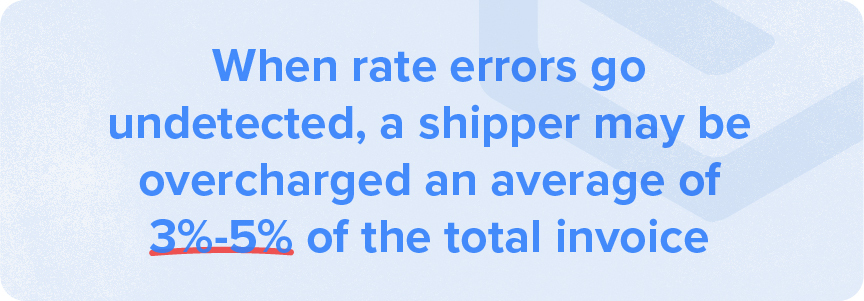
Did you know that 5% of invoices contain errors and inaccuracies? The root causes of these mistakes are often common shipping issues like accessorials and late fees. When rate errors go undetected, a shipper may be overcharged an average of 3%-5% of the total invoice.
For example, if you look at the FedEx Invoice below, the total charges are $1,831.17. If 5% of those charges are riddled with inaccuracy, then you'd be paying $92 in unnecessary overages - which adds up.
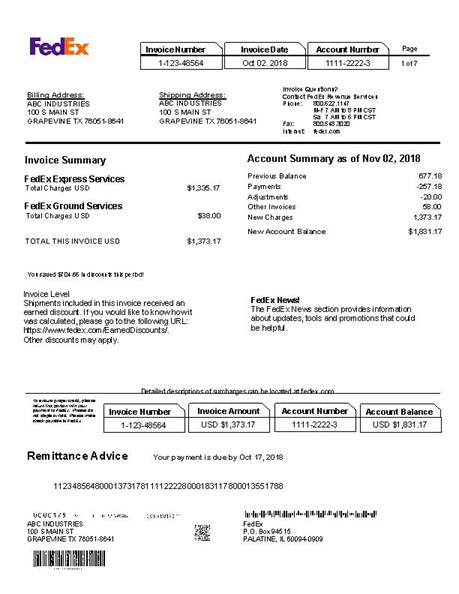
These costs are not always clear-cut and can fluctuate depending on the carrier. Our in-depth article on accessorial charges outlined three key lessons businesses can use to minimize mistakes and unexpected fees.
See more details in our guide to managing accessorial charges.
Inefficient systems can often delay the clearing of invoices, which results in unnecessary late fees. For example, both UPS and FedEx have instituted late payment fees. To avoid incurring these fees, make sure that payment is received by UPS within 14 days of the invoice due date and for FedEx, within 15 days of the invoice date. If payment is not received by the due date, both carriers charge a late payment fee of 6% of the total past-due balance. FedEx places delinquent accounts on cash-only status, which could cause delays in your shipments and the loss of applicable discounts.
Shipping companies are responsible for ensuring an effective system to avoid late charges and penalties. Failure to meet the terms of the agreement can also result in carriers charging additional interest fees.
When a shipper hires a transportation company to move their goods, an invoice or bill is created for each job. These documents contain important information about the shipment, the services provided, and any additional services rendered. For carriers, it compiles all charges from every Bill of Lading associated with the shipment.
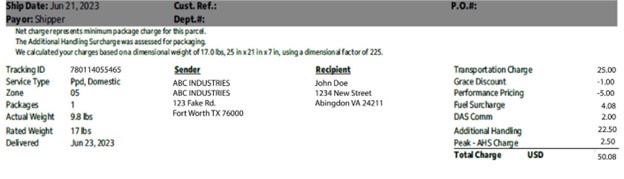
Shipping errors are an unfortunate reality in the fulfillment industry. Every 3PL wants to ensure a seamless pick, pack, and ship process, but mistakes can and do happen. It's important to be vigilant and watch for common errors.
Small mistakes in measurements, dimensions, and packaging can lead to expensive surcharges for shipping. Even slight errors can cause significant charges to accumulate. It's important to remember that shipping fees are calculated based on the greater value of weight or size, which means DIM weight can also affect shipping fees. Measuring and weighing packages accurately is crucial to avoid these unnecessary expenses.
UPS, for example, if your package dimensions don’t match your labels, the mislabeled packages will be subject to a shipping correction fee. If you get charged with a shipping charge correction audit fee, you’ll have to pay the greater of the following:
So, invest in a reliable scale and WMS to avoid incorrect estimates and unnecessary fees. This will ensure your measurements match your carrier's, reducing the risk of unexpected charges. Giving incorrect delivery details might seem insignificant, but it can quickly snowball into a logistical nightmare.
Rather than trying to save money by using cheap materials or skimping on protective measures, investing in better packaging will ultimately save you money in the long run by reducing re-shipping fees caused by transit damage.
Keep packages as small as possible and minimize inserts to minimize your costs further. Standardizing packaging is also important in reducing costs, helping you to streamline the process and minimize materials. Following these tips can significantly reduce your packaging costs without compromising quality. With so much at stake, taking shipping accuracy seriously is essential.

To avoid high shipping costs, diversify your carrier mix. Relying solely on one carrier may leave you vulnerable if they face capacity issues, raise prices, or go out of business. Without other options, you may have to pay expensive fees to ship your goods.
Cost Effective: To save on shipping costs, choose carriers that fit your budget and take advantage of available deals and discounts. Comparing rates on a single platform is easy and helps you make informed decisions. Let the software do the work for you.
Saves Time: Input package details into your WMS and let technology compare rates from various carriers. You'll have diverse shipping options to select the most affordable and efficient.
Reduces Disruptions: Using a multi-carrier platform can prevent shipping delays by seamlessly switching to another carrier if one experiences trouble.
Handling Unique Scenarios: When you use multiple carriers, it's possible to choose a more affordable option for free shipping and give customers the choice to upgrade for faster delivery times.
When managing logistics operations, using a warehouse management system is not just a nice-to-have; it's a must. Manually determining the cheapest rate based on address, weight/dimensions, and shipping speed is tedious and complex. Not to mention the risk of shipping errors and lost time.
With ShipHero’s Rate Shopping, you can access the most up-to-the-minute shipping rates from major carriers. Buy the label at the cheapest price. It's time to take advantage of a WMS.
A WMS is not just about the convenience of having everything in one place - but the benefits of automation. By reducing the need for personnel in the shipping process, companies can save money, reduce processing time, and improve accuracy. With fewer jobs for staff, there’s also less risk of data entry errors and lower costs because you need less help to run your 3PL.
By utilizing warehouse management software, you can accomplish the following:

To manage carrier costs accurately, it's essential to take the time to verify that invoices are correct and up-to-date and ensure that your fulfillment systems are processing payments promptly. It's also important to consider the non-monetary shipping costs, including accurate measurements, dimensions, and packaging. This can help you avoid costly surcharges and ensure your deliveries are successful. Finally, implementing a warehouse management system can save you time, prevent shipping delays, compare prices, and reduce errors.
One of the easiest ways for fulfillment centers to run into trouble is through an inefficient returns process. Your outgoing fulfillment can be as optimal as any brand on the market, but without a way to communicate and complete returns, warehouses can quickly become overwhelmed and disorganized.
While a product return might mean the customer is dissatisfied with what they received, returns offer a key opportunity for brands to showcase their quality customer service and encourage them to return in the future.
Conversely, an overly complicated returns process leaves buyers feeling unappreciated, frustrated and unwilling to visit the online store again. By creating an easy-to-use returns management process, you can ensure your customers walk away feeling positive and satisfied with their buying experience.
Here’s a breakdown of what you can look forward to while reading ShipHero’s Guide to Returns in eCommerce:
eCommerce shipping is a key link of the supply chain that can make or break your business. Think that’s a bit of an overstatement? Well, last-mile delivery is recorded as the most costly part of the order fulfillment process – it’s one of the most pressing logistical challenges. Plus, if order inaccuracies occur, and items are shipped to the wrong location, you’ll have to face the additional costs of returns and refunds.
This is why it’s so important to optimize the shipping process. You need to cut down labor costs, transit times, fuel costs, and establish a seamless workflow. Easier said than done, though, right?
In this guide, we’re going to take a look at how you can optimize the shipping process from different angles. Questions such as how much to charge your customers, what sort of hits your business should absorb, how to protect your own investment, and which data-driven tools to use, will be addressed and answered.
.svg)


.svg)


