.svg)
.svg)

Let’s stay in touch with the ShipHero Blog.


.png)
While your team is still walking aisles, your competitors are cutting pick times in half with automation. Guess who’s shipping faster and stealing market share?
Automation isn't the future anymore. It's the present. For growing eCommerce brands or fulfillment centers under pressure to deliver faster, cheaper, and more accurately, automated warehouse picking systems are no longer a luxury. They're a necessity.
In this guide, you'll learn how automated picking systems work, the types available, how to choose the right one, and how ShipHero can help you streamline fulfillment processes with confidence.
Automated warehouse picking systems use software, robotics, and real-time data to locate, retrieve, and prepare items for shipment, without relying solely on human labor. Instead of employees walking long distances and manually selecting items, automated systems bring items to workers or direct them with tools like lights, voice commands, or mobile robots.
For example, in the eCommerce space, brands use Goods-to-Person (GTP) systems to increase operational efficiency and efficiently handle large catalogs of SKUs. In retail, where seasonal order surges can overwhelm manual processes, automated solutions help companies double their picking speed and maintain consistent fulfillment even during peak demand.
The process is surprisingly seamless:
This flow is driven by smart software that integrates with warehouse management systems and supports key warehouse processes, including picking, packing, and tracking real-time inventory.
Want a deeper look at the tech behind it? Read this guide on warehouse automation software.
There’s no universal solution for warehouse automation. The best picking system depends on your space, order volume, and the variety of products you offer. Some work better for high-SKU, high-volume operations; others are ideal for smaller, more focused setups. Below, we break down the top systems and which warehouse types they’re best suited for.
GTP systems deliver inventory directly to a stationary picker, eliminating walking marathons. This setup enhances inventory management, reduces physical strain on workers, and improves worker safety.
It also optimizes order accuracy by minimizing human error. By minimizing walking time and keeping pickers in one place, GTP systems significantly boost pick rates while also cutting down on labor fatigue.
Pick-to-Light is an automated solution that uses LED light bars to guide workers to the right location for picking items, enhancing accuracy, speed, and efficiency while reducing errors.
When paired with Pack-to-Light and Receive-to-Light, your entire workflow is streamlined. Pack-to-Light ensures precise packing, while Receive-to-Light optimizes inventory storage and retrieval. Together, these technologies simplify inventory management, reduce labor costs, and accelerate fulfillment.
At ShipHero, we offer all three solutions, Pick-to-Light, Pack-to-Light, and Receive-to-Light, under one roof, seamlessly integrating with your existing systems to optimize warehouse operations. The combination can help boost efficiency by 20% while also cutting costs by up to 30% for batches of 10 to 30 orders.
Pickers wear headsets and follow voice commands to locate items, like a GPS for your warehouse. This hands-free approach automates repetitive tasks, shortens training time, and reduces picking errors, even in noisy environments. It also improves accuracy, even in noisy environments where traditional methods might fall short.
AMRs, or autonomous mobile robots, navigate the warehouse floor independently, delivering items or bins to human workers or packing stations.
Unlike fixed systems, AMRs offer greater flexibility and adapt to varying warehouse sizes, support scalable operations, and offer the flexibility to grow without major infrastructure changes. They’re also highly scalable, which makes them a smart choice for warehouses looking to grow or adjust operations without major infrastructure changes.
These are high-tech racking systems equipped with robotic cranes or shuttles that automatically store and retrieve inventory. They’re especially well-suited for large warehouses with high inventory turnover, where speed and space efficiency are critical.
Businesses that need to maximize vertical storage find these systems invaluable, and industries such as pharmaceuticals, automotive, and electronics often benefit the most from their precision and scalability.
Still not convinced? The real-world benefits speak for themselves. Automation significantly reduces human error, particularly in fast-paced warehouse environments where accuracy is crucial. It also speeds up fulfillment, often cutting pick times in half or more.
By streamlining operations, businesses can lower labor costs by either reducing headcount or reassigning team members to more valuable tasks.
By transitioning to automation, companies often see dramatic improvements in efficiency and cost savings. For example, automation can reduce warehouse labor costs by up to 60%, allowing businesses to reallocate resources and scale more effectively.
It’s not always smooth sailing when implementing automated picking systems. One of the biggest hurdles is the high initial investment, as hardware, software, and integration can come with a steep upfront cost.
Staff training is another challenge, as teams need time to learn how to use the new technology effectively. There can also be short-term disruption; installation and onboarding may temporarily slow down operations. But the long-term gains are often worth it.
For example, James Enterprise struggled with paper-based picking and processing delays before switching to ShipHero’s Warehouse Management System.
The transition required workflow changes and staff training, but with proper planning, such as going paperless, reorganizing their layout, and utilizing smart pick paths, they boosted productivity by 38%. New hires cut their pick time from 55 to 34 seconds in just five days, proving that smart automation pays off.
Finding the right automated picking system starts with understanding your specific needs. Warehouse size plays a big role, as larger spaces often benefit most from solutions like AMRs or AS/RS that can cover more ground efficiently. If your business manages a high variety of SKUs, systems like GTP or voice picking can offer the flexibility and accuracy you need.
For those working with tighter budgets, starting with light-based or voice-guided systems can provide a solid foundation without breaking the bank. Regardless of your starting point, scalability is crucial; your system should be able to grow in tandem with your business. Partnering with ShipHero ensures you get expert, customized guidance and future-proof solutions designed specifically for your operation.
Implementing warehouse picking automation isn’t just about installing new tech; it’s about doing it strategically. To get the most out of your investment and avoid common pitfalls, follow these proven best practices:
Best Practices for Successful Warehouse Picking Automation
For example, Black Wolf Nation and its 3PL arm, ONE23 Fulfillment, partnered with ShipHero to scale their operations. By adopting ShipHero's warehouse management software, they increased their order volume from 10,000 to over 25,000 per month in less than a year. This strategic implementation allowed them to efficiently manage growth and expand into the 3PL space.
Most companies see a return on investment within 12 to 24 months, depending on the system and order volume.
Yes. Many automated systems are designed to be scalable and cost-effective, which makes them ideal for small warehouses. Solutions like Pick-to-Light and voice picking can start small and expand as your operation grows.
Yes. Advanced systems feature adjustable grippers, sensors, and packaging logic to safely handle delicate or irregularly shaped products.
Warehouse management systems make daily warehouse operations efficient. And wave planning is at the heart of it.
As part of the supply chain industry where efficiency is of utmost importance, the fast-paced environment of warehouse management requires every aspect of operations to work on schedule. This is where wave planning comes into play and brings efficiency to the table.
It integrates with warehouse management systems and streamlines end-to-end warehouse operations to meet customer expectations of fast shipping and real-time updates.
Wave planning batches orders for optimized picking routes, shipping, and priority. It supports operational workflows and integrates with warehouse wave picking strategies to maximize productivity, reduce errors, and improve overall daily warehouse output.
This turns warehouse operations into an organized process of handling and systematizing hundreds of orders a day.
Applying the best practices for wave management allows for maximum efficiency in managing daily warehouse operations. Start with these:
Not all orders need to be shipped at the same time. Some can wait, others can’t. Strategic planning means prioritizing orders based on shipping deadlines to ensure they are shipped out and delivered on time. This increases customer satisfaction and overall operational efficiency. To better understand the core workflows that make this strategy effective, explore how we have explained the six key warehouse processes.
Accessing real-time data allows you to monitor every wave that’s happening, from orders getting picked up to those that are delayed. This lets you take action accordingly, especially when spotting issues as they are happening.
Downtimes are red flags in wave management. They are equal to unproductivity and possible shipment delays, both affecting operations to meet quotas and customer satisfaction.
Reduce idle time in operations with these methods:
High-demand periods like holidays, promotions, and occasional spikes can cause chaos, especially if you don’t have a plan in place. That chaos can overwhelm your normal operations and lead to delays and unsatisfied customers.
Avoid this by ensuring scalability for peak periods with effective wave planning:
If you’re preparing your warehouse for high-volume fulfillment, it may be worth exploring how automated warehouse picking systems can make wave execution more efficient and adaptable.
Warehouses have different zones to which pickers are assigned.
Having specific picking zones gives structure to the picking process, making it easier to execute even through high-volume orders.Having defined picking zones helps:
Wave management gives you the flexibility to adapt quickly when an unexpected change occurs during operations.
A common issue often faced in wave management is the sudden changes in order volume. This disrupts the flow of current waves and may have an avalanche effect on the whole operation if not solved immediately.
Here’s how wave management adjusts operations to meet demand fluctuations:
A warehouse management system creates an overall plan that controls the flow of a warehouse's production. Using tools and automation, a WMS simplifies and streamlines wave management to execute warehouse operations from fulfillment to packing and delivery.
The main difference between wave planning and wave management is that the former is where the strategizing happens, while the latter is the execution and overseeing that the plan takes place.
Wave planning is the strategic part of grouping what orders should be fulfilled together, setting the time for wave releases, and adjusting them based on warehouse capacity and labor availability.
Wave management is the main operational part where the production happens. It tracks the real-time progress of wave execution to ensure things are running smoothly according to plan.
The main difference between digital and wholesale waves lies in their order size, wave planning, and operational goal. Due to their differences, each wave type requires different planning and strategy.
Digital waves service the B2C channel, are high in volume, and often have small, single-item orders that require urgent or same-day deliveries. The wave strategy used is frequent and short for flexibility. For this wave type, warehouse managers use WMS-integrated mobile devices for tech support
Meanwhile, wholesale waves are for bulk orders, often for retail distribution, resellers, or B2B supply chains. Wholesale waves have a lower order volume with large shipments and more flexible timelines.
Yes, it can be used if they have large volumes of orders per day, orders with time-blocked pickups, or group orders with shipping deadlines.
Yes. eCommerce and retail, grocery and food distribution, healthcare and pharmaceutical, industrial supply, and consumer packaged goods industries are industries that benefit from wave planning. These are industries with high order volume, delivery sensitivity, and high operational complexity.
Yes, wave management is designed to make warehouse operations, including same-day shipping, possible. Wave management creates a structure that speeds up the order fulfillment, speeding up the process for all warehouse operations, such as same-day shipping.
Your warehouse isn’t slow because your team isn’t working hard. It’s slow because they’re working inefficiently. When every picker is chasing orders in random directions, you lose time, increase errors, and risk customer satisfaction.
Wave picking fixes that by turning chaos into coordination. By grouping orders for optimized picking routes and releasing them in scheduled “waves,” you can streamline picking, reduce walking time, and enhance picking speed, especially in high-volume eCommerce environments.
In this guide, we’ll explain what wave picking is, how it works, and how to use it to run a faster, leaner, and more accurate warehouse.
Wave picking is a warehouse picking strategy where orders are grouped and released in scheduled “waves” throughout the day. Each wave organizes orders based on factors like delivery time, product type, or warehouse zone, to help your team pick faster, move smarter, and stay organized. When paired with automated warehouse picking systems, wave picking becomes even more powerful, and minimizes manual effort while maximizing speed and accuracy.
For example, a warehouse might group all orders that need same-day shipping into a morning wave, while standard shipping orders are picked in the afternoon. This keeps the flow structured and reduces chaos on the floor.
Brands using wave picking have seen measurable results. A study published in Acta Logistica found that accurately batching and releasing orders in structured waves reduced cycle times by more than 13% compared to unplanned methods, proving how it standardizes warehouse processes and improves resource utilization. This demonstrates how even modest changes in picking structure can lead to significant gains in warehouse efficiency.
Wave picking operates through a structured, three-phase process: pre-wave, wave, and post-wave.
Each stage plays a critical role in coordinating order fulfillment, from organizing batches of orders to guiding pickers efficiently through the warehouse and ensuring fast, accurate packing and shipping. Understanding how each phase works is key to unlocking the full efficiency potential of wave picking.
Before picking begins, the warehouse management system (WMS) organizes inventory for efficiency by grouping orders into waves based on factors like shipping deadlines, SKU type, or zone. It then generates batch pick lists, allocates resources, and ensures that equipment and carts are ready, laying the groundwork for a smooth picking process using proven picking strategies.
Good Company, a 3PL provider, exemplified this by leveraging ShipHero's multi-item batch feature. This streamlined their pre-wave setup, enabling them to group multiple orders with shared items into single picking runs. This drastically reduced picker travel, and as they scaled from 500-600 to 6,000-10,000 units daily within 18 months, allowed them to halve their pick time. This demonstrates the immense power of an optimized pre-wave process.
Once a wave begins, pickers follow optimized routes through the warehouse to collect items. The goal is to reduce backtracking and congestion by assigning pickers to specific zones or paths.
E-Commerce Xpress, an eCommerce fulfillment provider, has significantly streamlined its picking process by adopting ShipHero's Warehouse Management System (WMS). Their previous manual methods caused inefficiencies and excessive picker travel. By using ShipHero's multi-batch order feature, they transformed their picking phase. This technology groups multiple orders into single runs, creating highly optimized routes and eliminating unnecessary trips. The result was profound: E-Commerce Xpress could fulfill 200 orders in just 2 hours with one person, a task that previously required four staff members 4-5 hours. This showcases how wave picking handles peak operational loads and supports multi-order fulfillment with ease.
After items are picked, they move to packing and shipping. This phase includes labeling, verifying accuracy, and dispatching the final product. A well-organized post-wave process ensures orders are completed on time and without mistakes.Consider Vareya, a 3PL and fulfillment company, which dramatically improved its post-wave efficiency and client satisfaction by adopting ShipHero's Warehouse Management System (WMS). Previously, Vareya struggled with disconnected systems, resulting in significant errors and excessive paperwork. By migrating to ShipHero, they automated workflows and shipping labels, ensuring efficiency and accuracy in packing and dispatch. This allowed them to triple business volume and meet customer service levels consistently.
To get the full benefits of wave picking, it’s essential to follow proven best practices that align your people, tools, and workflows. From using the right technology to organizing pick paths and handling carts efficiently, these core strategies—like those in our warehouse picking strategies guide—will help you maximize speed, accuracy, and productivity in every wave.
A powerful WMS like ShipHero automates wave creation, drives real-time decision-making, and optimizes paths. It ensures every wave is precisely executed and synced with inventory.
Calculating optimal picking routes is one of the most effective ways to reduce travel time on the warehouse floor, a major contributor to inefficiency. By using route optimization software, pickers follow the shortest and most logical paths through the facility, thereby avoiding unnecessary backtracking and congestion. This not only speeds up fulfillment but also reduces fatigue and boosts overall productivity, especially in high-volume environments where every second counts.
Efficient cart handling is key to successful wave picking. Organizing carts by order, zone, or SKU reduces sorting time and speeds up packing. This keeps the workflow smooth, reduces errors, and enhances overall fulfillment efficiency.
Wave picking comes in different forms, each suited to specific warehouse needs. Whether you’re handling large SKU volumes, urgent orders, or multiple zones, choosing the right strategy can boost speed, accuracy, and efficiency.
Organizing wave picking by product type allows warehouses to group similar SKUs into the same wave. This reduces picker travel time, as items are often stored near each other, and enables faster, more efficient picking by creating consistent, repeatable paths through the warehouse. It’s especially useful for high-assortment operations where grouping like products streamlines the process.
Wave picking by order priority ensures that urgent orders, such as express shipments or VIP customers, are grouped and processed first. By releasing these high-priority orders in the earliest waves, warehouses can ensure faster turnaround times and meet strict delivery deadlines, thereby maintaining high customer satisfaction and consistent service levels.
Dividing the warehouse into picking zones allows each wave to focus on a specific area, reducing unnecessary movement and streamlining the picking process. Assigning pickers to dedicated zones allows waves to run simultaneously in different zones, reducing congestion and enabling scalability in operations.
Wave picking is a fulfillment strategy designed to group orders into scheduled "waves" based on factors like shipping deadlines, product locations, or customer types.
This method is especially valuable in high-volume or time-sensitive operations where precision and speed are critical. Below are four key benefits of using wave picking in your warehouse:
Wave picking keeps operations structured, which allows you to process more orders per shift without expanding your physical footprint.
By reducing idle time and unnecessary movement, wave picking streamlines the entire fulfillment process. After adopting ShipHero’s WMS, American Tall saw a 275% increase in picking efficiency and cut fulfillment errors by 50%, allowing them to scale operations by 400%—clear proof of how structured picking methods lead to faster, more reliable order delivery.
With batch pick lists, scanning, and real-time tracking, wave picking drastically reduces errors in item selection and order completion.
Fewer errors, faster picks, and optimized labor use = lower costs. Wave picking helps you do more with fewer resources.
The main difference between wave picking and batch picking lies in their timing and level of structure. Wave picking organizes and releases orders at scheduled times throughout the day, which is ideal for high-volume warehouses where precise timing and a smooth workflow are essential. This method offers a structured approach that reduces errors and supports scalability, but it requires more upfront planning and a reliable warehouse management system.
In contrast, batch picking allows warehouse staff to pick multiple orders in a single trip without being tied to a specific schedule. It’s a simpler, more flexible method that’s well-suited for smaller operations with lower order complexity.
While batch picking is easy to implement and has a lower barrier to entry, it becomes less efficient when dealing with large volumes or time-sensitive orders. Choosing the right approach depends on your warehouse size, order volume, and fulfillment goals.
Yes. Wave picking can scale down for smaller operations to help them improve organization, reduce picker confusion, and streamline fulfillment.
No. Only certain WMS platforms, such as ShipHero, offer full wave picking functionality, including automated order grouping, routing, and inventory syncing.
Absolutely. Wave picking was designed for fast-paced, high-volume environments where timing, accuracy, and scalability are critical.
Thanks to recent technological advancements and the demands of omnichannel retail today, RFID technology is now seen in a whole new light within the speed-driven logistics landscape.
Here's what's driving all the attention: businesses today are under incredible pressure. Customers want their orders to be fast and accurate, and they want to know exactly where their order is at all times.
With rising costs, unpredictable supply chains, and customers who expect instant updates, businesses are increasingly turning to RFID technology for faster fulfillment, real-time accuracy, and smarter operations.
But is RFID truly the future of logistics? Or are we simply getting caught up in another tech trend?
In this article, we break down what RFID inventory management really is, how it works, and what makes it superior (or not) to traditional barcode systems. We'll also explore the benefits, challenges, and use cases that matter most to fast-scaling eCommerce businesses and 3PLs.
RFID (Radio Frequency Identification) inventory management uses radio waves to automate identification and tracking processes throughout a warehouse or supply chain. Compared to manual spreadsheets or barcode-based systems, RFID is faster, more scalable, and more dynamic.
Instead of having your team manually scan barcodes one by one, each item is tagged with a unique electronic identifier (RFID tag). This allows teams to track inventory wirelessly and with greater precision.
You don’t have to shut down your operations to do a cycle count or use math formulas to determine the ideal order quantity. With RFID, your team gains real-time, accurate insights into the location and quantity of everything. All without the need for line-of-sight scanning.
In short, RFID inventory management enhances accuracy in inventory management, reduces manual counting and human errors, and improves visibility across supply chains.
Here’s how an RFID inventory management system works in practice:
RFID makes an even more measurable impact when used for:
Before we dive deeper into RFID's benefits, let's break down the essential building blocks that make it all possible. Here are the three core components that power the system:
RFID tags are the identifiers attached to each inventory item. Tags can be embedded in labels, hangtags, or packaging and support item-level tracking for precise data.
They come in two main types:
RFID readers can be handheld devices or fixed-position scanners placed at warehouse entry points, loading docks, or packing stations.
Their ability to read data from multiple items simultaneously allows for faster cycle counts, pallet scanning, or outbound processing. However, its signal strength and reliability can be affected by nearby metal objects or liquids.
This is where all the raw tag information captured by RFID readers gets translated into actionable insights.
Modern RFID systems integrate with warehouse management systems and enable seamless integration with ERP systems, providing:
Very accurate, especially if implemented correctly. In fact, a study by Auburn University’s RFID Lab found that RFID systems can increase inventory accuracy from a rate of 63% to 95%.
This increased precision helps businesses:
Still, RFID isn't bulletproof.
Metal surfaces and liquid products can interfere with radio signal transmission, potentially causing read errors or missed detections. Although these issues are usually mitigated by strategic tag placement or the use of specialized tags designed for challenging environments.
Here’s how RFID stacks up against traditional barcode systems:
Ultimately, the choice between RFID and barcode technology depends on your operational requirements, budget constraints, and the value placed on automation versus initial investment costs.
RFID offers significant advantages. But like any tech investment, it comes with a few hurdles. If you're considering RFID for your warehouse or fulfillment center, it’s important to weigh both the benefits and the potential roadblocks.
RFID isn’t a plug-and-play solution. But for businesses with high throughput or complex inventory needs, the long-term ROI can outweigh the initial friction.
The total cost of a complete RFID system for most mid-sized businesses can range from $10,000 to over $100,000. But this can vary depending on the size and complexity of your operations. To give you an idea:
Yes, but with caveats. Metal and liquid materials can interfere with RFID signals. But specialized RFID tags, shielding materials, and strategic tag placement can address most of these challenges.
Yes, of course. RFID inventory management can benefit small businesses, particularly those handling high-value items and fast-moving inventory.
A phased implementation (starting with one location or SKU category) can make RFID more accessible for smaller operations.




In a world where margins are tight and customer expectations are sky-high, investing in a warehouse management system (WMS) helps keep orders fulfilled around the clock.
However, the real question isn't whether to invest in a WMS; it is how to justify the investment and calculate the true return it delivers.
Businesses that build a strong business case and track measurable outcomes from their WMS implementation consistently play their cards right than those that don't. They scale faster, experience fewer fulfillment errors, and save significantly on labor and inventory costs.
This article will help you build that case, calculate the ROI of a warehouse management system, and demonstrate long-term business value.
To justify the investment in a WMS with measurable benefits, start with the right metrics.
One ShipHero customer reported a 30% increase in their picking efficiency. Their staff now picks 70-80 orders in an hour, thanks to ShipHero’s iPad-enabled picking process.
A strong business case isn't just about numbers. It's about clearly showing the value of WMS implementation across every part of the operation.
Short-term ROI refers to immediate, quantifiable improvements in areas like:
Long-term ROI, on the other hand, reflects sustained gains over months or years, such as:
For example, a brand might see a 30% labor savings within the first quarter, but the long-term cost savings of a WMS come from optimizing processes over the years and avoiding major expansion costs.
Direct ROI is quantifiable, easily measurable financial gains that result directly from WMS implementation. These could be:
Indirect ROI, on the other hand, is intangible, benefits that may not show up immediately on a financial statement but significantly impact business performance over time. This includes:
Most businesses struggle to assess the long-term cost savings of a WMS because they hyperfocus on the direct ROI to justify the initial investment. But indirect ROI underscores the strategic, long-term value of a WMS.
Peak seasons are high-stress, high-stakes, but a WMS helps implement automation to streamline warehouse operations and minimize chaos.
Challenges include:
ShipHero clients using our WMS manage multiple warehouses more efficiently, especially during the holidays, enabling them to meet SLAs and reduce overtime. WMS advantages include:
Below are case studies proving how WMS can drive measurable gains in efficiency, accuracy, and fulfillment speed.
James Enterprise, a veteran in the sales and distribution industry, turned to ShipHero’s WMS to overcome inefficiencies such as batch processing, error-prone paper pick tickets, and latency issues.
They needed a solution that could scale with them while reducing costs and streamlining fulfillment. Implementing ShipHero helps them as follows:
B2C business Vareya transitioned to ShipHero’s end-to-end Warehouse Management Software to consolidate its fragmented systems into one cohesive platform. Previously, they struggled with software that didn’t communicate, leading to inventory blind spots, delayed shipments, and frustrated customers.
ShipHero’s robust reporting improves inventory management with real-time tracking and reduces stock errors and inventory discrepancies.
Vareya and its clients now receive instant notifications when stock is low or an item hasn’t shipped, allowing them to respond quickly and avoid disruptions.
In less than two years of implementing ShipHero’s WMS, lifestyle brand American Tall’s orders increased by over 400%. It was the most intuitive solution they had tried, helping them keep up with order fulfillment while their business grew.
Meanwhile, Deliverzen, a growing 3PL provider, used to struggle with bottlenecks that made handling increased order volumes nearly impossible. ShipHero WMS helped scale operations to meet surging customer demand. The results?
"ShipHero has helped us scale without worrying about system breakdowns. It's reliable and gives us peace of mind," Drew Horner, Owner of Deliverzen.
Before making the leap, here’s a balanced look at what your business can expect when implementing a WMS:
Yes, though it depends on your baseline metrics. Leading platforms like ShipHero provide detailed dashboards that allow you to monitor warehouse performance and measure results post-implementation.
Absolutely. When you integrate the WMS with existing enterprise systems like ERP or CRM platforms, you streamline data flows and enable better cross-functional decision-making.
Yes. Training is critical. Without it, your team can't fully leverage features like automation, real-time tracking, or KPI dashboards. Training also ensures you track key performance indicators (KPIs) to assess success from day one.
.svg)
Rising labor costs, surging demand for faster shipping, and ongoing supply chain disruptions are making warehouse efficiency more critical than ever. If your operations aren’t optimized, you’re not just losing money—you’re falling behind.
The solution? Streamline your workflows to gain a major edge. Faster order fulfillment, fewer errors, and happier customers all contribute to higher profitability.
Embracing automation along with AI-driven inventory management and real-time tracking can set you apart in an increasingly competitive market.
This guide breaks down the top strategies to cut costs, improve accuracy, and build a smarter, more efficient warehouse in 2025.
Cost savings in warehouses go beyond cutting expenses—they enhance profitability, efficiency, and competitiveness. Optimizing resources eliminates waste in warehouse processes, improves output, and strengthens market positioning.
Lower costs allow for reinvestment, innovation, and adaptability in a changing market. Additionally, cost reduction efforts uncover inefficiencies, drive operational improvements, and support long-term growth.
Financially responsible operations attract investors and provide critical insights for strategic decisions. Prioritizing cost efficiency ensures a more resilient, scalable, and competitive warehouse operation for sustained success.
Reducing warehouse costs requires a strategic approach that balances efficiency with operational effectiveness.
Businesses must focus on optimizing labor, energy use, inventory management, and logistics while leveraging automation. This can reduce operational costs to stay competitive.
Here are eight key strategies to help cut costs without compromising productivity.
Labor is one of the largest expenses in warehouse operations. Businesses are turning to automation to reduce these labor costs efficiently through scheduling, automation, and cross-training.
Optimizing workforce scheduling, investing in staff development, and leveraging AI-driven tools can boost productivity while minimizing inefficiencies.
For example, companies like Amazon and Walmart have successfully integrated robotic automation to assist workers, improving efficiency while lowering labor costs.
Energy costs are rising, making efficiency a priority. According to the U.S. Department of Energy, LED lighting can cut energy use by up to 75%.
Warehouses can reduce expenses by switching to LED lighting, installing motion-sensor controls, and upgrading to energy-efficient systems that minimize energy consumption.
Companies like UPS have adopted solar power and smart energy management systems, significantly lowering operational costs.
Poor inventory management leads to overstocking, obsolescence, and excess storage costs. Techniques such as demand forecasting, just-in-time (JIT) inventory, and real-time tracking helps businesses maintain optimal stock levels and reduce errors by tracking inventory in real-time.
Inventory management software like NetSuite and Fishbowl helps reduce holding costs by providing accurate, real-time insights that monitor inventory levels to avoid overstocking.
To reduce overstocking and improve inventory accuracy, consider implementing advanced inventory management technologies. This resource covers the key technologies in inventory management that can streamline your processes.
Warehouse consolidation involves merging storage facilities or optimizing warehouse layout to save space and reduce rental expenses.
Companies with multiple warehouses often benefit by centralizing operations, reducing transportation costs, and streamlining inventory distribution. For example, FedEx implements warehouse consolidation strategies to cut logistics costs while maintaining service speed.
ASRS uses automation to manage inventory storage and retrieval, reducing labor costs and improving space utilization. While the initial investment is high, ASRS offers long-term savings by increasing efficiency and minimizing picking errors.
Industries such as pharmaceuticals and e-commerce benefit from ASRS by streamlining high-volume fulfillment while improving accuracy and reducing costs. Companies like DHL have successfully implemented these systems to enhance efficiency and meet growing demand.
Transportation expenses are a major cost factor in warehouse operations. Businesses can decrease transportation costs through route optimization software, fuel-efficient vehicles, and freight consolidation.
For instance, route planning tools like OptimoRoute help companies reduce fuel consumption and delivery times.
According to a study published on ResearchGate, optimized routing of communal vehicles can significantly reduce fuel consumption and CO₂ emissions. Emerging trends such as electric trucks and AI-driven logistics management are further improving cost savings.
Theft, loss, and damage contribute to increased warehouse costs. Effective security measures, including surveillance cameras, RFID tracking, and controlled access systems, help prevent losses.
Employee training on security protocols also plays a critical role in reducing internal theft. Many retailers, such as Target, have integrated RFID technology to enhance inventory tracking and reduce shrinkage.
Inefficient picking processes lead to higher labor costs and slower fulfillment. This technique streamlines order picking and packing processes to reduce labor costs and fulfillment time.
Companies like Zappos use AI-driven picking systems that optimize warehouse workflows and improve warehouse productivity with advanced tools.
While implementing automation and AI-driven solutions offers significant benefits, it's important to consider the cost of a Warehouse Management System (WMS) when planning your technology budget. This investment can streamline operations and reduce long-term expenses.
An optimized warehouse budget ensures profitability while maintaining efficiency. A well-structured breakdown of operational expenses helps businesses identify areas for cost reduction and efficiency improvements.
Ideal Breakdown of Warehouse Operational Expenses
While costs vary by industry, a typical warehouse budget includes:
Cost Benchmarks Based on Industry Standards
Warehouse Cost Optimization Checklist
By adopting the right technologies, including WMS, you can maximize your ROI. This guide on WMS ROI provides insights into how such investments pay off over time through improved accuracy and reduced costs.
Yes, route optimization software is beneficial for transportation cost savings. It reduces fuel consumption, shortens travel time, and minimizes vehicle wear by identifying efficient delivery routes. Businesses using route optimization can cut fuel expenses by up to 20% and improve on-time delivery rates by avoiding traffic and optimizing delivery orders.
Yes, energy-efficient lighting can lower warehouse operating costs. LED lights use up to 75% less energy than traditional bulbs and last longer, reducing both electricity and maintenance costs. Smart controls like motion sensors further enhance savings. Most warehouses see ROI within two years through reduced utility bills and improved sustainability.
Yes, cross-training employees is an effective cost-saving measure. It increases workforce flexibility, reduces the need for overtime or temporary hires, and minimizes downtime by allowing employees to cover multiple roles. This approach improves productivity and helps businesses adapt to changing demand while lowering labor expenses.
Any e-commerce business knows that inventory management is not just a back-office task. It is the lifeline that keeps operations flowing and customers satisfied.
Fast forward to today, modern inventory management systems do so much more than count what's on the shelves. They cut down on mistakes that cost real money, help businesses run leaner, predict what customers will want next, and grow right alongside your company.
Simply put, when you bring in the right tech tools, you set up your business to be more profitable and efficient at every level.
In this article, we explore how technology is reshaping inventory management and which types matter most.
Inventory management is the process of overseeing and controlling the flow of goods from supplier to customer. It includes ordering, storing, tracking, and selling inventory, ensuring businesses maintain just the right amount of stock.
Think of it as the foundation of a profitable, customer-first logistics strategy. Without it, even the best marketing or sales efforts will falter due to fulfillment issues.
If done right, it prevents overstocking and stockouts while ensuring smooth operations across the supply chain.
The right tech stack can transform inventory management from a guessing game into a data-driven powerhouse. Here are the tools making that happen:
A Warehouse Management System is the operational heartbeat. It is a software used for optimizing and automating core warehouse functions like order fulfillment, stock control, and shipment tracking.
ShipHero’s own WMS, for instance, helps businesses manage stock across multiple locations, process orders faster with automated systems, and streamline warehouse operations with technology.
Robotic systems enhance stock accuracy with barcode scanning and scan products with handheld devices for efficiency, accelerating fulfillment, and minimizing delays. They pick, pack, sort, and even transport goods, reducing labor costs and error rates.
Think Amazon-style automation, but something more accessible to businesses of all sizes.
LiFi uses visible light to transmit data at high speeds, offering a secure alternative to Wi-Fi. It supports real-time updates and ultra-fast communication between devices, improving both speed and reliability of inventory data flow.
It is especially useful in environments sensitive to electromagnetic interference, like pharmaceutical or aerospace warehouses.
RFID allows for wireless communication between inventory tags and scanners. It drastically reduces the need for manual checks, making inventory tracking seamless.
Businesses can monitor inventory using RFID technology, automate stock replenishment processes, and implement barcoding and RFID systems for accuracy.
Automated picking systems use guided vehicles, robotic arms, or pick-to-light systems to fetch items with minimal human input. This is ideal for fast-moving warehouses where accuracy and speed are mission-critical.
This technology reduces human error with automation, improves fulfillment speeds, and optimizes warehouse space with advanced software.
Today, AI and ML are increasingly being used to forecast demand, adjust stock levels automatically, and analyze performance trends.
For example, a system might notify managers of low stock automatically or predict seasonal demand spikes based on historical data, allowing proactive planning and smarter purchasing.
Here are the trends shaping the future of inventory tech:
IoT uses connected devices to improve stock visibility and record inventory movements digitally. Smart shelves, sensors, and trackers ensure that businesses know exactly what they have (and where it is) at all times.
Cloud-based inventory systems allow teams to synchronize inventory data across all platforms and access it from anywhere. This flexibility makes it easier to scale, collaborate, and stay responsive in a fast-moving market.
Predictive tools analyze inventory performance with data analytics and forecast future needs with remarkable accuracy. This enables better decision-making, reduces stockouts, and eliminates excess inventory.
From cost savings to customer satisfaction, here are the key benefits companies can expect when they adopt modern inventory tools.
By automating core functions and reducing waste, businesses lower labor costs and inventory losses. Simply put: more efficient operations = higher margins.
On-time deliveries, accurate stock updates, and fast fulfillment improve customer experience, leading to repeat business and stronger brand loyalty.
Tech-supported businesses can outpace competitors and adapt to market changes faster, all thanks to faster order processing and accurate fulfillment.
Technology supports growth by allowing companies to manage more SKUs, warehouses, and sales channels without compromising accuracy or speed.
The main difference between manual and tech-supported inventory management is efficiency and accuracy. Here’s a quick look at their differences:
With so many options available, the key to choosing the right technology is to align your tech stack with your specific operational goals, growth plans, and support needs.
Are you trying to reduce stockouts, control stock flow, or improve fulfillment times? Clarifying your goals helps narrow down the best tools.
Consider your current scale and your growth plans. Then, look for platforms that integrate inventory data with ERP systems, offer customization, and have solid user reviews.
Don’t overlook service quality because it’s what makes or breaks implementation. From onboarding to troubleshooting, good tech partners offer dedicated support.
Barcode scanning enhances stock accuracy and accelerates stock entry and retrieval. This minimizes manual errors and ensures faster processing.
To make sure inventory is always up to date, these systems use sensors, RFID, or barcode technology to track inventory levels with real-time updates. They can also automatically notify managers of low stock.
Mobile inventory apps allow staff to update stock levels in real-time, scan products with handheld devices, and monitor inventory from anywhere. Essentially, they boost flexibility and responsiveness.
Is your warehouse ready for the holiday rush? As the peak shipping season approaches, logistics managers everywhere are gearing up for one of the busiest times of the year.
The peak shipping season is the annual surge in shipping volume, driven by events like the holiday shopping rush, special sales events, and seasonal goods. This season can make or break a company's ability to meet customer expectations. But with the right preparation, you can manage resources effectively during peak demand, avoid shipping delays, and keep your customers satisfied.
Let’s dive into expert tips to help you navigate the complexities of peak shipping season in 2025.
Just like a sports season has different games, peak seasons vary in nature and timing. Think of each peak season as a different “game” with each one requiring its own strategy to win. Here's a breakdown of typical peak shipping periods in various industries:
Be proactive and prepare in advance so you can anticipate challenges and streamline operations.
Businesses need to develop comprehensive logistics to ensure a smooth peak season. Forecasting shipping needs based on historical data allows you to coordinate with suppliers and assess inventory levels well in advance. You can also plan months ahead to avoid a last-minute rush and ensure stock levels are adjusted, carrier capacity is coordinated, and potential bottlenecks are identified.
Doing so optimizes carrier selection and delivery routes, schedules shipments to avoid bottlenecks, and streamlines order fulfillment to prevent delays. Consider implementing peak season inventory management strategies to help forecast and manage your inventory effectively during this busy period.
Communicate with your customers about potential delays or extended shipping times. Do this through email campaigns, website banners, or social media posts. Communicating clearly with customers about shipping timelines allows customers to manage their expectations, enhance satisfaction, and reduce service inquiries.
Partnering with third-party logistics providers (3PLs) can enhance your business's ability to manage peak season workloads. When you select 3PLs with a proven track record, strong technological capabilities, and a wide geographic reach, you can ensure timely deliveries and efficient operations during high-demand periods.
Outsourcing logistics functions to these experts not only reduces costs but also increases efficiency. This partnership enables you to scale quickly, improve service levels, and navigate the complexities of peak season more effectively.
Ensure solid communication with your suppliers well in advance of peak season by holding regular meetings or using shared digital platforms to keep everyone aligned. When you have proactive communication with suppliers, it helps maintain steady inventory levels, avoids delays in product availability, and ensures smoother operations during peak. Regular communication with suppliers anticipates potential disruptions and creates backup plans, which ultimately improve efficiency and prevent disruptions.
Adopting modern supply chain technologies, such as real-time tracking systems and automated inventory management, can greatly enhance efficiency during peak season. These technologies reduce manual errors, speed up processing times, and improve overall operational efficiency.
Businesses that automate the shipping process to reduce manual errors can enhance the reliability of deliveries and adjust shipping strategies based on real-time data. Using ShipHero's shipping management tools can help optimize your shipping processes and ensure smooth operations throughout the peak season.
Distributing inventory across multiple warehouse locations helps ensure faster shipping to key regions. When you choose warehouse locations near high-demand areas or major transportation hubs, you can reduce delivery times, lower shipping costs, and ensure quicker delivery to customers.
Using multiple carriers ensures flexibility and better coverage by allowing businesses to assess factors like:
This approach helps avoid bottlenecks, ensures faster delivery times, and maintains reliable service, especially when demand spikes during peak season.
The peak shipping season in 2025 will likely begin around Halloween (October 31) and will run through New Year's Day (January 1). This period includes major holidays and events, such as:
Be prepared for these dates so that your business can have efficient shipping and operations. To help you stay on top of deadlines, make sure to review the holiday shipping deadlines for major carriers in 2025.
ShipHero is a powerful solution designed to streamline warehouse operations during the peak shipping season. With features like inventory forecasting, which helps predict future demand and optimize stock levels, and order management, which efficiently tracks and processes orders from start to finish, ShipHero ensures smooth and timely operations even during high-demand periods.
Start preparing for the 2025 peak shipping season today with ShipHero, and let us help you optimize your logistics and improve operational efficiency.
Peak shipping season typically spans from October to January, covering major retail events and holidays. Understanding these key dates helps businesses plan for increased shipping volumes.
Yes, hiring temporary staff can help manage increased demand during peak shipping season, depending on your operations and staffing needs.
Pros of hiring more staff include quick scaling, flexibility, and reduced employee burnout. However, cons involve the time and resources needed for onboarding and training, as well as potential challenges with consistency and high turnover, which can impact productivity.
Preparation should start 3-6 months before peak season. In the first 3 months, assess inventory, review past performance, and refine logistics plans. In the next 1-2 months, secure staffing, finalize supplier and carrier agreements, and implement necessary upgrades. In the final month, conduct training, test systems, and ensure everything is ready to handle the surge.
Is your warehouse running at its full potential? As eCommerce continues to boom, businesses are faced with increasing demands to fulfill orders quickly and efficiently.
With growing volumes and tight delivery expectations, implementing a Warehouse Management System (WMS) is key.
This guide compares WMS pricing models and features to help you assess the upfront costs of WMS software and determine the best solution for your business needs.
WMS pricing varies based on software type, company size, and deployment model. Explore the different pricing structures below to help you choose the best fit for your business.
On-premises WMS includes a significant investment upfront because of the licensing, hardware, and maintenance costs. Initial setup would cost you around $100,000 to $500,000. When you purchase an on-premises WMS, it gives you greater control over data security for your business.
These systems also allow for more customization to ensure that they meet specific warehouse needs. While estimating the cost of a warehouse management system may seem steep initially, businesses with existing infrastructure may see long-term savings. As companies become more familiar with the system, they track the return on investment (ROI) of WMS implementation, which makes it worthwhile over time. To learn more about how businesses can calculate and track WMS ROI, check out our dedicated guide.
Cloud-based WMS pricing has lower upfront costs compared to on-premises solutions. It offers flexibility, scalability, automatic updates, and reduced IT overhead, which is ideal for growing businesses with fluctuating needs.
Pricing typically starts at $2,000 per month for small businesses and can rise to $10,000 per month for larger enterprises, depending on features and users. Many businesses select a WMS based on pricing and scalability to align with growth and seasonal demands. Analyzing subscription-based vs. one-time purchase options helps businesses choose the most efficient model for their specific needs.
When implementing a WMS, always account for hidden costs that might not be immediately obvious. Those hidden costs include the following:
Setting up a WMS includes software costs, installation, configuration, and training, with implementation costs ranging from $10,000 to $150,000 depending on system complexity. While the upfront investment is significant, it leads to improved efficiency, streamlined operations, and reduced errors.
For example, after adopting a WMS, James Enterprise, a company handling 300,000 orders annually, saw a 38% increase in productivity. New employees improved their picking speed from 55 seconds per order to 34 seconds within just five days. These efficiency gainsreduce costs through automation and lead to quicker return on investment.
Support packages vary by provider, with 24/7 support costing more than standard office hours. Annual fees range from $5,000 to $30,000, depending on the service level. Continuous support is crucial to quickly resolve issues, minimize disruptions, and ensure smooth operations. Businesses should manage recurring costs for software updates and support to avoid unexpected costs.
As your business grows, you may need additional user licenses for the WMS, typically costing $50 to $200 per user per month. Investing in scalable warehouse management solutions allows businesses to scale their system as needed without facing significant upfront costs. Many providers offer flexible pricing based on user count so that businesses pay only for the resources they need.
While WMS pricing is influenced by the software and deployment model, many systems include essential features such as location management, receiving, picking, packing, and reporting within their base cost.
Imagine you're managing a growing eCommerce business with several warehouses across different regions. As your operations expand, keeping track of inventory, shipments, and orders across multiple locations becomes increasingly complex. Without a robust system, errors such as missing stock, delayed shipments, and inventory discrepancies can occur.
Managing multiple warehouses can be complex and costly, especially with WMS providers that charge extra for each location. Centralizing all locations in one system eliminates these costs, which allows real-time inventory tracking, efficient stock allocation, and consistent order fulfillment. This streamlines operations, reduces errors, and improves efficiency, ultimately optimizing the cost-performance balance of WMS solutions.
Receiving and storing goods within a WMS requires investment in automation tools like barcode scanners, RFID systems, and software integration. While these incur initial costs, they reduce manual labor and errors.
Automated receiving updates inventory in real time, while automated storage directs items to designated locations, which improves speed and minimizes mistakes. Automation streamlines inventory flow, reduces costs through automation, and enhances operational efficiency, which leads to faster turnover and optimized space.
Think of it as a GPS for warehouse workers that guides them through the most efficient routes to get orders ready faster. WMS software can optimize picking routes to reduce the time spent searching for items and improve order fulfillment speed.
ShipHero’s Mobile Pick & Pack Solution helps businesses increase efficiency with barcode scanning, reducing errors by 99.9% and ensuring faster, more accurate order processing.
Reporting management provides valuable insights that drive decision-making and cost savings. Real-time inventory reports prevent stockouts and overstocking, while order performance reports highlight fulfillment speed and accuracy. Operational efficiency reports assess staff productivity, which helps identify areas for improvement.
These data-driven insights optimize operations, reduce errors, and improve resource allocation, ultimately enhancing decision-making, workflow efficiency, and profitability.
In a WMS, real-time tracking with barcode scanning, RFID, and automated data entry ensures accurate stock levels. While there are costs for software, hardware, and training, the benefits of streamlined inventory management outweigh these investments.
Effective inventory management prevents stockouts and overstocking, optimizes stock levels, and reduces excess inventory costs. It also improves stock visibility, reduces errors, and enhances order fulfillment speed, ultimately boosting customer satisfaction, service levels, and profitability. To further optimize your inventory management, consider integrating a solution like ShipHero’s inventory management software to seamlessly track and manage your stock.
Aside from direct costs, some businesses often overlook training, infrastructure upgrades, IT staff time, and data utilization as part of the WMS implementation.
Training staff on a new Warehouse Management System (WMS) is crucial for efficient use. Think of training as the foundation of a building. The stronger the foundation, the more stable the operations. Without it, even the best system can fall short.
Training typically lasts one to three weeks and includes a mix of hands-on sessions, virtual courses, and documentation. This ensures employees understand everything from basic navigation to advanced features like inventory tracking and order management.
Allocating a budget for WMS training and onboarding helps ensure a smooth implementation to help boost staff confidence and reduce errors.
Implementing a new Warehouse Management System (WMS) may require upgrades to existing infrastructure, such as improved Wi-Fi, barcode scanners, or RFID systems, to ensure optimal performance. These upgrades are necessary to support real-time tracking and automation.
For example, enhancing Wi-Fi connectivity enables seamless communication between devices, while RFID systems improve inventory accuracy. These upgrades directly enhance operational efficiency and ensure a successful WMS implementation.
Successful WMS implementation demands a substantial time commitment from IT staff. IT will also monitor performance, apply updates, and resolve issues as they arise.
It’s crucial to budget for IT staff time for a smooth implementation and minimize disruptions to regular operations. Invest in dedicated IT resources to avoid downtime and ensure the WMS runs efficiently to support long-term operational success.
Businesses that leverage data from a WMS reduce excess inventory, improve demand forecasting, and maximize warehouse space. Real-time tracking allows businesses to align stock levels with demand to prevent overstocking and stockouts while optimizing storage capacity.
Analyzing inventory accuracy, order processing time, and shipping performance allows businesses to identify inefficiencies and continuously improve operations. Understand how these efficiencies can lead to cost savings by reading our guide on warehouse operations & cost savings.
Several factors, such as the number of users, the complexity of operations, and the required features, influence the cost of WMS software.
The number of users affects WMS licensing costs, with many providers charging based on user count. As businesses grow, user numbers may increase, which would raise costs. You can avoid these expenses by limiting access to key staff or using tiered pricing models that offer scalability. Many providers allow flexible user additions so businesses can scale their WMS without significant cost increases and keep the system both efficient and affordable.
The complexity of warehouse operations affects both the type and cost of the WMS needed. More complex operations, such as multi-location management or high SKU volumes, require advanced systems, which increase costs.
To choose the right WMS, businesses should assess their needs, such as inventory size, number of users, and required features. For instance, a large eCommerce retailer with complex operations will need a more advanced, costly WMS, while a smaller warehouse can opt for a more basic, affordable solution.
Businesses can choose between a one-time payment for a perpetual software license or a flexible, subscription-based SaaS model. Each option offers distinct benefits, depending on budget, scalability, and operational needs.
A perpetual software license involves a one-time payment for indefinite use of the WMS, which eliminates recurring subscription fees. While the upfront cost is higher, businesses avoid ongoing licensing costs, making it more cost-effective over time.
This model is ideal for businesses with stable operations that plan to use the WMS long-term and don’t require frequent updates. Positioned as a long-term investment, a perpetual license offers substantial savings by avoiding recurring costs, especially for larger operations.
The SaaS subscription model involves a recurring fee for cloud-hosted WMS software that offers benefits like scalability and cost-efficiency. It allows businesses to adjust their plan based on fluctuating needs, which makes it ideal for growth or seasonal changes.
SaaS is cost-effective upfront, with flexible service tiers that let businesses pay only for what they use. It provides a dynamic, affordable solution that can scale up or down as operational needs evolve, ensuring businesses can adapt without committing to large, upfront investments.
A WMS typically pays for itself within 1 to 3 years, depending on system scale and efficiency gains. For example, a mid-sized eCommerce business may see ROI in 1-2 years by reducing fulfillment times and stock discrepancies, while larger operations with more complex needs may take up to 3 years. ROI depends on factors like operational complexity and how quickly the system is integrated, with most savings coming from improved efficiency and customer satisfaction.
Yes, there are free or low-cost WMS options, but they often have limitations like fewer features, scalability issues, or a lack of advanced integrations. While suitable for small businesses with basic needs, these systems may require upgrades as operations grow.
Yes, a WMS can be customized. Many solutions allow adjustments to workflows, reporting, and integrations with other systems or hardware to meet specific business needs. This flexibility ensures the system aligns with unique operational requirements.
As the holiday season approaches, meeting holiday shipping deadlines becomes crucial for businesses to ensure on-time deliveries. The holiday rush can bring about a surge in orders, which creates a frenzy in warehousing and shipping processes.
However, with this spike in demand comes the need for precise planning and efficiency. Shipping deadlines, or cutoffs, play a crucial role in ensuring that products are delivered on time. Missing these deadlines can result in delayed delivery, dissatisfied customers, and lost revenue.
In this article, we’ll discuss why understanding and adhering to holiday shipping deadlines is so vital, highlight important deadlines for major carriers in 2025, and offer tips to ensure your business meets these crucial dates.
Think of cut-off dates as the last chance to jump on a moving train – after that, you're waiting for the next one. Just like missing the train leads to a delay in reaching your destination, missing the shipping cut-off date means your goods might not make it to customers in time.
Every year, shipping volumes spike dramatically during the holiday season, and major carriers like USPS, FedEx, and UPS experience an overload. For example, on Cyber Monday in 2024 alone, FedEx processed over 24 million packages.
If your business misses a cutoff, your customers could face significant delays, leading to frustration and potentially lost sales. Keeping track of the last day to ship and planning ahead can mitigate this risk.
The shipping deadlines for major carriers are set to accommodate the holiday surge to ensure that deliveries are made before the holidays. Here’s what you need to know about these deadlines for 2025:
The United States Postal Service (USPS) offers several shipping options during the holidays, including Priority Mail and First-Class Package Service, both of which are frequently used for holiday gifts.
For USPS, the cut-off dates in 2025 are:
While USPS can often be the most affordable option, especially for smaller packages, businesses need to be mindful that shipping costs can rise during the peak season. USPS is typically a strong choice for local and regional shipping, but may not always offer the same speed as competitors like FedEx or UPS.
FedEx is well-known for its reliability and is considered one of the best options, especially during the busy holiday season. Their holiday shipping deadlines in 2025 are:
FedEx guarantees holiday delivery with express shipping, which makes it a popular choice for urgent shipments. They also help businesses manage inventory levels during the holidays by offering tracking and real-time insights.
FedEx's commitment to reliability during the holiday season has been recognized by industry experts. In 2024, FedEx achieved a 97.8% on-time delivery performance during the Black Friday/Cyber Monday period, reflecting its capacity to handle increased volumes efficiently.
UPS is another major player in the shipping industry that offers services such as UPS Ground and UPS Next Day Air, which are both ideal for last-minute orders. Here are the key cut-off dates for 2025:
UPS is a go-to choice for businesses looking to meet the last shipping day for major carriers, with its strong track record of on-time delivery during the holiday season.
Proactive planning will save your business from shipping delays during the holiday season. Here are five tips to ensure your business avoids delays and delivers packages before holiday deadlines:
To avoid last-minute stress, plan holiday shipping ahead of time. Ship weeks in advance for more flexibility and avoid the cutoff rush.
For example, by shipping early, you can avoid the peak season surge to ensure that products arrive at their destinations on time. Early shipping gives you the chance to manage potential delays and keep customer expectations in check.
Don't undermine the importance of proper packaging because it is key to ensure products arrive intact and on time. Packaging that is too loose can result in damage or delays, while overly tight packaging can cause difficulty in processing the package. Use durable materials and add extra padding for fragile items to reduce the chances of delays and improve your delivery efficiency.
International shipping requires careful planning because of added complexities, which include customs clearance and international shipping deadlines. In 2025, major carriers like FedEx and UPS will have different cutoffs for international shipments, and these deadlines should be confirmed early.
If you’re planning to serve global consumers during the holidays, consider using trackable shipping services to ensure visibility throughout the shipping process.
Tracking is essential for customer satisfaction and helps reduce customer inquiries. Choosing trackable services such as those offered by FedEx and UPS gives your customers the chance to track their deliveries and have peace of mind. ShipHero also tracks packages through major carriers, helping your business manage these processes smoothly.
UPS Next Day Air or FedEx Express Saver are essential for last-minute orders because these expedited shipping options do the job, even if they can be pricey. By expediting shipping to meet holiday demands, you ensure that your customers get their products on time, especially when orders are placed closer to holiday cutoffs. Expedited shipping helps to arrange overnight shipping before the deadline and ensures that holiday gifts arrive on time.
The last day to mail packages varies based on the carrier. Here’s a quick look at the key cutoff times:
When you miss these deadlines, you'll end up shipping the deliveries late and disappointing your customers. It's important to plan holiday shipping ahead of time and schedule shipments based on carrier deadlines.
Want to make sure you can manage holiday shipping volumes and ensure on-time delivery? ShipHero's automated processes and real-time ship rate tracking help businesses schedule shipments based on carrier deadlines. They also ensure all orders are fulfilled accurately and even integrate seamlessly with major carriers so users only have a single source for managing shipping during the holiday season.
ShipHero’s robust inventory management tools help businesses avoid stockouts and overstocking by providing insights into inventory levels, which is crucial for managing high-demand periods like the holidays. Tracking packages and using real-time data allows ShipHero to make sure that deliveries arrive before their cutoff dates, so your business meets the expectations of your customers every time.
If you need more information on how to improve warehouse operations during peak times, here’s a guide on Warehouse operations & cost savings.
Yes, international holiday shipments have a different shipping deadline compared to domestic shipments. International shipping deadlines are earlier due to customs processing, longer transit times, and varying destination country logistics. Domestic shipments can be sent closer to the holiday date with options like priority or express shipping.
If you miss the holiday shipping deadlines, use expedited services like overnight or two-day shipping. Consider using local courier services or same-day delivery apps. Digital alternatives like e-gift cards or subscriptions can also replace physical gifts. Communicate delays with recipients to manage expectations and offer tracking updates.
No. It is not too late to ship for Christmas, but options are limited. Use last-minute services like overnight, same-day, or express shipping. Carriers like FedEx, UPS, and USPS offer holiday cutoff dates for premium services. Expect higher costs and increased risk of delays due to volume and weather.
Peak season is the best time to build a stellar reputation. During high-demand periods like the holidays, customers don’t just expect fast shipping; they expect flawless execution. If a package arrives late or damaged, you could lose a customer forever. So, learning how to evaluate peak season shipping performance isn’t just a “nice to do,” but a competitive advantage. In this guide, you’ll learn exactly which metrics to track, how to interpret the data, and what steps to take next. Here’s how you can improve performance during high-volume seasons.
Let’s be clear: expectations skyrocket during the peak shipping season. Customers want:
If you're not meeting those expectations, they won’t wait around. And when something goes wrong, like a delay or a missed package, you won’t always get the chance to make it right.
First things first, identify your peak season dates. The most intense fulfillment periods typically fall between Black Friday and Christmas, but there are other seasonal surges too: back-to-school, Valentine’s Day, and regional shopping holidays. You may also see spikes around product launches or influencer campaigns. Knowing your brand’s specific demand windows allows you to define time-bound benchmarks and monitor logistics performance accordingly.
But here’s the thing. If you don’t track it, you can’t improve it. Here’s what you need to monitor to truly understand how to evaluate peak season shipping performance:
Use these metrics to quantify your success and identify opportunities for improvement. Dashboard tools or software integrations like ShipHero offer real-time shipment tracking and carrier performance evaluation, which can make this process easier and more actionable. But how?
Let’s break it down step-by-step. A thorough assessment of your peak season involves everything from internal operations to carrier reliability and customer feedback.
Before you can improve, you need to know what success looks like. Setting meaningful KPIs helps you stay focused on outcomes that matter as they allow for comparative analysis. For example, you can track the following:KPITarget BenchmarkOn-time Delivery Rate98%+Packing Error Rate< 1%Fulfillment TimeUnder 24 hoursReturn Rate< 8%These peak season performance benchmarks are essential when your team assesses shipping performance during peak demand, reviews order fulfillment times, and audits shipping processes for accuracy and efficiency.
Historical data gives you the context to spot trends and avoid repeat mistakes. You can:
Ask yourself: Where did the bottlenecks occur last year? Which carriers underperformed? Did specific products or warehouses contribute to inventory stockouts? Segment your analysis to uncover actionable insights.
What your customers say matters. And during the peak season, their feedback becomes even more telling. Use tools like Net Promoter Score (NPS), star ratings, and review analysis tools.This feedback helps you measure customer satisfaction with shipping speed and quantify the impact of late or damaged deliveries. Comments about “late packages” or “poor packaging” can reveal more than just frustration, as they can expose gaps you need to fix. It’s also a powerful way to enhance shipping performance with data-driven insights.
Your carrier is often the last touchpoint in the customer experience. To ensure they’re delivering on promises, monitor carrier performance during high-volume periods with:
These insights help you compare carrier performance and on-time delivery rates, and can inform your carrier strategy moving forward. If a carrier repeatedly causes shipping delays, it may be time to renegotiate or move on to a different courier.
Shipping cost efficiency often erodes during busy seasons. To monitor this, we suggest that you stay on top of all the variables:Cost FactorWhat to MonitorBase Rates & SurchargesCheck for seasonal rate hikes and hidden carrier feesExpedited Shipping UsageTrack the percentage of orders requiring rush deliveryCost per ReturnMeasure reverse logistics costs, including handling and restockingCost-to-Serve AnalysisCalculate shipping cost efficiency during peak season to identify margin lossUsing a cost-to-serve analysis, you can calculate shipping cost efficiency during peak season and see where margin loss occurs.
Your warehouse operations are the engine behind every successful delivery. To evaluate the efficiency of warehouse operations and improve order processing time for faster shipping, identify bottlenecks in the shipping process. Consider metrics like:
These insights will help you optimize internal workflows ahead of your next peak season.
Returns don’t have to be a profit killer if you manage them right. You’ll want to track the return volume, processing time, and restocking accuracy. Also, identify the most common reasons for returns. Are items coming back due to damage, incorrect fulfillment, or vague product descriptions? Understanding the "why" behind returns is just as important as handling the "how." Use these insights to improve your customer experience strategy.
Scalability matters. If your operation buckles under pressure, especially in inventory management, it’s time to reassess:
This warehouse performance review allows you to document peak season shipping performance for future planning, improve training schedules, and ensure you're ready to flex as demand grows.But evaluating your peak season performance doesn’t end there. It continues right after the peak season.
A structured post-peak assessment turns data into progress. To do this, assemble a cross-functional team. Then, break down your peak season shipping performance by:
Document lessons learned and prioritize the biggest opportunities for improvement. Shipping management software like ShipHero can help centralize your shipping data and generate actionable insights for smoother future peak seasons. To learn how ShipHero can help streamline your peak season logistics, request a free quote today. This way, you can build a better plan for the next peak season.
Once you’ve evaluated your performance, use those insights to level up. Here’s how:
Every small improvement compounds during high-volume weeks. So, start refining your strategy today, because the best time to prepare for peak season is before it begins.
Yes. Predictive analytics helps you forecast volume, streamline routes, and allocate labor efficiently to prevent holiday shipping delays before they happen.
Yes. A proper review highlights both strengths and weaknesses so you can prepare scalable solutions for next year.
Yes. Real-time data tools let you track, quantify, and report on critical metrics, giving you faster insight into your shipping performance.
Whether it’s Black Friday, Cyber Monday, the holiday rush, or a surprise surge from viral marketing, demand spikes fast, and you want your business to be ready for it.Effective inventory management during peak periods allows you to get your best products to customers quickly. This then creates a better shopping experience that keeps them coming back and sets the stage for sustained growth throughout the year.Let’s explore how strategic inventory planning can boost your margins, improve efficiency, and delight your customers even when orders pour in by the second.
Seasonal inventory management is the strategic process of preparing, organizing, and tracking stock during high-demand periods. This includes everything from forecasting sales trends to optimizing stock levels for peak season and maintaining operational flow during surges.Retailers, eCommerce brands, and 3PLs experience seasonal spikes during:
Businesses that anticipate customer demand during peak times avoid the two worst-case scenarios: stockouts that cost sales and overstocking that ties up capital.
Here, we break down the most effective strategies for getting ahead (and staying ahead) during high-volume periods.
Not all inventory is created equal. Businesses must stock high-demand items ahead of time and treat them differently from evergreen Stock Keeping Units (SKUs).Take fashion retailers, for example. They ramp up inventory on holiday collections weeks in advance, or how toy brands prepare for Q4 months ahead to capitalize on gifting demand.Focusing on seasonal products not only increases revenue but also improves customer engagement. Promotional bundles, limited editions, and early access can all drive urgency and boost conversions.
Businesses that forecast demand accurately can implement the right order fulfilment strategy during peak season and avoid costly missteps.Accurate forecasting starts with a thorough analysis of past data. This could be previous shipping performance or historical sales, such as which inventory stock was the best seller, average order size, and channel of maximum orders (e.g., online or in-store).Case in point: One ShipHero client achieved their logistics goals through ShipHero's WMS. The platform's Bulk Ship feature helped their team handle high-volume orders with ease, boosting client satisfaction and fostering long-term partnerships.
Setting optimal inventory levels ensures products are available when needed, without bloating storage or overextending budgets. This involves calculating lead times, expected sales, and buffer stock.For example, to reduce stockouts during the holiday rush, ShipHero’s built-in reports can help your business fine-tune reorder points across SKUs.Monitoring stock levels to prevent shortages while also avoiding overstock is a delicate balance, but it’s doable with the right systems in place.
Manual processes are a liability, especially during peak season. Businesses need tools that automate inventory management to reduce errors and free up staff time.Inventory software like ShipHero tracks real-time inventory movement, automates reordering, and integrates with sales platforms to give you end-to-end visibility. This makes sure you don’t miss sales or misallocate inventory in crunch time.One client scaled from 500 to 10,000 orders per day with minimal staff increases, thanks to automated replenishment, centralized order tracking, and warehouse routing.
A streamlined layout improves accuracy, reduces labor costs, and speeds up last-mile delivery. Companies that optimize warehouse layout and streamline picking processes reduce order fulfillment time and errors.That’s exactly what Good Company did. By reorganizing their warehouse based on top-selling SKUs and order frequency, they achieved a 50% reduction in pick times.
Placing high-volume SKUs in easily accessible zones enables faster picking and prevents stockouts during peak periods.For example, you may use the ABC analysis to categorize inventory by movement. This means prioritizing A-level items near packing stations or high-speed zones to accelerate throughput.Planning for efficient storage and handling ensures space is used wisely, and seasonal items don’t bottleneck fulfillment operations. This is why where you store seasonal items matters.
Supply chain disruptions are another common scenario during peak seasons. It’s highly advisable that you maintain regular orders with vendors and communicate frequently to avoid delays.To handle fluctuations in demand without panic-buying or overpaying, you may create staggered purchase orders with backup suppliers. Regular ordering and supplier communication keep your fulfillment engine running, even when the pressure is on.
Challenges may still arise even with all your team’s preparation. Here's how to spot and solve the most common issues:
Unpredictable consumer behavior, market shifts, or unexpected trends can derail even the best forecasts. Still, forecasting demand accurately helps businesses control inventory costs during high-volume periods and avoid unnecessary markdowns.
When seasonal inventory misses the mark, you’re left with dead stock, which means products that don’t sell and drain resources. This inventory ties up capital, clogs storage, and reduces profitability. Smart promotions and dynamic pricing can help mitigate this risk.
Stockouts = missed revenue. Overstock = wasted space and budget.Balancing stock levels with forecasted demand is important. Use real-time analytics to spot issues early and adjust purchase orders or promotional pushes accordingly.
From miscounts to misplacement, inaccuracies spike especially during peak times. Implementing efficient inventory control systems reduces these issues. Barcode scanning, real-time syncing, and software validation ensure what’s in your system reflects what’s on your shelves.
Avoid these pitfalls to keep your operations on track:
Cycle time is the total time it takes for inventory to move through the supply chain, from when it arrives at the warehouse to when it’s shipped to the customer.
To prevent stockouts during peak periods, monitor your inventory levels closely. Use forecasting tools, maintain regular communication with suppliers, and implement automated reorder points to ensure stock replenishment before it’s too late.
To help you make informed decisions about stocking levels, product launches, or promotional timing, use a combination of historical data, current sales trends, and predictive analytics for more accurate forecasting.
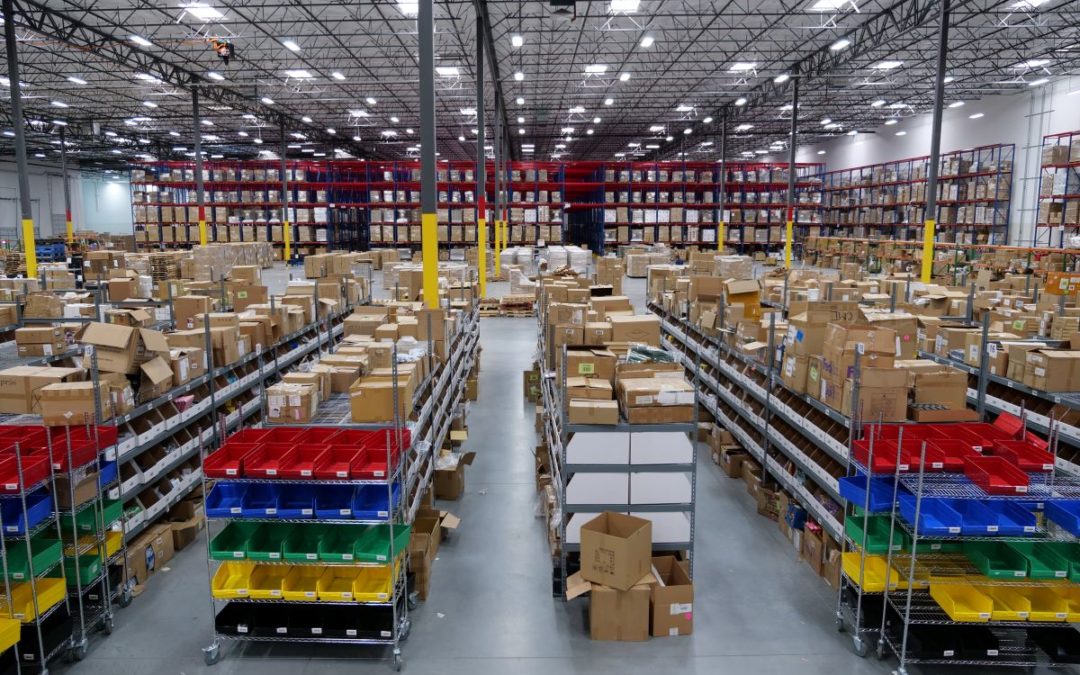
3PL companies are companies that offer various eCommerce logistics processes to online businesses. Some services they offer include warehousing, inventory management, and order fulfillment.
3PL involves the business, the logistics provider, and the shipping carrier. In simple terms, a 3PL provider offers logistics services to manage certain aspects of a company’s shipping operations. 3PLs are renowned for their logistics industry expertise and can help companies better fulfill orders to keep their customers happy.
Some people think 3PLs and freight brokers are essentially the same. However, 3PL companies are more active than freight brokers because they take over your fulfillment operations. Meanwhile, freight brokers only connect you to shipping carriers without touching your products.
A 3PL becomes integrated into the company’s inventory storage and transportation procedures. Rather than storing, packaging, and shipping orders, companies hire a 3PL to manage the entire process. The 3PL owns or leases its storage and transportation assets to fulfill the client’s orders remotely, ensuring you can focus on growing your business.
Third-party supply chain models first appeared in the 1970s when intermodal marketers took packages from businesses and brought them to rail stations for delivery. People developed 3PL software to help companies manage inventory and deliveries as the field grows. Nowadays, all kinds of businesses, from Fortune 500 to small businesses, use third-party logistics.
Here are the benefits of working with a 3PL company:
Third-party logistics companies often have connections in the sector, meaning they have better access to vendors and can negotiate higher discounts for you. By partnering with them, you can use their contacts and influence to reduce shipping supply and warehousing expenses, ultimately saving you money.
Many third-party logistics service experts have decades of combined experience in the industry. When you hire a 3PL company, you get access to this expertise to get insights on transport documentation, shipping regulations and other logistics issues. They can also answer your questions about how to increase operational efficiencies.
Running an in-house logistics division takes a lot of time and money. By hiring a 3PL company, you can instead focus on core business processes like developing marketing materials and improving sales channels. Better yet, you can do this without dedicating any internal staff or resources to run an in-house logistics division.
3PLs provide custom-made services based on your company’s needs and performance. If your business grows and product orders increase, you can sign them for a more significant contract with more benefits. Conversely, considering downscaling your business, you can opt out of some of their services.
As the name implies, 3PL involves three parties that help bring products to the market. Here are the three parties involved in the 3PL model:
A 3PL can scale and customize its services according to the client’s specific needs. The client still retains some oversight when managing shipping operations. Before signing a contract, you can outline what services you want the 3PL to provide and what services you will maintain in-house. As your business grows, your 3PL provider can take over a significant role in expanding your supply chain and procurement operations.
Here’s an overview of the services a 3PL typically provides:
3PL companies provide warehouse spaces to handle order fulfillment for multiple companies in one place. This improves efficiency and reduces costs because they don’t have to switch between numerous warehouse locations to finish orders. Moreover, you don’t have to lease warehouse space, buy forklifts, or rent trucks to handle your merchandise.
Managing inventory involves more than simply storing your company’s products. Integrative technology also syncs your inventory with your online store in real-time, so you can track inventory and predict demand to avoid sell-outs. Your 3PL also helps organize items with multiple parts into proper categories, ensuring nothing is misplaced.
Most 3PL providers have fulfillment centers across the country to store your products. 3PL companies distribute your inventory across the country to ensure fast shipment times.
A 3PL automatically routes orders to fulfillment centers based on where the customer resides. 3PLs use extensive automation to save hundreds and thousands of dollars on inventory distribution, raising their clients’ profits.
Alongside storage, 3PL companies assign staff to pick products for each order and package them for delivery.
Once the products are picked and packaged, the 3PL forwards them to a shipping carrier for delivery. Different 3PLs work with other carriers, and a good 3PL will choose the one that offers the best price and delivery speed. Some 3PLs even work with local carriers for less than truckload (LTL) shipping for local orders.
By partnering with a 3PL, your company can offer expedited shipping options to your customers since fulfillment centers send out orders daily. 3PLs often negotiate discounts with carriers like FedEx, DHL, USPS and others to offer faster delivery speeds at a manageable cost.
In addition to handling the shipping process, a 3PL will also manage the tracing and tracking process. Customers will receive shipping information to track their orders throughout the fulfillment process.
Not only do 3PLs offer shipment services, but they can also provide reverse logistics to handle returns. A 3PL can provide customers with return labels to drop the item off with a carrier for return to the fulfillment center.
Again, when you sign a contract with a 3PL company, you can customize its services according to your business’s needs. An experienced 3PL provider will be able to handle the logistics of the entire supply chain from when your customer submits their order to when it arrives on their doorstep.
So you can visualize what this looks like, here is an outline of the order fulfillment process from a 3PL provider’s perspective:
A 3PL needs inventory to complete customer orders, so your first act should be moving inventory to their warehouse. Depending on your business size, your inventory may be divided into several fulfillment centers. Each 3PL has its process for receiving and storing inventory. Most providers can customize this service according to the client’s needs.
Depending on the 3PL’s software, your partner may get the orders automatically, or you may have to send them manually. After placing the order, the 3PL starts the order fulfillment process by picking the items at the warehouse and then passes it to the next stage of the supply chain for packaging.
Once the 3PL has picked up all ordered items, they are prepared for packing.
Standard shipping materials for your products include cardboard boxes, poly mailers, bubble wrap, packing tape and bubble mailers. The best 3PL company can balance package protection and small dimensional weight, so your products arrive safely and within budget.
Some 3PL companies charge extra for packing material, but others fold the costs into the service fee. Depending on your working relationship, 3PL companies may also let brands customize their packaging.
After the products are prepared, they’re handed off to a courier for final delivery.
Some 3PLs partner with specific shipping carriers, while other companies have a rotation of transportation services to get the best deals. Either way, 3PL partners are responsible for brokering deals with freight forwarders to bring you the best rates. The courier fleet usually picks items up from your 3PL partner’s warehouses.
The order process doesn’t always finish once the package is delivered to the customer’s door. Specifically, product returns can get complicated if you manage inventory stock levels yourself. When you’re working with a 3PL partner, they receive all returned products to be restocked, scrapped or processed.
To make the return process more manageable, you can ask the 3PL company to provide shipping labels for every package. Customers can fill them out and return their packages if something goes wrong.
It should be clear by now that 3PL partnerships benefit companies, but how do you determine whether yours will? Keep reading to learn the signs that it’s time to hire a 3PL.
3PLs are needed when you can’t handle order fulfillment by yourself. Unless you’re running a small retail business out of your garage with no more than a dozen orders a week, the chances are good that your company could benefit from hiring a 3PL provider. To help you decide, here is an overview of the advantages associated with working with a third-party logistics provider:
Still unsure whether hiring a 3PL provider is the next logical step for your business? Here are some of the top reasons to hire a third-party logistics provider:
There is nothing magical about the number “100” – the point is that your company is receiving more orders than you can efficiently manage in-house. Shipping a large volume of items per month means your team spends more time and effort fulfilling orders than doing core business tasks. Once you’ve reached over 100 shipments per month, it’s a good idea to hire a 3PL company to support your operations.
Any retail company’s goal is to have enough orders that it becomes necessary to increase inventory levels. Of course, when this happens, you’ll need space to store all of that extra inventory. Rather than dealing with this predicament each time you add a new product to your store, turn over storage logistics to a 3PL.
Suppose you’re currently managing your order fulfillment in-house. In that case, you may struggle to make it to the post office even once a day, let alone often enough to give your customers expedited shipping options. With a 3PL handling your order fulfillment logistics, you can suddenly offer one-day, two-day, and maybe even same-day delivery.
Working with 3PL providers isn’t cheap, but it could save you loads of time and money. Instead of spending a lot to lease storage space and build an in-house logistics division, consider hiring a 3PL so you can spend the savings on building your business. Additionally, 3PL services speed up product deliveries and give you a competitive advantage.
Every good business person is forward-thinking. From the moment you start your business, you should know where you want to go and how you want to get there. Suppose you expand your offerings throughout the country or around the globe. In that case, a 3PL can help you get there with inventory distribution services. For example, some 3PLs can leverage 2-day or overnight shipping to help eCommerce businesses keep up with Amazon and other giants.
Hiring a 3PL provider to manage your supply chain’s logistics is smart if any or all of the signs above are coming into play. Before you start shopping around for a 3PL, however, you should take a moment to consider whether doing so is enough. You may want to consider taking things one step further and hiring fourth-party logistics service providers – keep reading to learn more.
First and foremost, you should know that 3PLs and 4PLs are professional, hired services that help businesses like yours plan and execute inventory management and order fulfillment logistics. You get much more flexibility than you would if you managed fulfillment in-house.
As you well know by now, a third-party logistics provider is a company that handles the logistics of your company’s supply chain and order fulfillment processes. Depending on how much control you want to hand over to your 3PL, they can do everything from storing and managing your inventory to picking, packing, and shipping your orders. They can even handle the returns management process for you.
A fourth-party logistics provider adds another element to the equation, combining various resources and technologies to optimize your supply chain’s design and execution. You can still keep your 3PL to manage the day-to-day details of order fulfillment. Still, a 4PL will become the “control tower” that oversees supply chain management. They will supervise your 3PLs and any other resources or providers you use to ensure your supply chain operates smoothly, efficiently, and cost-effectively. For businesses that want total supply chain visibility, a 4PL provider can be a great option.
The critical difference between a 4PL and a 3PL is that many 3PLs are asset-based – they own or lease equipment and warehouses that they use to provide services. As such, a 3PL is concerned with its costs and may not always seek the best deal for you if it means a better deal for them. In contrast, a 4PL’s only concern is integrating and optimizing your supply chain operations.
A third-party logistics provider can offer many services, though many focus on specific supply chain solutions. As a business, this might mean hiring multiple 3PLs to fulfill your supply chain’s different aspects – this is when hiring a 4PL may come in handy.
Here is a quick overview of the different types of 3PL providers you may come across:
As part of your transportation 3PL search, you need to consider several factors, including: the company’s location, where your customers are located, delivery timelines, shipping methods, service options, and pricing and discounts. This type of 3PL deals with shipping inventory between locations.
The most common type of 3PL is warehouse and distribution-based. These providers handle the storage, shipment, and returns of your orders. When considering a warehousing 3PL, you’ll need to consider the number of locations and their geographical locations, the pricing model for storage, negotiated shipping rates, delivery insurance, daily cutoffs for order fulfillment, and management tools.
Once your company expands beyond the eight or nine-figure mark in annual revenue, you may want to bring a financial 3PL on board to help you optimize your operations for the industry and to evaluate current trends. These 3PLs offer freight auditing, cost accounting, bookkeeping, tracking, tracing, and inventory management.
Now that you better understand the different types of 3PL providers, you may wonder how much it costs to hire a 3PL. Third-party logistics pricing depends on the services you require and the scope. Several factors that determine 3PL pricing include:
In addition to considering these individual costs, you should also know that most 3PLs offer three pricing models. Here is a quick overview of their differences:
When choosing a 3PL provider, consider all aspects, including costs. Keep reading to receive some additional tips for selecting a 3PL provider.
If you’ve decided that hiring a third-party logistics provider is the next logical step in expanding your business, congratulations! Now comes the hard work – choosing the perfect provider to meet your business’s current needs while offering room for growth.
Here are some simple tips to keep in mind when choosing a 3PL provider:
There are dozens of 3PL companies vying for your business, so choosing one is challenging. To help you decide, here are four premiere 3PL company options for your eCommerce and small business:
ShipHero is one of the best third-party logistics services for online retailers providing order fulfillment for more than 4,000 eCommerce businesses. Here are some of the benefits you’ll get when partnering up with ShipHero:
ShipHero also integrates with major eCommerce platforms like Shopify Plus, BigCommerce, Shopify, Amazon, and WooCommerce.
ShipBob is a third-party logistics company that helps you ship products worldwide. It promises shipping to all areas of the world through fulfillment centers in North America, Australia, and Europe.
ShipBob offers these 3PL services:
ShipBob offers integrations with major eCommerce platforms like Shopify, BigCommerce, and Squarespace.
Whitebox offers end-to-end 3PL services to help your products go from the factory floor to the buyers’ doorstep. Whitebox even has an in-house advertising agency to help you market your business.
The services offered by Whitebox include:
FedEx Fulfillment is the 3PL subsidiary of FedEx, which offers third-party logistics to small businesses. It boasts excellent customer service and a resource hub to help new business owners learn entrepreneurship.
Here are the services you’ll get from FedEx Fulfillment:
Choosing the right 3PL company can help you cut costs and improve efficiency. Follow these tips to pick the right 3PL provider:
Once you’ve narrowed your list to a few different 3PL options, it’s time to start digging deeper to find the best match for your company. Before talking to any 3PL in-depth, ensure they have and sign a non-disclosure agreement to protect your company.
In addition to talking to the 3PL’s representatives, you should also ask for references in the industry to determine whether the company has a solid track record and a positive reputation. Over time, it will become clear whether any of the 3PLs on your list are the right fit for your company or not.
Of course, the most important matter when choosing a 3PL partner is the value it offers. Find a 3PL company that caters to your order fulfillment needs at a reasonable price.
Finding the perfect third-party logistics partner that will keep your company’s best interests in mind may not be a quick and easy process. Still, it is important that you do it right.
For help finding a 3PL provider, check out our online directory or contact ShipHero directly to learn how we can help you with fulfillment.
Third-party logistics involves handing your logistics operations over to another company. A third-party logistics company usually offers warehousing, shipping, and inventory management services.
The main difference between 3PL and 4PL is the number of parties involved. A 3PL company still works under your management to handle your inventory and shipments. In contrast, a 4PL company contracts different 3PL providers to take your products.
The main benefits of working with 3PLs are cost and time savings. You also gain access to their expertise. You don’t have to train in-house logistics employees to handle warehousing and shipping.

The holiday season is here, and finding gifts that match the drive and creativity of clients, business partners, and teams can feel like a tall order. At ShipHero, we know quality and innovation are key, especially for the leaders and pioneers we’re privileged to work with. That’s why we’ve handpicked a selection of standout items from our trusted partners. Whether you’re looking to surprise someone with a touch of luxury or make their life a little healthier, our guide is here to help you find the perfect match.

The Surly Preamble Flat Bar is a must-have for the adventurer at heart. This steel-framed marvel offers quality and affordability, ideal for smooth rides and not-so-smooth roads. Designed with durability in mind, it’s perfect for regular commuters or those embarking on their first backpacking trip. Gift the freedom of the open road this holiday season.
Discover the Surly Preamble Flat Bar

Help someone you care about beat insomnia and anxiety with Hush’s Iced Bamboo Cooling Sheets. Made from sustainably sourced bamboo, these sheets are soft, anti-bacterial, and perfect for hot sleepers. They wick away heat and sweat, ensuring a clean and comfortable night's sleep. Give the gift of serene slumber with Hush's innovative bedding.

Natura Market's Holiday Gift Shop takes the guesswork out of finding unique, diet-friendly treats and thoughtful gifts for health-conscious friends, clients, and colleagues. With carefully curated options that suit any lifestyle, their selection of nutritious, on-trend products ensures that each gift feels special and intentional—perfect for spreading holiday cheer without compromising quality.
Visit Natura Market’s Gift Shop

Red Land Cotton brings you heirloom-quality bedding crafted from 100% cotton grown on their family farm in Alabama. These sheets offer a crisp, cool, percale experience that promises a heavenly sleep night after night. Proudly made in the USA, they are perfect for those who appreciate craftsmanship and sustainability. Treat someone to this luxurious bedding set—they'll thank you every morning!
This holiday season, make your gifts as memorable as the relationships you’ve built. At ShipHero, we’re here to help you thrive during peak season with a WMS solution designed to keep everything running like clockwork—so you can focus on what truly matters. Let’s set your business up for an extraordinary 2025 filled with growth, success, and seamless logistics.
Make this your most rewarding holiday season yet.
.svg)


.svg)


