.svg)
.svg)

Let’s stay in touch with the ShipHero Blog.


.png)
While your team is still walking aisles, your competitors are cutting pick times in half with automation. Guess who’s shipping faster and stealing market share?
Automation isn't the future anymore. It's the present. For growing eCommerce brands or fulfillment centers under pressure to deliver faster, cheaper, and more accurately, automated warehouse picking systems are no longer a luxury. They're a necessity.
In this guide, you'll learn how automated picking systems work, the types available, how to choose the right one, and how ShipHero can help you streamline fulfillment processes with confidence.
Automated warehouse picking systems use software, robotics, and real-time data to locate, retrieve, and prepare items for shipment, without relying solely on human labor. Instead of employees walking long distances and manually selecting items, automated systems bring items to workers or direct them with tools like lights, voice commands, or mobile robots.
For example, in the eCommerce space, brands use Goods-to-Person (GTP) systems to increase operational efficiency and efficiently handle large catalogs of SKUs. In retail, where seasonal order surges can overwhelm manual processes, automated solutions help companies double their picking speed and maintain consistent fulfillment even during peak demand.
The process is surprisingly seamless:
This flow is driven by smart software that integrates with warehouse management systems and supports key warehouse processes, including picking, packing, and tracking real-time inventory.
Want a deeper look at the tech behind it? Read this guide on warehouse automation software.
There’s no universal solution for warehouse automation. The best picking system depends on your space, order volume, and the variety of products you offer. Some work better for high-SKU, high-volume operations; others are ideal for smaller, more focused setups. Below, we break down the top systems and which warehouse types they’re best suited for.
GTP systems deliver inventory directly to a stationary picker, eliminating walking marathons. This setup enhances inventory management, reduces physical strain on workers, and improves worker safety.
It also optimizes order accuracy by minimizing human error. By minimizing walking time and keeping pickers in one place, GTP systems significantly boost pick rates while also cutting down on labor fatigue.
Pick-to-Light is an automated solution that uses LED light bars to guide workers to the right location for picking items, enhancing accuracy, speed, and efficiency while reducing errors.
When paired with Pack-to-Light and Receive-to-Light, your entire workflow is streamlined. Pack-to-Light ensures precise packing, while Receive-to-Light optimizes inventory storage and retrieval. Together, these technologies simplify inventory management, reduce labor costs, and accelerate fulfillment.
At ShipHero, we offer all three solutions, Pick-to-Light, Pack-to-Light, and Receive-to-Light, under one roof, seamlessly integrating with your existing systems to optimize warehouse operations. The combination can help boost efficiency by 20% while also cutting costs by up to 30% for batches of 10 to 30 orders.
Pickers wear headsets and follow voice commands to locate items, like a GPS for your warehouse. This hands-free approach automates repetitive tasks, shortens training time, and reduces picking errors, even in noisy environments. It also improves accuracy, even in noisy environments where traditional methods might fall short.
AMRs, or autonomous mobile robots, navigate the warehouse floor independently, delivering items or bins to human workers or packing stations.
Unlike fixed systems, AMRs offer greater flexibility and adapt to varying warehouse sizes, support scalable operations, and offer the flexibility to grow without major infrastructure changes. They’re also highly scalable, which makes them a smart choice for warehouses looking to grow or adjust operations without major infrastructure changes.
These are high-tech racking systems equipped with robotic cranes or shuttles that automatically store and retrieve inventory. They’re especially well-suited for large warehouses with high inventory turnover, where speed and space efficiency are critical.
Businesses that need to maximize vertical storage find these systems invaluable, and industries such as pharmaceuticals, automotive, and electronics often benefit the most from their precision and scalability.
Still not convinced? The real-world benefits speak for themselves. Automation significantly reduces human error, particularly in fast-paced warehouse environments where accuracy is crucial. It also speeds up fulfillment, often cutting pick times in half or more.
By streamlining operations, businesses can lower labor costs by either reducing headcount or reassigning team members to more valuable tasks.
By transitioning to automation, companies often see dramatic improvements in efficiency and cost savings. For example, automation can reduce warehouse labor costs by up to 60%, allowing businesses to reallocate resources and scale more effectively.
It’s not always smooth sailing when implementing automated picking systems. One of the biggest hurdles is the high initial investment, as hardware, software, and integration can come with a steep upfront cost.
Staff training is another challenge, as teams need time to learn how to use the new technology effectively. There can also be short-term disruption; installation and onboarding may temporarily slow down operations. But the long-term gains are often worth it.
For example, James Enterprise struggled with paper-based picking and processing delays before switching to ShipHero’s Warehouse Management System.
The transition required workflow changes and staff training, but with proper planning, such as going paperless, reorganizing their layout, and utilizing smart pick paths, they boosted productivity by 38%. New hires cut their pick time from 55 to 34 seconds in just five days, proving that smart automation pays off.
Finding the right automated picking system starts with understanding your specific needs. Warehouse size plays a big role, as larger spaces often benefit most from solutions like AMRs or AS/RS that can cover more ground efficiently. If your business manages a high variety of SKUs, systems like GTP or voice picking can offer the flexibility and accuracy you need.
For those working with tighter budgets, starting with light-based or voice-guided systems can provide a solid foundation without breaking the bank. Regardless of your starting point, scalability is crucial; your system should be able to grow in tandem with your business. Partnering with ShipHero ensures you get expert, customized guidance and future-proof solutions designed specifically for your operation.
Implementing warehouse picking automation isn’t just about installing new tech; it’s about doing it strategically. To get the most out of your investment and avoid common pitfalls, follow these proven best practices:
Best Practices for Successful Warehouse Picking Automation
For example, Black Wolf Nation and its 3PL arm, ONE23 Fulfillment, partnered with ShipHero to scale their operations. By adopting ShipHero's warehouse management software, they increased their order volume from 10,000 to over 25,000 per month in less than a year. This strategic implementation allowed them to efficiently manage growth and expand into the 3PL space.
Most companies see a return on investment within 12 to 24 months, depending on the system and order volume.
Yes. Many automated systems are designed to be scalable and cost-effective, which makes them ideal for small warehouses. Solutions like Pick-to-Light and voice picking can start small and expand as your operation grows.
Yes. Advanced systems feature adjustable grippers, sensors, and packaging logic to safely handle delicate or irregularly shaped products.
Warehouse management systems make daily warehouse operations efficient. And wave planning is at the heart of it.
As part of the supply chain industry where efficiency is of utmost importance, the fast-paced environment of warehouse management requires every aspect of operations to work on schedule. This is where wave planning comes into play and brings efficiency to the table.
It integrates with warehouse management systems and streamlines end-to-end warehouse operations to meet customer expectations of fast shipping and real-time updates.
Wave planning batches orders for optimized picking routes, shipping, and priority. It supports operational workflows and integrates with warehouse wave picking strategies to maximize productivity, reduce errors, and improve overall daily warehouse output.
This turns warehouse operations into an organized process of handling and systematizing hundreds of orders a day.
Applying the best practices for wave management allows for maximum efficiency in managing daily warehouse operations. Start with these:
Not all orders need to be shipped at the same time. Some can wait, others can’t. Strategic planning means prioritizing orders based on shipping deadlines to ensure they are shipped out and delivered on time. This increases customer satisfaction and overall operational efficiency. To better understand the core workflows that make this strategy effective, explore how we have explained the six key warehouse processes.
Accessing real-time data allows you to monitor every wave that’s happening, from orders getting picked up to those that are delayed. This lets you take action accordingly, especially when spotting issues as they are happening.
Downtimes are red flags in wave management. They are equal to unproductivity and possible shipment delays, both affecting operations to meet quotas and customer satisfaction.
Reduce idle time in operations with these methods:
High-demand periods like holidays, promotions, and occasional spikes can cause chaos, especially if you don’t have a plan in place. That chaos can overwhelm your normal operations and lead to delays and unsatisfied customers.
Avoid this by ensuring scalability for peak periods with effective wave planning:
If you’re preparing your warehouse for high-volume fulfillment, it may be worth exploring how automated warehouse picking systems can make wave execution more efficient and adaptable.
Warehouses have different zones to which pickers are assigned.
Having specific picking zones gives structure to the picking process, making it easier to execute even through high-volume orders.Having defined picking zones helps:
Wave management gives you the flexibility to adapt quickly when an unexpected change occurs during operations.
A common issue often faced in wave management is the sudden changes in order volume. This disrupts the flow of current waves and may have an avalanche effect on the whole operation if not solved immediately.
Here’s how wave management adjusts operations to meet demand fluctuations:
A warehouse management system creates an overall plan that controls the flow of a warehouse's production. Using tools and automation, a WMS simplifies and streamlines wave management to execute warehouse operations from fulfillment to packing and delivery.
The main difference between wave planning and wave management is that the former is where the strategizing happens, while the latter is the execution and overseeing that the plan takes place.
Wave planning is the strategic part of grouping what orders should be fulfilled together, setting the time for wave releases, and adjusting them based on warehouse capacity and labor availability.
Wave management is the main operational part where the production happens. It tracks the real-time progress of wave execution to ensure things are running smoothly according to plan.
The main difference between digital and wholesale waves lies in their order size, wave planning, and operational goal. Due to their differences, each wave type requires different planning and strategy.
Digital waves service the B2C channel, are high in volume, and often have small, single-item orders that require urgent or same-day deliveries. The wave strategy used is frequent and short for flexibility. For this wave type, warehouse managers use WMS-integrated mobile devices for tech support
Meanwhile, wholesale waves are for bulk orders, often for retail distribution, resellers, or B2B supply chains. Wholesale waves have a lower order volume with large shipments and more flexible timelines.
Yes, it can be used if they have large volumes of orders per day, orders with time-blocked pickups, or group orders with shipping deadlines.
Yes. eCommerce and retail, grocery and food distribution, healthcare and pharmaceutical, industrial supply, and consumer packaged goods industries are industries that benefit from wave planning. These are industries with high order volume, delivery sensitivity, and high operational complexity.
Yes, wave management is designed to make warehouse operations, including same-day shipping, possible. Wave management creates a structure that speeds up the order fulfillment, speeding up the process for all warehouse operations, such as same-day shipping.
Your warehouse isn’t slow because your team isn’t working hard. It’s slow because they’re working inefficiently. When every picker is chasing orders in random directions, you lose time, increase errors, and risk customer satisfaction.
Wave picking fixes that by turning chaos into coordination. By grouping orders for optimized picking routes and releasing them in scheduled “waves,” you can streamline picking, reduce walking time, and enhance picking speed, especially in high-volume eCommerce environments.
In this guide, we’ll explain what wave picking is, how it works, and how to use it to run a faster, leaner, and more accurate warehouse.
Wave picking is a warehouse picking strategy where orders are grouped and released in scheduled “waves” throughout the day. Each wave organizes orders based on factors like delivery time, product type, or warehouse zone, to help your team pick faster, move smarter, and stay organized. When paired with automated warehouse picking systems, wave picking becomes even more powerful, and minimizes manual effort while maximizing speed and accuracy.
For example, a warehouse might group all orders that need same-day shipping into a morning wave, while standard shipping orders are picked in the afternoon. This keeps the flow structured and reduces chaos on the floor.
Brands using wave picking have seen measurable results. A study published in Acta Logistica found that accurately batching and releasing orders in structured waves reduced cycle times by more than 13% compared to unplanned methods, proving how it standardizes warehouse processes and improves resource utilization. This demonstrates how even modest changes in picking structure can lead to significant gains in warehouse efficiency.
Wave picking operates through a structured, three-phase process: pre-wave, wave, and post-wave.
Each stage plays a critical role in coordinating order fulfillment, from organizing batches of orders to guiding pickers efficiently through the warehouse and ensuring fast, accurate packing and shipping. Understanding how each phase works is key to unlocking the full efficiency potential of wave picking.
Before picking begins, the warehouse management system (WMS) organizes inventory for efficiency by grouping orders into waves based on factors like shipping deadlines, SKU type, or zone. It then generates batch pick lists, allocates resources, and ensures that equipment and carts are ready, laying the groundwork for a smooth picking process using proven picking strategies.
Good Company, a 3PL provider, exemplified this by leveraging ShipHero's multi-item batch feature. This streamlined their pre-wave setup, enabling them to group multiple orders with shared items into single picking runs. This drastically reduced picker travel, and as they scaled from 500-600 to 6,000-10,000 units daily within 18 months, allowed them to halve their pick time. This demonstrates the immense power of an optimized pre-wave process.
Once a wave begins, pickers follow optimized routes through the warehouse to collect items. The goal is to reduce backtracking and congestion by assigning pickers to specific zones or paths.
E-Commerce Xpress, an eCommerce fulfillment provider, has significantly streamlined its picking process by adopting ShipHero's Warehouse Management System (WMS). Their previous manual methods caused inefficiencies and excessive picker travel. By using ShipHero's multi-batch order feature, they transformed their picking phase. This technology groups multiple orders into single runs, creating highly optimized routes and eliminating unnecessary trips. The result was profound: E-Commerce Xpress could fulfill 200 orders in just 2 hours with one person, a task that previously required four staff members 4-5 hours. This showcases how wave picking handles peak operational loads and supports multi-order fulfillment with ease.
After items are picked, they move to packing and shipping. This phase includes labeling, verifying accuracy, and dispatching the final product. A well-organized post-wave process ensures orders are completed on time and without mistakes.Consider Vareya, a 3PL and fulfillment company, which dramatically improved its post-wave efficiency and client satisfaction by adopting ShipHero's Warehouse Management System (WMS). Previously, Vareya struggled with disconnected systems, resulting in significant errors and excessive paperwork. By migrating to ShipHero, they automated workflows and shipping labels, ensuring efficiency and accuracy in packing and dispatch. This allowed them to triple business volume and meet customer service levels consistently.
To get the full benefits of wave picking, it’s essential to follow proven best practices that align your people, tools, and workflows. From using the right technology to organizing pick paths and handling carts efficiently, these core strategies—like those in our warehouse picking strategies guide—will help you maximize speed, accuracy, and productivity in every wave.
A powerful WMS like ShipHero automates wave creation, drives real-time decision-making, and optimizes paths. It ensures every wave is precisely executed and synced with inventory.
Calculating optimal picking routes is one of the most effective ways to reduce travel time on the warehouse floor, a major contributor to inefficiency. By using route optimization software, pickers follow the shortest and most logical paths through the facility, thereby avoiding unnecessary backtracking and congestion. This not only speeds up fulfillment but also reduces fatigue and boosts overall productivity, especially in high-volume environments where every second counts.
Efficient cart handling is key to successful wave picking. Organizing carts by order, zone, or SKU reduces sorting time and speeds up packing. This keeps the workflow smooth, reduces errors, and enhances overall fulfillment efficiency.
Wave picking comes in different forms, each suited to specific warehouse needs. Whether you’re handling large SKU volumes, urgent orders, or multiple zones, choosing the right strategy can boost speed, accuracy, and efficiency.
Organizing wave picking by product type allows warehouses to group similar SKUs into the same wave. This reduces picker travel time, as items are often stored near each other, and enables faster, more efficient picking by creating consistent, repeatable paths through the warehouse. It’s especially useful for high-assortment operations where grouping like products streamlines the process.
Wave picking by order priority ensures that urgent orders, such as express shipments or VIP customers, are grouped and processed first. By releasing these high-priority orders in the earliest waves, warehouses can ensure faster turnaround times and meet strict delivery deadlines, thereby maintaining high customer satisfaction and consistent service levels.
Dividing the warehouse into picking zones allows each wave to focus on a specific area, reducing unnecessary movement and streamlining the picking process. Assigning pickers to dedicated zones allows waves to run simultaneously in different zones, reducing congestion and enabling scalability in operations.
Wave picking is a fulfillment strategy designed to group orders into scheduled "waves" based on factors like shipping deadlines, product locations, or customer types.
This method is especially valuable in high-volume or time-sensitive operations where precision and speed are critical. Below are four key benefits of using wave picking in your warehouse:
Wave picking keeps operations structured, which allows you to process more orders per shift without expanding your physical footprint.
By reducing idle time and unnecessary movement, wave picking streamlines the entire fulfillment process. After adopting ShipHero’s WMS, American Tall saw a 275% increase in picking efficiency and cut fulfillment errors by 50%, allowing them to scale operations by 400%—clear proof of how structured picking methods lead to faster, more reliable order delivery.
With batch pick lists, scanning, and real-time tracking, wave picking drastically reduces errors in item selection and order completion.
Fewer errors, faster picks, and optimized labor use = lower costs. Wave picking helps you do more with fewer resources.
The main difference between wave picking and batch picking lies in their timing and level of structure. Wave picking organizes and releases orders at scheduled times throughout the day, which is ideal for high-volume warehouses where precise timing and a smooth workflow are essential. This method offers a structured approach that reduces errors and supports scalability, but it requires more upfront planning and a reliable warehouse management system.
In contrast, batch picking allows warehouse staff to pick multiple orders in a single trip without being tied to a specific schedule. It’s a simpler, more flexible method that’s well-suited for smaller operations with lower order complexity.
While batch picking is easy to implement and has a lower barrier to entry, it becomes less efficient when dealing with large volumes or time-sensitive orders. Choosing the right approach depends on your warehouse size, order volume, and fulfillment goals.
Yes. Wave picking can scale down for smaller operations to help them improve organization, reduce picker confusion, and streamline fulfillment.
No. Only certain WMS platforms, such as ShipHero, offer full wave picking functionality, including automated order grouping, routing, and inventory syncing.
Absolutely. Wave picking was designed for fast-paced, high-volume environments where timing, accuracy, and scalability are critical.
Thanks to recent technological advancements and the demands of omnichannel retail today, RFID technology is now seen in a whole new light within the speed-driven logistics landscape.
Here's what's driving all the attention: businesses today are under incredible pressure. Customers want their orders to be fast and accurate, and they want to know exactly where their order is at all times.
With rising costs, unpredictable supply chains, and customers who expect instant updates, businesses are increasingly turning to RFID technology for faster fulfillment, real-time accuracy, and smarter operations.
But is RFID truly the future of logistics? Or are we simply getting caught up in another tech trend?
In this article, we break down what RFID inventory management really is, how it works, and what makes it superior (or not) to traditional barcode systems. We'll also explore the benefits, challenges, and use cases that matter most to fast-scaling eCommerce businesses and 3PLs.
RFID (Radio Frequency Identification) inventory management uses radio waves to automate identification and tracking processes throughout a warehouse or supply chain. Compared to manual spreadsheets or barcode-based systems, RFID is faster, more scalable, and more dynamic.
Instead of having your team manually scan barcodes one by one, each item is tagged with a unique electronic identifier (RFID tag). This allows teams to track inventory wirelessly and with greater precision.
You don’t have to shut down your operations to do a cycle count or use math formulas to determine the ideal order quantity. With RFID, your team gains real-time, accurate insights into the location and quantity of everything. All without the need for line-of-sight scanning.
In short, RFID inventory management enhances accuracy in inventory management, reduces manual counting and human errors, and improves visibility across supply chains.
Here’s how an RFID inventory management system works in practice:
RFID makes an even more measurable impact when used for:
Before we dive deeper into RFID's benefits, let's break down the essential building blocks that make it all possible. Here are the three core components that power the system:
RFID tags are the identifiers attached to each inventory item. Tags can be embedded in labels, hangtags, or packaging and support item-level tracking for precise data.
They come in two main types:
RFID readers can be handheld devices or fixed-position scanners placed at warehouse entry points, loading docks, or packing stations.
Their ability to read data from multiple items simultaneously allows for faster cycle counts, pallet scanning, or outbound processing. However, its signal strength and reliability can be affected by nearby metal objects or liquids.
This is where all the raw tag information captured by RFID readers gets translated into actionable insights.
Modern RFID systems integrate with warehouse management systems and enable seamless integration with ERP systems, providing:
Very accurate, especially if implemented correctly. In fact, a study by Auburn University’s RFID Lab found that RFID systems can increase inventory accuracy from a rate of 63% to 95%.
This increased precision helps businesses:
Still, RFID isn't bulletproof.
Metal surfaces and liquid products can interfere with radio signal transmission, potentially causing read errors or missed detections. Although these issues are usually mitigated by strategic tag placement or the use of specialized tags designed for challenging environments.
Here’s how RFID stacks up against traditional barcode systems:
Ultimately, the choice between RFID and barcode technology depends on your operational requirements, budget constraints, and the value placed on automation versus initial investment costs.
RFID offers significant advantages. But like any tech investment, it comes with a few hurdles. If you're considering RFID for your warehouse or fulfillment center, it’s important to weigh both the benefits and the potential roadblocks.
RFID isn’t a plug-and-play solution. But for businesses with high throughput or complex inventory needs, the long-term ROI can outweigh the initial friction.
The total cost of a complete RFID system for most mid-sized businesses can range from $10,000 to over $100,000. But this can vary depending on the size and complexity of your operations. To give you an idea:
Yes, but with caveats. Metal and liquid materials can interfere with RFID signals. But specialized RFID tags, shielding materials, and strategic tag placement can address most of these challenges.
Yes, of course. RFID inventory management can benefit small businesses, particularly those handling high-value items and fast-moving inventory.
A phased implementation (starting with one location or SKU category) can make RFID more accessible for smaller operations.





Your auto parts business is not just a business, it's a lifeline. A lifeline to the mechanic restoring a classic car in their garage, and to the single parent trying to keep their only mode of transport running. But as your catalog expands and order volumes accelerate, you find yourself at a crossroads. Your auto parts are reaching further corners of the world, and with that comes the monumental task of managing inventory, processing orders, packaging products, and ensuring speedy deliveries. Your focus is being pulled away from what truly matters…sourcing and selling top-notch auto parts. Fortunately, there are solutions designed precisely for this task, as precise as a well-calibrated torque wrench: third-party logistics (3PL) companies!
Third-party logistics, or 3PL, is a service model where businesses outsource parts of their supply chain operations to specialized logistics providers. This service can encompass a wide range of tasks, including inventory management, warehousing, order fulfillment, transportation, and distribution. In other words, everything needed to get the goods from place A to B.
An automotive 3PL is a third-party logistics provider that specializes in the handling and distribution of auto parts. From the smallest components to complete vehicle systems, these logistics experts ensure that automotive manufacturers and retailers can meet market demand with efficiency and precision.
Third-party logistics companies play a crucial role in the automotive supply chain. Their services extend from storage of the parts in warehouses to efficient order fulfillment and delivery to the desired destination area. With their robust systems and processes, they streamline the way auto parts travel across the globe, from the bustling streets of Toronto to the quiet corners of Japan.
A 3rd party logistics company takes over various logistics tasks, from handling SKUs and bulk orders to managing returns and tracking freight. They provide businesses with the extra storage space and resources they need, freeing up companies to focus on core operations like manufacturing and improving customer service.
3PLs support automotive sellers in several ways, not just by dealing with logistical challenges. They offer streamlined logistics solutions and services, product optimization, and enhanced customer satisfaction through efficient order processing, communication, and delivery. With their expertise and support, automotive sellers can focus on developing products and expanding their businesses.
An auto parts delivery partnership with a 3PL can be a game-changer. With such a partnership, automotive companies can scale operations, meet market demand more effectively, and expand into new channels.
If you're looking to outsource your order fulfillment to a 3PL, consider your business needs and challenges. The right logistics provider will offer not just services, but also support, experience, and expertise in the automotive industry.
This 3PL specializes in eCommerce fulfillment, making it a perfect partner for auto parts retailers who have an online presence. ShipHero's software integrates seamlessly with popular eCommerce platforms, offers real-time inventory tracking, and efficient order fulfillment services. They also offer advanced warehouse management features that are especially useful for managing the variety of SKUs typically found in auto parts inventory.
Known for its accuracy and speed, Red Stag Fulfillment is an excellent choice for auto parts businesses. They specialize in handling heavy and oversized goods, a common characteristic of auto parts, ensuring safe and efficient handling and delivery.
While known for its association with Amazon, FBA caters to all kinds of eCommerce businesses, including auto parts. They offer extensive storage, quick delivery, and strong customer service.
Whiplash offers an easy-to-use platform and integration with popular eCommerce and shopping platforms. They offer flexible, scalable solutions suitable for businesses of all sizes.
This 3PL offers an end-to-end solution, handling everything from storage and fulfillment to sales and support. Their comprehensive approach is ideal for auto parts businesses looking to outsource multiple aspects of their operations.
With its on-demand warehousing and fulfillment network, Flowspace offers a highly flexible solution for auto parts businesses. They can handle both palletized and individual items, offering flexibility for a variety of auto parts products.
As their name suggests, Ships-a-Lot excels at high-volume order fulfillment. They offer seamless integrations, transparent pricing, and a focus on speed and accuracy.
Known for their reliable shipping services, FedEx also offers excellent fulfillment services, with the added benefit of their extensive logistics network.
A specialist in automotive logistics, BlueGrass Logistics Group offers tailored solutions for the auto parts industry. They focus on efficient and safe transportation of parts from manufacturers to retailers or end-users.
FSI offers tailored solutions to fit the specific needs of businesses. Their high-quality control standards and efficient order processing make them a strong partner for auto parts businesses.
At the heart of any successful 3PL operation is secure storage and precise inventory management. Professionals handle all the details, providing businesses with the peace of mind knowing that their products are safe and their inventory status is always up-to-date.
Kitting is a specialized service where several separate but related items are grouped, packaged, and supplied as one unit. It’s a perfect solution for auto parts brands offering package deals or repair kits. 3PL companies handle this task with care, ensuring all the necessary components are bundled together correctly.
3PLs offer professional pick, pack, and ship services. These logistics experts ensure that the right product is picked, securely packed, and shipped according to schedule, avoiding unnecessary delays. This quality control is particularly crucial for businesses handling sensitive auto parts.
Cross-docking is a practice in logistics where products from a supplier or manufacturing plant are distributed directly to a customer or retail chain with minimal to no handling or storage time. This approach streamlines operations, reduces costs, and helps businesses handle bulk shipments efficiently.
Dealing with returns is a common challenge for businesses, but it's something that 3PLs manage well. They ensure that returns are processed quickly and efficiently, minimizing inconvenience for both businesses and customers.
3PL companies often have a wide network of partnerships that allow them to offer shipping discounts. These cost savings can be a huge advantage, especially for businesses handling high volumes of auto parts deliveries.
Shipping oversized and heavy auto parts can present its own set of complexities. However, experienced 3PLs are equipped to handle these challenges, coordinating transportation and ensuring all the requirements for shipping such items are met.
From preparing necessary documents to ensuring compliance with regulations, 3PLs can help auto parts companies navigate through the complexities of customs clearance, simplifying the international shipping process.
One of the main concerns for businesses is ensuring on-time delivery. 3PLs have systems in place to manage and coordinate shipping schedules effectively, reducing delays, and improving customer satisfaction.
Managing returns can be a tricky part of the supply chain. 3PLs typically have efficient processes in place to handle returns, ensuring they are dealt with quickly and to the satisfaction of both the customer and the business.
The auto industry is heavily regulated, and failing to comply with rules can lead to hefty fines. 3PLs stay on top of these regulations, ensuring that all aspects of the logistics process are compliant.
When shipping internationally, understanding and calculating taxes and duties can be a complex task. 3PLs can take care of these calculations, ensuring that businesses are not caught off guard by unexpected fees.
3PL companies have the required infrastructure and capabilities to handle the storage and transportation of engines. As the heart of any vehicle, engines demand utmost care and precision during transit, making them ideal products to be managed by seasoned logistics professionals.
Whether manual or automatic, gears are a critical component of any vehicle. 3PLs provide secure storage facilities for these delicate components and ensure their safe movement through the supply chain, from manufacturer to end consumer.
Exhaust systems, due to their size and shape, can pose unique logistics challenges. However, some 3PLs are adept at handling such oversized products, ensuring they reach their destination intact and on time.
Automotive batteries are another crucial product managed by 3PLs. With stringent regulations regarding their storage and transport due to their hazardous nature, entrusting their logistics to 3PL companies ensures safe, compliant handling.
The management of smaller components, such as fuel injectors, is equally essential. 3PLs handle the inventory management, order processing, and safe transport of these smaller, yet critical components.
Just like fuel injectors, spark plugs are another smaller, yet vital component of a vehicle's engine. 3PLs ensure efficient inventory management and careful transportation of these parts to maintain their optimal condition.
The automotive 3PL market is a thriving sector experiencing consistent growth year on year. This growth can be attributed to factors such as globalization of automotive manufacturing, growing eCommerce in auto parts retail, and increased focus on core competencies prompting outsourcing of logistics services. While exact market size can vary based on the source of the data, there is a general consensus in industry reports that the automotive 3PL market is set to grow substantially in the coming years.
Analyzing the automotive 3PL market, we observe a trend towards significant growth in the near future. Several factors contribute to this outlook. Firstly, the increasing complexity of supply chains in the automotive industry necessitates efficient logistics services. Secondly, manufacturers are focusing more on their core competencies and outsourcing logistics activities to reduce costs and improve efficiency. Thirdly, the shift towards just-in-time manufacturing and direct-to-consumer deliveries in the automotive sector requires specialized 3PL services.
The automotive 3PL industry is typically segmented based on services and geography.
Service Type: This includes transportation, warehousing, and value-added services. Transportation services involve moving auto parts from the manufacturer to the end consumer or retailer.
Geography: On a geographical basis, the market is typically segmented into regions such as North America, Europe, Asia-Pacific, and the rest of the world.
The automotive 3PL market is characterized by several emerging trends:
The Asia-Pacific region, driven by countries like China and India, has seen significant growth in the automotive industry. This surge has fueled the demand for reliable 3PL services, transforming the region into a significant player in the global 3PL market.
In the world of third-party logistics, market leaders are often identified by their global reach, the breadth and innovation of their service offerings, and their commitment to customer service and satisfaction. Some globally recognized 3PL leaders in the automotive sector included DHL Supply Chain, XPO Logistics, Kuehne + Nagel, and Ryder System, Inc. These companies had demonstrated an impressive range of services, a strong international presence, and a reputation for innovative logistics solutions.
For the most current and reliable news, consider sources that specialize in logistics and supply chain management news such as The Logistics of Logistics, Supply Chain Digital, and Logistics Management. For broader market analyses and reports, trusted market research companies like Gartner, Forrester, and McKinsey & Company can provide valuable insights.

Navigating the fast-paced world of automotive logistics can be challenging. As the industry evolves and customer expectations rise, it's more important than ever to partner with a reliable and innovative third-party logistics (3PL) provider. These companies not only simplify the intricate logistics process but also offer cost-effective and efficient solutions, ensuring your auto parts are stored, managed, and delivered with precision. With trends like digitization and sustainability reshaping the landscape, partnering with a 3PL provider can provide the competitive edge you need to excel in today's dynamic automotive industry!
Automotive logistics refers to the management and coordination of the flow of goods in the automotive industry.
The automotive supply chain refers to the network of suppliers, manufacturers, and distributors involved in the creation and delivery of automotive products.
An example of 3PL logistics in the automotive industry could be as follows: A car manufacturer contracts a 3PL company to manage the storage and distribution of auto parts. The 3PL provider takes responsibility for warehousing the parts, keeping track of inventory, packaging the components, assembling kits as required, and arranging transportation to deliver these parts to the manufacturer's facilities or directly to customers.
.svg)
Running a small business is a bit like spinning plates while juggling flaming torches—you're always on your toes, constantly shifting focus and ready to tackle the next challenge. And then there's logistics, the invisible cog that keeps the whole circus running smoothly. It's the unsung hero behind every delivered package, every stocked shelf, and every satisfied customer.
A small business, as the name implies, is a business that operates on a smaller scale compared to large corporations. It has fewer employees, lesser revenue, and serves a smaller geographical area. However, size can vary greatly based on the industry and country. For example, in the US, a small business is defined as a firm having fewer than 500 employees.
3PL, short for Third-Party Logistics, refers to companies that provide outsourced logistics services to businesses. These services encompass various aspects of the supply chain, including inventory management, warehousing, order fulfillment, and transportation.
In the logistics spectrum, each "PL" or "party logistics" represents a level of service:
Yes, in many ways. Amazon, through its Fulfillment By Amazon (FBA) program, offers services typical of a 3PL company, including warehousing, inventory management, and order fulfillment. However, Amazon is also a marketplace, making its role in the logistics landscape quite unique.
Small businesses, just like any other, need to manage the flow of goods effectively to meet customer expectations and maintain operational efficiency. Efficient logistics can help small businesses optimize inventory, reduce shipping costs, speed up delivery times, and enhance the customer experience.
3PLs provide all-encompassing logistics solutions, from storing inventory in warehouses to packing orders and shipping them to customers worldwide. They also offer services like inventory forecasting and analytics, helping businesses make informed decisions.
For small businesses, partnering with a 3PL can offer numerous benefits. These include reduced operational costs, better inventory management, broader shipping options, and more time to focus on core business aspects. 3PLs often have a wide network of warehouses and fulfillment centers, enabling businesses to store their products closer to their customers and reduce delivery times.
While 3PLs provide a range of logistics services, 4PLs take it a step further by managing the entire supply chain, including coordinating with various 3PLs. For many small businesses, a 3PL is more than enough to handle their logistics needs. However, large businesses with complex supply chains might opt for a 4PL.
While both 3PLs and 4PLs offer valuable services, for most small businesses, a 3PL is a more cost-effective and practical option. 3PLs provide a broad range of logistics services without the complexity and often higher cost associated with 4PLs. Additionally, 3PLs often have flexible and customizable offerings, which can be great for small businesses with specific logistics needs.
Want to chat with us to get the inside scoop on logistics? Check out our website!
In the grand picture of running an eCommerce business, embracing a third-party logistics (3PL) partner may seem like a big step. Just like any business decision, it comes with its unique set of challenges and considerations.
Your small business should consider hiring a 3PL when managing your inventory, shipping, and order fulfillment starts to feel overwhelming. If you're spending more time packing boxes and handling shipments than growing your brand, it may be time to think about getting some assistance.
One of the main issues small businesses face when searching for a 3PL provider is finding a company that offers the perfect fit for their specific needs and growth plan. Other challenges include navigating contracts, understanding fees, and ensuring order minimums align with your sales volume.
If you find yourself juggling too many orders, struggling to keep up with shipping demands, or your garage is bursting at the seams with stock, it's probably time to consider hiring a 3PL.
Smaller businesses and startups often face the challenge of finding 3PL companies that offer flexible, scalable solutions without sky-high costs or long-term contracts. Especially when it comes to the bigger providers who require massive minimum order counts per month. Which is why it’s good to find a 3PL that can grow with you. Especially those 3PL’s who have a software solution you can start with to streamline your own logistics, before you fully move to their services.
Choosing the right 3PL for your small business comes down to a variety of factors including cost, service levels, the 3PL's warehouse network, and their ability to integrate with your eCommerce platform like Shopify, BigCommerce, eBay or WooCommerce. The right 3PL partner should adapt to your business model as it evolves.
Comparing 3PL companies is not just about price. It's also about the services they provide, their integration capabilities, their order management system, customer satisfaction, and the extent of their fulfillment network.
3PL company options can vary by region. In the US, ShipHero, Whiplash, and Fulfillify have extensive warehouse networks. For businesses based in Canada, ShipHero also provides excellent coverage.
Small businesses can enjoy many benefits when partnering with a 3PL. It allows them to focus more on their core operations, like product development and marketing, while leaving the order fulfillment and logistics challenges to the experts.
Partnering with a 3PL helps small and medium businesses streamline their supply chain management, enhance customer service, and improve efficiency. Plus, a good 3PL provider comes with a variety of packaging materials, shipping options, and eCommerce integrations for a one-stop solution.
The recipe for small business growth isn't complete without a pinch of 3PL magic. The perfect 3PL for your business should fit as snugly as a perfectly packed box. They should be a partner that aligns with your vision, budget, and above all, your customers' needs. So, keep calm, partner with a 3PL, and let them take care of the logistics while you rock the eCommerce world!
Yes, many 3PLs offer scalable solutions specifically tailored to the needs of small businesses.
While 3PL service providers offer a range of benefits, one potential downside is the loss of control over your inventory and shipping process. However, most 3PLs provide visibility and updates through their systems.
Yes, through its Fulfillment By Amazon (FBA) program, Amazon provides 3PL services. However, it's important to review the costs and terms associated with FBA, as it may not be the best fit for all businesses.

A warehouse management system (WMS) or a warehouse management software is an essential tool for controlling inventory and ensuring products are delivered to customers efficiently. It plays a vital role in warehouse operations, coordinating various parts of the supply chain, and enhancing the picking process within the whole warehouse system. This system is crucial for managing inventory levels, inventory visibility, controlling stock, and ensuring seamless operations, meeting the needs of businesses, distributors, and sales channels. Learn more about warehouse management processes here.
A WMS for eCommerce is a software solution that monitors inventory levels, tracks stock, and streamlines warehouse processes. It automates order fulfillment, optimizing a proper warehouse management system, supply chain fulfillment operations and meeting the needs of businesses, users, and customers. This system is crucial for managing inventory, controlling stock levels, and ensuring seamless operations, integrating with other ERP systems and software systems and providing support for various organizational needs.
Managing effective logistics operations can be challenging without the proper warehouse management systems. a WMS system is an online storage platform designed to help businesses store information about their business locations and products. Functional features vary based upon requirements like picking, packing, or shipping. The major goal of this is the smooth movement of your products between the warehouses. This warehouse management system benefits and optimises warehouse space utilization by analyzing information from the system. This software manages inventory and supplies while monitoring inventory performance, etc. The best solution will help you to get more customers.
A warehouse management system software monitors the storage of products at warehouses or warehouse centers. It helps keep items in optimal storage places with proper packing and pick-up. WMS software is a useful tool for managing all labor in an industrial warehouse and monitoring worker performance. Inventory management systems help manage inventory in the warehouse staff inventory room including raw material, finished products, or components needed in manufacturing. They monitor stocks and notify businesses of how much final goods and raw materials are required to produce products.
Different warehouse management systems offer various features and functionalities. Choosing the right WMS depends on the company's size, order volume, shipments, and the number of products. It's essential to consider the business's specific needs, including vendors, stock control, devices, and overall determine the role of warehouse management software. The system's level of integration with business processes are also vital considerations.
Warehouse management software has two types: An integrated WMS is generally included by a current ERP provider. ERP software is the primary system for billing, accounting, inventory management. Warehouse management software accepts orders and manages inventory, order delivery of goods. If all the items can fit into a single software platform, it becomes much easier to know which order should be invested in.
On premises WMSs are those that require you to manage and maintain the hardware and software that runs your computer. While this provides you full control in terms of up-time and security, it also has a high upfront cost since it is your responsibility. You must also maintain a regular WMS system operation. While very little enterprises may enjoy an on-site WSMS, managing things is difficult. Alternatively, cloud-based WMS systems can be charged as a service fee, but can be hosted remotely.
Traditional on-premise WMS solutions provide customization and integration with other enterprise systems and platforms. These systems adapt to the company's specific warehousing needs, including vendors, stock control, devices, and more. They offer benefits in managing inventory, tracking products, controlling the warehouse process, and integrating with manufacturing and distribution channels.
Cloud-based WMS solutions adapt to technological changes and integrate with eCommerce platforms for data exchange. They ensure compliance with shipping regulations and scale operations to accommodate business growth. These cloud technology and software solutions are essential for warehouse automation, cost control, and enhancing efficiency in the warehouse or distribution center operations, providing visibility into supply chain management and 3pl integrations.
WMS mobile apps enable real-time reporting of stock items and warehouse status. They provide insights into the warehouse and retailers, enhancing visibility, planning and control. Training on WMS apps is essential for warehouse managers and employees to maximize efficiency and functionality, and they often include tools for order management and performance tracking for warehouse workers.
The top 10 best WMS for eCommerce include:
These major ecommerce platforms offer various features for inventory management, order processing, and shipping, catering to different business needs and market demands, including solutions for order management, fulfillment, and supply chain management tasks.
ShipHero is an optimal WMS for eCommerce businesses, enhancing visibility and customer satisfaction. It organizes operations, and inventory accuracy reduces common warehouse issues, and integrates with various platforms. ShipHero is a solution that caters to both DTC and B2B operations, providing a seamless workflow and efficient warehouse management solution, including capabilities and modules for storage systems, sales, and service distribution centers.
WMS platforms offer features to optimize picking, packing, and maintaining stock levels. They provide real-time tracking inventory data, automate warehouse operations, and enhance customer service. Integration with sales channels, shipping label generation, and coordination with logistics are essential functionalities. Explore best practices for warehouse bin storage systems here, including aspects of cost management, picking efficiency, and tracking inventory and online tool integration.
With the right WMS solution, businesses can improve efficiency across operations, from stock management integrated logistics to better customer service and satisfaction. WMS software assists organizations in reducing costs, enabling faster shipping, and saving on shipping & logistics. Understanding warehouse automation costs can further optimize eCommerce through warehouse management systems, including aspects of supply chain automation, order tracking, and inventory control.
In the realm of eCommerce warehouse management systems implementation, several crucial insights emerge:
In sum, eCommerce warehouse management systems stand as essential pillars that not only enhance operational efficiency but also empower businesses to navigate the complex and evolving eCommerce landscape with agility and customer-centricity.
There are two main types of storage space for enterprise systems: on-premise and cloud-based. On-premise is installed on company devices, while cloud-based uses cloud storage.
The three components of transportation management systems are software, data recording via mobile or cloud based systems, IoT communication equipment, and automatic identification technology like SKUs or barcodes.
Many businesses have adopted WMS systems to optimize efficiency and productivity for the best performance possible. Using an integrated logistics and storage system, the company can move outbound processes, reduce human error and maximize efficiency while improving overall business performance through automation upgrades.
By using an automated Warehouse Manager system, the business can improve inventory accuracy and increase transparency as the system provides the warehouse with an accurate view of demand. Moreover, enterprises have the ability to leverage specialized WMS systems to monitor order management.
A WMS can dramatically increase inventory administration, resulting in faster turnover. The ability to reduce inventory movements can help an organization reduce lead time and reduce the need for safety stocks.
Warehouse management systems (WMSs) are software applications used for managing warehouse activities and tracking inventory. This warehouse yard management also takes care of all shipments from their entry into a stockyard to their storage location until the delivery is complete.
WMS helps ensure efficient transportation inventory movement of goods or materials within warehouses. WMS handles numerous functions for this movement such as an inventory management system to pick up, receive and put the shipment away.
Inventory Management allows and enables you to control stocks in different warehouses using SAP Inventory Management. It can be easily adapted to any warehouse to track inventory in store bins. Contact ShipHero today for a demo today.
ShipHero is the best ShipBob alternative, thanks to its extensive integrations ecosystem and transparent pricing. However, it pays to learn more about ShipHero and ShipBob before deciding on the right WMS and fulfillment outsourcing service for your business. Learn more about ShipHero and ShipBob to make the best decision for your eCommerce business!
ShipHero is a third-party logistics (3PL) provider that offers a warehouse management system (WMS) and eCommerce fulfillment services. Some of its key WMS features include order and returns management, inventory reporting, carrier rate shopping, and warehouse automation.ShipHero also offers end-to-end eCommerce fulfillment solutions. Boasting eight fulfillment centers nationwide ensures your products get to customers on time. All you need to do is send your items to a ShipHero fulfillment center; the company will handle everything from there.Here’s a quick look at the pros and cons of ShipHero:
ShipBob is a fulfillment solution company that recently began providing a warehouse management system alongside fulfillment outsourcing. ShipBob offers over 40 fulfillment centers across six countries so that you can expand your eCommerce business internationally.Its warehouse management software automates various processes to help you save time and conserve costs. It also lets you monitor stock levels in real-time from anywhere, ensuring you can reorder items quickly to prevent stocks from running out.Here’s a look at the pros and cons of ShipBob:
With both companies working in third-party logistics and warehouse management systems, we can expect some overlap of features between ShipBob and ShipHero. Let’s take a look at what features they have in common and what unique features each company provides.
Both companies offer many of the same features, like a robust WMS that helps clients track inventory levels and manage orders. They also help clients with their order fulfillment through third-party logistics.
When it comes to warehouse management, ShipHero is in a league of its own. With over a decade of experience, they have helped countless businesses streamline their operations, saving time and money in the process. They don't just use any warehouse management software; they use their own - developed and refined over the years to meet the specific needs of their clients. And they don't just wait for their clients to request new features and upgrades; they proactively add them, often before their clients even realize they are needed.
If your business involves managing a fleet or working with third-party carriers, you know how important it is to stay on top of transportation needs. With ShipBob's transportation management system wrapped into their WMS, you can forecast and plan your transportation needs, whether managing your fleet or working with outside carriers. The TMS platform allows you to assign drivers, schedule vehicles, and manage dispatch. Plus, with the ability to track carrier performance and get real-time updates about your freight, you can stay on top of any issues.
You can find reviews for both companies all over the Internet. However, we’ll be using reviews from the platform Trustpilot in this overview.
ShipHero’s Trustpilot page records a 4.4 average score out of 503 reviews. Many positive client reviews cited its customer service team's responsiveness and ease of onboarding. Meanwhile, negative reviews cited occasional issues like lost items and problems in shipping during peak seasons.
ShipBob’s Trustpilot page records a 3.9 average score out of 585 reviews. Many positive reviews praised the onboarding process guidance and the helpfulness of its account managers. Whereas negative reviews cited barcode registration issues, long setup times, and additional costs.
3PL companies must have a well-distributed network of fulfillment centers to ensure fast customer delivery. Here’s a look at ShipHero and ShipBob’s fulfillment center networks:
ShipHero has warehouses in major cities like New York, Los Angeles, Seattle, Philadelphia, and suburban and rural areas. They have expanded to 11 warehouses by collaborating with three additional warehouse partners. They also have warehouses in Toronto and Vancouver, which makes shipping throughout Canada's provinces easy.
ShipBob offers over 40 warehouses located across six countries. These six countries are the United States, Canada, Australia, Poland, the United Kingdom, and Ireland. This means ShipBob can help you deliver to customers in North America, Canada, Australia, New Zealand, and over a dozen European countries — providing your business with international reach.
Both ShipHero and ShipBob use proprietary warehouse management systems for their clients. Let’s take a deeper look at their inventory management systems.
With ShipHero's warehouse inventory management system, you can easily keep track of inventory across multiple warehouses and set rules for inventory on order. That's why ShipHero's real-time software is the only solution you need. With cycle counting, you never have to count your entire stock at once. You can select specific SKUs or locations to count regularly. Their software will alert you when stock levels are running low and will even automatically reorder products to ensure you never run out of stock. And when your products are reordered, you can bet that purchase orders are generated, and inventory is easily accepted and put away upon arrival.
ShipBob is a great solution for merchants who want to streamline their order fulfillment process. Merchants can rely on ShipBob to provide the necessary guidance and reporting to manage their inventory efficiently. The software allows merchants to manage their stock across multiple stores and ShipBob’s fulfillment centers without breaking a sweat.
While both ShipHero and ShipBob offer similar services, they’re bound to have their differences.Here’s a series of comparisons between various aspects of ShipHero and ShipBob’s services.
As mentioned frequently on its website, ShipHero primarily serves small businesses that want to outsource their order fulfillment to concentrate on other business processes. However, its 3PL services and WMS can still serve larger companies well.ShipBob doesn’t explicitly mention what kind of businesses it serves. However, you can visit its customer case studies page and see that ShipBob works with companies of various sizes operating in many industries.
Both companies offer robust shipping software that lets you track inventory levels, reorder items and create reports for various aspects of your fulfillment process.However, there are some unique features that each software boasts. ShipHero has an iOS-based mobile picking and packing dashboard that lets your warehouse crew optimize their pick routes to save time and minimize mistakes. Meanwhile, ShipBob has an algorithm-based inventory distribution feature that automatically decides where to send your products to ensure your international storefronts are well-stocked.Regarding speed, ShipHero boasts a 3.5-day average shipping time with options for standard, two-day, and overnight shipping for the lower 48 states. Meanwhile, ShipBob offers a two-day express shipping program for all customers in the continental United States.
Neither ShipHero nor ShipBob handles shipping by themselves. Both companies offer rate shopping tools that let you choose which shipping courier provides the best deal.
ShipHero and ShipBob partner with multiple shipping couriers to ensure your products get to customers safely and on time. Both companies help you identify which shipping methods are the best for certain customer bases to ensure you get the best shipping deals.
The best WMS and 3PL service for your eCommerce business is whichever best fulfills your needs and priorities. Identify what your business needs and find the company that can deliver those at a reasonable budget. You can also examine customer support and user interface factors to guarantee the best fit.
ShipHero compares well with ShipBob. They have similar features and services, though ShipBob has a more extensive distribution network than ShipHero, which has a presence across six countries. ShipHero has been working with and improving its WMS for over a decade.
ShipHero’s fulfillment outsourcing works by taking over your entire order fulfillment process from end to end, leaving you to focus on other business processes. ShipHero’s WMS is a cloud-based software that manages everything happening in your warehouse from receiving and putaway to picking, packing and shipping.
ShipBob serves eCommerce companies.
ShipBob offers cloud-based services and software.
ShipHero and Linnworks are two popular options for eCommerce order and inventory management. Both services eliminate time-consuming manual processes but differ in a few key ways.
Keep reading to learn more about ShipHero and Linnworks and what sets each service apart.
ShipHero is a comprehensive warehouse management system (WMS). Its WMS software is packed with features to streamline the entire warehouse management and fulfillment process. These include order picking, packing, shipping, inventory management, returns processing, rate shopping, automation, and more.
Setting ShipHero apart is its robust integration ecosystem, including partnerships with major players like Shopify Plus, WooCommerce, DHL Express, UPS, NetSuite, and Loop.
ShipHero has become the number one warehouse management system of choice for many businesses looking to streamline their fulfillment process. Through its advanced features and integration partnerships, ShipHero provides an efficient and profitable warehouse solution to help any business run more efficiently and cost-effectively.
Linnworks is an inventory and order management software designed to automate key processes in eCommerce. It operates as a cloud-based solution selling across multiple channels.
Linnworks tools manage warehouse operations, order processing, fulfillment, and shipping. Additionally, it provides real-time inventory tracking to gain insights into sales performance and forecast demand, preventing stockouts and overstocking.
Linnworks excels in inventory and order management, making it a valuable choice for businesses seeking to optimize inventory and sales metrics.
ShipHero and Linnworks WMS are powerful software solutions, and while they share some common goals, significant differences between the two platforms can impact your choice. Here are some primary differences:
ShipHero: Based in North America, ShipHero caters to a global market including the UK, Europe, Australia and South America. They have a broader geographic reach and are a better fit for businesses with international operations.
Linnworks: Headquartered in the United Kingdom and has a strong presence in Europe. It is well-suited for businesses primarily operating in Europe and the UK.
ShipHero: Places strongly emphasize warehouse management with features such as picking, packing, shipping, inventory management, returns processing, rate shopping, automation, and more. Their WMS is ideal for businesses with complex warehousing needs.
Linnworks: Primarily an inventory and order management software. While they offer comprehensive features for order processing and inventory tracking, they could all be more granular when it comes to warehouse management capabilities.
ShipHero: Has a robust integration ecosystem, partnering with major players like Shopify Plus, WooCommerce, DHL Express, UPS, NetSuite, and Loop. Its extensive integrations support various aspects of eCommerce operations.
Linnworks: Offers integrations with many eCommerce platforms, marketplaces, and shipping carriers that provide flexibility in managing multichannel sales.
ShipHero: Offers comprehensive customer support with an extensive knowledge base, how-to articles, and videos. And they have a reputation for excellent customer service.
Linnworks: Offers phone support and resource library with blogs, webinars, and white papers, but customer service lacks personalization and comprehensiveness.
ShipHero is best suited for businesses and 3PL providers seeking an extensive integration ecosystem, a hands-on onboarding experience, and an end-to-end warehouse management solution. Whether you're a medium-sized business looking to scale or a large enterprise streamlining operations, ShipHero offers the necessary tools.
ShipHero has you covered for seamless order fulfillment, real-time inventory management, or outstanding customer support. Its transparent pricing and global reach make it an ideal choice for businesses aiming to scale and optimize their operations.
For businesses focused primarily on growth in the UK and Europe, Linnworks is an acceptable solution. It has strong order and inventory management capabilities but does not offer a full range of features.
Ultimately, the choice between Linnworks and ShipHero WMS depends on your specific business needs, geographic location, and the depth of warehouse management functionality required. Consider factors like your target markets, integration preferences, and the level of support you require when deciding. Each platform has strengths and can be a valuable asset for eCommerce businesses.
Linnworks offers free demos. ShipHero also provides a free demo.
ShipHero is best for growing eCommerce businesses and 3PLs, plus large enterprises that want plenty of options for platform integrations.
Yes, Linnworks offers eCommerce management.

Surcharges are the bane of every 3PL operator's existence. They not only drive up costs but can prove to be an unpredictable factor when calculating expenditures. Shipping rates are constantly in flux, and this complexity can make predicting costs a daunting proposition. 3PLs must be able to manage these costs effectively to ensure they don't adversely affect their bottom line. The good news is that there are multiple strategies that your 3PL can employ to contain these costs and protect your profits.
Understanding the actual cost of shipping can be challenging. Although base rates provide a starting point, they are not enough to give a complete picture. Additional charges, known as accessorial charges, can accumulate quickly, making it vital to comprehend what you are paying for. To manage your outbound shipping expenses, it is essential to understand the additional charges and address them whenever feasible.
Base rates refer to the basic cost of transporting products from point A to point B, and they are typically negotiated between you and your carrier.
Accessorial charges, on the other hand, are additional charges that may be tacked on for specialized services like lift gates or residential delivery.
Additional charges may be temporary and contextual, but your base rate will remain the same depending on your contract agreements.
When it comes to selecting the best base rate for shipping, it's important to consider all options. While it's true that carriers' base rates tend to be similar, package specifications can make all the difference in choosing the most cost-effective option.
Take into account package size, weight, and distance, as these will all affect the rate. But don't forget about accessorials and additional fees, which can significantly increase the overall cost of shipping.
Tools like ShipHero rate shopping will compare base rates from different carriers in real-time, so you will always find the best available shipping rate per order.
Accessorial charges are described as supplementary fees or surcharges imposed by a carrier for services not included in the basic delivery of a shipment. These services may include loading, unloading, packing, or unpacking. The carrier may also charge fees for waiting time or delays at the loading dock.
Accessorial fees have become a contentious issue in the transportation industry over the last few years, with carriers increasingly relying on surcharges to boost their revenue. According to a recent survey, over three-quarters of carriers view accessorial surcharges as crucial to their financial well-being.
With this knowledge, you'll be better equipped to develop shipping cost strategies that work for your 3PL. You’ll also have more information to use when negotiating rates with carriers and shipping partners.
General Rate Increases are a reality of the shipping industry and have the ability to impact all players involved, including 3PLs. These increases are a direct result of rising costs across the supply chain, such as fuel, insurance, wages, raw materials, and other operational expenses.
Carriers can pass on these costs to shippers through an increase in rates. These GRIs are typically announced in October-November, providing carriers with time to adjust their base rates accordingly. While these increases may seem small, hovering around 4-6%, they can significantly hike carrier base rates for 3PLs.
Here are the current increases for the top three carriers:
UPS General Rate Increase 2023
Average GRI increase at UPS: 6.9%
Effective from: December 27, 2022.
FedEx General Rate Increase 2023
Average GRI increase at FedEx: 6.7%
Effective from: January 2nd, 2023
USPS General Rate Increases 2023
Average GRI increase: 5.5%
Effective from: January 22, 2023

As the logistics industry continues to evolve, so do the complexities of managing accessorial charges and other fees. Accessorials can be a significant expense for 3PLs, but there is one advantage to these fees: they are usually negotiable, and the key to successful negotiation is understanding your surcharges.
You can leverage this information by knowing the percentage of these fees in relation to your total volumes. Carriers are more likely to be receptive to your proposal if you have done your homework and can present a clear case for why the fees should be adjusted. Regularly auditing shipping bills and disputing errors or overcharges can help recover unnecessary costs and improve carrier accountability.
Our Invoice Analysis tool provides a comprehensive overview of your UPS expenses. By importing your data and using our template, you can quickly identify where your money is being spent. Our tool breaks down charges into a clear and concise format, highlighting the fees that are most impactful to your bottom line. Say goodbye to hidden fees that drain your wallet - click the link above to make more informed decisions.

Carriers use surcharges to ensure that their volume remains manageable. Although robots and software have automated certain processes, some aspects of shipping still require manual labor. For example, when carriers must handle large packages that won't fit into an automated sortation process, they implement oversize charges to offset the additional labor costs.
During peak shipping seasons, carriers also take on seasonal labor to sustain their service standards and manage their increased workload. By understanding the common surcharges shipping carriers impose, you can take proactive measures to minimize your shipping costs. Some common surcharges by carriers are:
ShipHero WMS offers live rate shopping, so you won't have to spend time figuring out which carrier is the most cost-effective for each shipment. Comparing and selecting carriers based on their rates, transit times, service levels, and surcharges can help reduce your shipping costs. Access to real-time rates will give you the information you need to make the smartest possible shipping decisions every time.

Dimensional weight, or DIM weight, is the formula carriers use to determine shipping costs by factoring in the size of a package. Lightweight and compact packaging can save on dimensional weight charges and transportation costs. But those who ship relatively light items in large boxes may end up paying more than expected due to this pricing model.
Peak season and demand surcharges are additional fees carriers add to their base shipping rates to cover the increased operating costs. Typically, these surcharges come in the form of flat fees per package and may last for a fixed period or until further notice.
These peak season surcharges can hit your P&L twice; once when receiving inventory for the season and two when shipping parcels to customers. One way to avoid extra peak season costs is to use accurate demand planning. Demand planning will help you determine which products you need and where to send them to maximize your distribution strategy and optimize shipping costs. You can avoid peak season charges by ordering your inventory well before the typical peak season time frame (typically October-January).
Demand forecasting can also help you determine areas in the country where your products are most likely to be shipped - by moving products closer to these destinations, you’ll be able to cut down on transit times, fuel costs, and other transportation expenses, which includes surcharges.
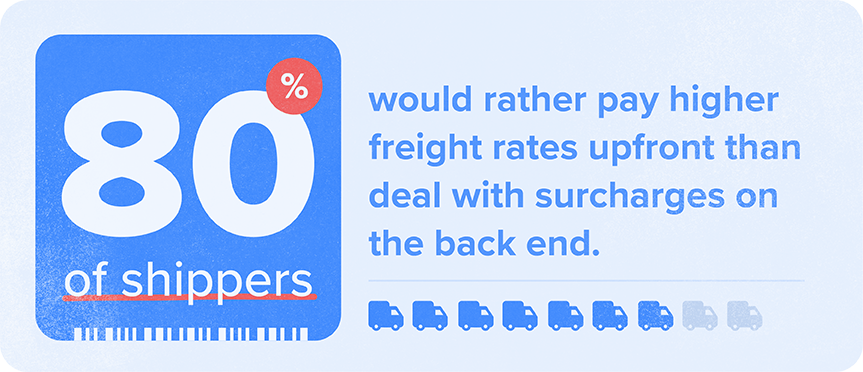
Investigating accessorial charges is crucial to forecast your total shipping expenses accurately. 3PLs should take the following strategies into account:
By thoroughly understanding and addressing these surcharges, you can better manage your overall shipping expenses and utilize shipping cost strategies to maximize your budget.
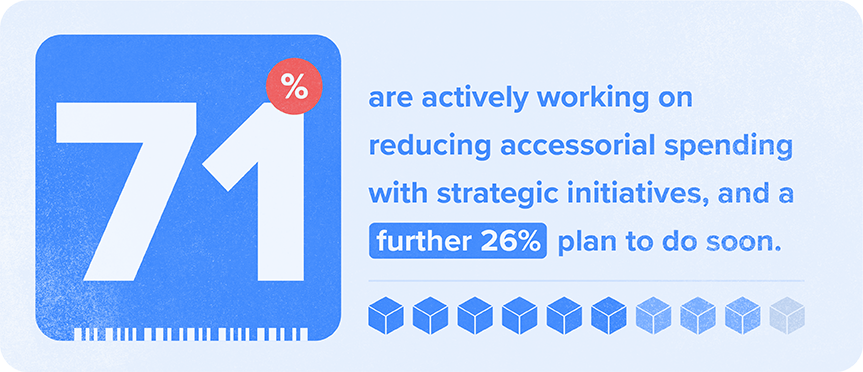
As we close our discussion on outbound shipping, it's vital to understand that it's not just the base rates determining the overall shipping costs. Here are the key takeaways when you’re estimating your outbound shipping costs.
When you begin negotiations, carriers will present any initial rate card with base shipping rates. However, those rates don’t tell the whole story. Ask about accessorial fees and how you can best avoid paying extra.
Pull reports that outline all the shipping costs for a set time frame (a quarter or six months) and take a closer look. Analyze these charges and ask your carriers for itemized bills if anything looks off. While this is time-consuming, understanding what you're paying and why is the only way to ensure you’re not being overcharged. This data can also help you when your shipping contracts come up for renewal.
It’s important to order your inventory for peak season early. This is the best way to avoid paying peak surcharges twice, once when receiving inventory and again when sending individual orders to customers.
Knowing the common surcharges by carrier and utilizing shipping cost strategies can help you save money in the long run. By taking the time to analyze your shipping costs and strategizing ways to reduce expenses, you can ensure that your business is operating as efficiently as possible.
ShipHero provides a plethora of tools and information to help you find the carrier that is right for you. With the use of our analytics and customized dashboard, you can shop real-time shipping rates to help you comprehend the total summation of your shipping fees, helping you stay informed and maintain complete control over the economics of your 3PL.
About ShipHero: We make it simple for you to deliver your eCommerce. Our software helps you run your warehouse, and our outsourced shipping solutions eliminate the hassle of getting your products to your customers. With thousands of brands and 3PLs relying on us daily, we’re here to help with all your logistics needs.
*Stats provided by Coyote Logistics*
In the competitive landscape of warehouse management systems, two standout solutions have garnered attention for their robust features and capabilities: ShipHero and Extensiv (formerly known as 3PL Central).
This blog will delve into a detailed comparison of these platforms, introduce their distinct characteristics and differences, and describe why one may be the perfect fit for your business.
If you are an eCommerce company or 3PL looking for the best warehouse management solution, ShipHero fits the bill. They offer a transparent pricing model with a simple monthly subscription and no contracts. Many clients have cited their intuitive, user-friendly interface as a key selling point. Some have said they can get new pickers up and running in 10 minutes because the software’s mobile app is so easy to use.
ShipHero also provides comprehensive onboarding with weekly calls to manage the transition to their platform and an exhaustive database of how-to and help articles in their Knowledge Base. Their customer service team is mentioned in reviews and case studies as one of the best in the industry. They recently launched ShipHero Academy, a clients-only walk-through of common processes and procedures via video instruction.
ShipHero provides a comprehensive WMS that meets all the needs of 3PLs and brands, making a huge impact in the DTC/eCommerce industry. Their all-in-one pricing gives you the complete suite of WMS features and offers the onboarding support necessary to make your transition to the platform successful.
Extensiv’s Warehouse Manager works best with other solutions, such as the Order Manager, Integration Manager, and Network Manager modules. It also offers a 3PL Warehouse Manager designed specifically for third-party logistics providers.
Extensiv is most known for its comprehensive library of tools and resources. If you need help with the software, you can connect with employees and other Warehouse Manager Community users. Alternatively, check out the Warehouse Manager University and Help Center for detailed instructions, training videos, guides, and best practices for 3PL.
Extensiv's Warehouse Manager suits small businesses, startups, and those seeking customizable solutions tailored to specific needs.
When managing your warehouse operations, making an informed choice is essential. ShipHero and Extensiv are strong contenders, but understanding their differences is crucial.
ShipHero: ShipHero takes an all-in-one approach, offering a comprehensive warehouse management system that seamlessly covers various aspects of your operations.
Extensiv: In contrast, Extensiv follows a modular approach, allowing for customization but potentially resulting in higher costs as you add different features.
ShipHero: Boasts an intuitive and user-friendly interface, ensuring a quick onboarding process and making it accessible to new users.
Extensiv: While customizable, Extensiv may require more time for onboarding and training, especially if you opt for a highly tailored setup.
ShipHero: Provides comprehensive onboarding, a rich knowledge base, and responsive customer service
.Extensiv: Offers a robust library of tools and resources, including an active user community for assistance.
ShipHero: Designed to streamline order fulfillment, facilitate real-time inventory management, and offer efficient reporting capabilities.
Extensiv: Primarily oriented toward in-house fulfillment and inventory management, which might not be as streamlined for certain 3PL needs.
ShipHero: Versatile solution suitable for businesses of all sizes, including 3PL providers, ensuring scalability as your operations grow.
Extensiv: Better suited for small businesses and startups, offering customization options for specific requirements.
According to G2, an independent software and technology review site, ShipHero’s overall satisfaction score is 91.9 compared to Extensiv’s 28.6. Additionally, ShipHero beat Extensiv head-to-head in categories including support quality, user satisfaction, and ease of collaboration.
ShipHero is the go-to solution for businesses and 3PL providers seeking a vast integration ecosystem. Whether you're a medium-sized business scaling up or a large enterprise streamlining operations, ShipHero equips you with the essential tools you need.
ShipHero delivers seamless order fulfillment, real-time inventory management, and exceptional customer support. Their transparent pricing and global reach make it the perfect choice for optimizing operations and scaling effectively.
Those who should use Extensiv’s Warehouse Manager include small businesses and start-ups, as it doesn’t scale as well at the enterprise level. DTC companies currently using multiple integrations to meet their needs and not looking to streamline their operations might find it easier to use Extensiv’s modular approach to warehouse management.
ShipHero has emerged as powerful inventory management and shipping software, offering seamless integration with storefronts and partners for medium-sized businesses, 3PL providers, and enterprise clients. On the other hand, Extensiv's Warehouse Manager primarily targets in-house fulfillment and inventory management.
One of the top warehouse management software available today, ShipHero, compares well to alternatives such as 3PL Central’s Warehouse Manager.
ShipHero’s Warehouse Management System is a one-stop shop with all the features you need to fulfill more orders in less time. Built-in features like inventory management flag your team to ensure inventory levels meet your customer needs, and native returns management makes it easy for your warehouse to process any returns.
As a 3PL WMS provider, ShipHero provides additional 3PL specific tools, like client portal access and specialized billing, to make it even easier for 3PLs to get their work done and paid.
Extensiv’s 3PL Warehouse Manager is a cloud-based warehouse management system designed specifically for 3PL companies. Its features allow for control over the picking, packing, shipping process, billing, customer management, inventory, data analytics, and reports.
While choosing 3PL software, you should consider the following factors:
ShipHero offers an end-to-end Warehouse Management Software solution that combines people, technology, and processes to make running an eCommerce warehouse efficient and cost-effective. They also have a full-service fulfillment solution for clients looking to offload their order fulfillment and inventory management tasks. Their nine owned and operated warehouses run on its proprietary WMS, making testing new features easy and providing fast resolution to any hiccups.
ShipHero and Logiwa are popular names in the Warehouse Management Software (WMS) space. Keep reading to compare both companies’ offerings, pros and cons, and how well ShipHero performs as an alternative to Logiwa.
ShipHero is a WMS provider known for its end-to-end solution that covers every aspect of managing an eCommerce warehouse. It offers tools for order fulfillment, inventory management and sales forecasting, making it a comprehensive solution for eCommerce businesses.
ShipHero is the go-to choice for DTC brands and 3PLs seeking advanced features like sales forecasting, end-to-end control over warehouse operations, an extensive library of available integrations, and an open API. It's highly adaptable and transparent in pricing.
Logiwa is a cloud-based WMS provider known for its accessibility, tailored plans, and focus on digital warehousing. It offers solutions for order fulfillment, inventory management, and efficiency optimization.
The key difference between Logiwa and ShipHero is the former’s Android-compatible mobile app. Objectively, ShipHero is a more complete WMS solution than Logiwa and provides a wide option covering all warehouse management aspects.
In the competitive world of Warehouse Management Software, ShipHero and Logiwa emerge as top contenders.
While both streamline warehouse operations, a closer look reveals ShipHero as the superior choice for many businesses.
ShipHero: ShipHero excels at providing end-to-end control and visibility. Users can monitor stock levels, optimize picking routes, and even receive AI-driven packaging recommendations. This holistic approach empowers decision-making and enhances overall business performance.
Logiwa: Logiwa offers control over warehouse operations but doesn't match ShipHero's comprehensive feature set for visibility and decision support.
ShipHero: With an impressive array of integrations, ShipHero stands out. It seamlessly connects with major eCommerce platforms, shipping carriers, and industry giants like NetSuite and SPS Commerce. This robust integration network ensures smooth data flow, reducing errors and enhancing efficiency.
Logiwa: While Logiwa offers integrations, it’s behind ShipHero regarding diversity and breadth. For extensive connectivity with your eCommerce ecosystem, ShipHero takes the lead.
ShipHero: ShipHero goes beyond order fulfillment and inventory management. It equips users with powerful sales forecasting tools, granting valuable insights into future demand. This data-driven approach can lead to improved profits and heightened customer satisfaction.
Logiwa: Logiwa primarily focuses on warehouse operations, offering solutions for picking, packing, shipping, and optimization. However, it lacks the sales forecasting feature that ShipHero provides.
eCommerce businesses & 3PLs that want to benefit from automated order fulfillment processes, especially those with complex inventory management needs, should use ShipHero. By centralizing the process, companies can manage multiple sales channels more efficiently and improve customer experience by ensuring accurate and timely deliveries.
ShipHero is a robust solution for eCommerce businesses seeking to streamline their order fulfillment operations, reduce errors, and improve overall efficiency. It is a good choice for companies focusing on providing excellent customer service through accurate and on-time deliveries.
Small- to medium-sized businesses prioritizing optimizing their warehouse operations and supply chain management should use Logiwa. So should companies dealing with high volumes of inventory, multiple warehouses or distribution centers, and a need for real-time visibility into inventory levels and order statuses.
ShipHero specializes in eCommerce order fulfillment and inventory management, while Logiwa focuses on warehouse management and supply chain optimization. ShipHero offers a complete warehouse management solution, while Logiwa provides similar features but focuses more on supply chain optimization.
When it comes to integrations, there’s no contest between ShipHero and Logiwa. ShipHero boasts one of the widest integration networks in the industry, connecting with major names in eCommerce, shipping, logistics, and robotics. You can connect most platforms to the software and instantly sync your data, reducing errors.
While both provide reports on inventory and sales, only ShipHero provides upfront data on potential future demand based on past sales.
Yes, ShipHero offers inventory optimization through its warehouse management software. Some of its inventory management features include cycle count, reorder and replenishment level setting, multi-warehouse allocation and putaway optimization. These help you efficiently track stock levels, manage inventory movement, and improve your warehouses' picking and packing efficiency.
Yes, Logiwa offers eCommerce management through its WMS integrations. It automatically updates your stock levels to prevent understocking and overselling.
ShipHero’s Warehouse Management System has better functionality and more features. Aside from its order fulfillment and inventory management solutions, it offers putaway optimization, automation rules, and detailed sales forecasting tools.
ShipHero and ShipStation are order fulfillment solutions that help businesses quickly get their products to customers for less money. However, each platform's unique approach makes them helpful in different ways.
Keep reading for a detailed breakdown of each platform’s features, pros and cons.
The main difference between these platforms is that ShipHero is a complete order fulfillment and warehouse management solution, while ShipStation is focused primarily on shipping.
ShipStation’s primary selling point is that it simplifies your shipping. It offers shipping discounts and does much of the international delivery legwork. Plus, its branding tools allow you to customize multiple customer touchpoints, such as shipping labels, emails and packing slips.
ShipHero’s Warehouse Management System does all of this and more. It gives you total control and visibility over your warehouses, including pick, pack, and ship. With its wide range of inventory and warehouse management tools, everything from routing orders to optimizing stock locations is more accessible. Plus, ShipHero automatically applies the cheapest shipping option and prints your labels, so there’s no more guesswork.
If you’re deciding between ShipHero and ShipStation for your eCommerce business, you’ll want to know how each stacks up against the other. Below is a comparison of each software based on their features, integrations, customer service and price.
ShipStation offers a few basic order management tools to help you organize your workflow. You can view, allocate, and deallocate stock through its dashboard in real-time. You can also combine split, filter, tag, and edit orders; set stock alerts automatically; and block shipments with insufficient stock.
Orders are printed on labels collected by different workers, who can verify, pick, and pack the correct items. Its return portal makes it easy for customers to initiate a return without contacting you directly.
ShipHero’s mobile pick and pack features make it easier to fulfill orders quickly.
ShipHero optimizes your picking routes and processing options, reducing the time and energy it takes to collect your orders. The AI software cuts waste and guesswork further with recommendations for the best packaging based on what it learns about your needs and preferences. And the Hero Board, which displays the orders that need to be fulfilled daily, keeps workers on track.
ShipStation uses a paper-based pick system, and labels are printed in batches, so it’s difficult to start work until all labels are printed. ShipHero’s mobile app provides an optimized pick route so workers take fewer steps to fulfill more orders. When you factor in ParcelView and ShipHero’s AI packaging, ShipHero is the clear choice for fulfillment.
ShipStation is primarily a shipping solution, so it doesn’t offer much in terms of warehouse management. Conversely, ShipHero has powerful tools for efficiently running your warehouse.The software can suggest how to store your inventory and implement warehouse best practices such as First-In-First-Out (FIFO). Its Putaway feature is especially useful in keeping track of stock, replenishing inventory levels and creating a more seamless workflow. Other notable features include cycle count, multi-warehouse allocation, kitting and reorder level setting.
ShipStation was not designed to manage a warehouse from receiving to order management to shipping. If you are looking for a complete Warehouse Management System, ShipHero is the answer.
ShipHero and ShipStation connect to popular sales channels like Shopify Plus, Amazon, Etsy and eBay. But ShipHero offers dozens of other integrations, including NetSuite, Loop Returns and more. If you intend to grow your business, more options will help.
Both options integrate with the most common online marketplaces. But ShipHero provides access to the less common ones that the more successful companies have the foresight to use.
ShipStation claims its rate calculator and shipping discounts can save you up to 88% on major carriers like DHL, USPS and Global Post. They say their workers can create shipping labels with your brand on the go and that their software can generate and transmit customs documents for international shipping.
ShipHero works with all the same carriers but automatically applies the best rates and carriers for your shipments in real-time, and they print the cheapest shipping label. You don’t have to waste time and energy choosing a suitable carrier.
ShipHero’s packing functionality includes a shipping rate calculator, weight & box recommendations and additional packing support, including ParcelView. ShipHero is an all-in-one solution that makes shipping labels and rates more affordable.
ShipStation has multiple tracking options. On the business side, you can view tracking links and statuses on the dashboard. Customers can monitor their deliveries via a branded tracking page, emails and SMS notifications.
ShipHero’s integration with Klaviyo provides the same functionality, including opting in for text alerts. Additionally, ShipHero provides standard shipment tracking capabilities via different carrier websites as well, so you can track a package from start to finish.
If all you need is tracking, ShipHero and ShipStation are interchangeable. However, if you’re looking for a more well-rounded solution that includes tracking, ShipHero is the better choice.
You can contact ShipHero through its in-app ticketing system if you have any questions or concerns. Its website also provides free resources, including a blog, knowledge base, help center, FAQs, videos, webinars and a community forum. Email and phone support are also available at a premium.
ShipStation also offers similar omnichannel support and phone support for Platinum plans and up. The customer service team is available from 8 AM to 8 PM CT, Mondays to Fridays. It also provides access to ShipStation University, an online database of courses on the platform.
Both ShipStation and ShipHero offer free, hands-on onboarding and setup services.
Since both platforms offer some support at no charge and others at a premium, they are pretty even in this area, but ShipHero’s team has the receipts for being helpful and attentive.
ShipHero has been named the leader by G2, an independent review site that measures the best software and technology across various industries, including Warehouse Management Systems and Shipping. ShipHero was named the #1 WMS for Small Business, the #1 in the Most Implementable WMS and achieved lead status in 5 other categories for Summer 2023.
During the same period, ShipStation was named a momentum leader in the shipping industry.
Order and shipping management solutions like ShipHero and ShipStation can make fulfilling customer orders easier, faster and cheaper. Both can help you keep track of inventory, improve picking and packing efficiency and get better deals on shipping. But there are a few key differences between them.
As an end-to-end warehouse management solution, ShipHero compares well to ShipStation’s shipping-focused software. While both ShipHero and ShipStation have order management and fulfillment capabilities, ShipHero also helps you stay on top of your warehouse operations.
ShipHero’s software is prepped for high-volume businesses out of the gate. In contrast, you need to upgrade your plan with ShipStation to accommodate more orders and users.
Because of this, ShipHero is best for eCommerce businesses, 3PL providers and high-volume brands that need software that meets their needs. And with multi-warehouse support, it’s also great for companies that stock inventory at different locations.
If you’re looking for a shipping label printer, ShipStation works. If you’re looking for a complete warehouse management solution that saves you money on shipping and increases warehouse efficiency by at least 30%, ShipHero is the right choice.
ShipHero works by sending orders from your storefront to your warehouses and assisting in picking, packing, and shipping. Here’s the process in three steps:
ShipStation collects your orders in a single dashboard and calculates the best rates and shipping options. It automatically assigns orders to workers and enables on-the-go scanning, improving efficiency and accuracy.
If you're in the warehouse management software (WMS) market, you might be weighing the pros and cons of ShipHero and Mintsoft. To make an informed decision, keep reading to explore the features and benefits of each provider and see which one fits your business needs.
ShipHero offers robust warehouse management software, often named as the top option in the market by third-party reviewers like G2. With features like inventory management, sales reporting, and picker and packer efficiency tracking, their WMS streamlines warehouse operations as effortless, one-click integrations for order and return management with major eCommerce platforms.
In addition to WMS, ShipHero offers end-to-end eCommerce fulfillment services, using nine fulfillment centers across North America for timely product delivery. You can simply send your products to a ShipHero warehouse, and they take it from there.
ShipHero’s powerful Warehouse Management Software streamlines warehouse operations, integrates with major eCommerce platforms, and offers automation features for faster processing. Businesses can rely on ShipHero to manage their inventory, orders, and shipping, making it a convenient and efficient choice for eCommerce operations.
Mintsoft is a cloud-based order fulfillment software designed to assist eCommerce businesses in meeting customers' demands across multiple sales channels.
Based in the UK, Mintsoft offers over 60 integrations with online shopping platforms and more than 80 courier integrations, making it compatible with many partners. With its automation capabilities, Mintsoft provides real-time visibility and traceability of inventory that can be accessed from any location.
Mintsoft's strength is its automation capability that enhances order fulfillment accuracy and efficiency. It also provides real-time visibility into inventory and traceability from anywhere, helping businesses manage their operations more effectively.
ShipHero and Mintsoft offer similar functionalities such as inventory management, warehouse management, order processing, and fulfillment. However, ShipHero excels in extensive integrations, sales forecasting, and end-to-end control. Mintsoft distinguishes itself by utilizing efficient warehouse space and centralized order processing. These two solutions will ultimately depend on your specific business requirements and priorities.
ShipHero: Its strengths lie in its extensive integrations, enabling seamless synchronization of inventory data with various eCommerce platforms and shipping carriers.
Mintsoft: They focus on warehouse space optimization, making it suitable for businesses looking to maximize space efficiency.
ShipHero: They stand out with an extensive integration network, empowering businesses with seamless connectivity to eCommerce platforms, shipping couriers, and industry leaders.
Mintsoft: Their warehouse management tools optimize space utilization and offer real-time reports.
ShipHero: They streamline order processing and fulfillment with automation rules for faster picking and packing. ShipHero’s extensive integration ecosystem simplifies order processing by connecting seamlessly with various eCommerce platforms, streamlining the entire order fulfillment process.
Mintsoft: They focus on centralized order processing and a user-friendly order management tool that may appeal to businesses with high-order volume scenarios.
ShipHero: Their strength is in their diversity and breadth of integrations, ensuring smooth data flow across the eCommerce ecosystem.
Mintsoft: While Mintsoft provides integrations, it will need to expand its integration ecosystem to match ShipHero's connectivity options.
ShipHero is an excellent choice for businesses that value smooth integration with eCommerce platforms and shipping carriers, and it’s particularly useful for those who require advanced features such as sales forecasting to enhance their inventory management.
If you need a comprehensive solution that provides complete control and transparency over your warehouse operations, from stock monitoring to packaging recommendations, ShipHero is the perfect fit for your business.
Highly adaptable and priced transparently, ShipHero is the preferred choice for businesses seeking extensive eCommerce integrations, advanced features like sales forecasting, and end-to-end control over their warehouse operations.
Mintsoft presents a viable option for businesses seeking a warehouse management system that can effectively optimize space utilization and centralize order processing. Those looking to streamline operations across particular sales channels can benefit from Mintsoft's integration options.
Mintsoft is a warehouse management system focusing on specific features like warehouse space optimization and centralized order processing. However, compared to ShipHero, some might perceive it as offering relatively less value. While Mintsoft provides automation capabilities and a range of integrations, its system might face challenges computing all the features together. For businesses seeking a more comprehensive solution with extensive eCommerce integrations, advanced features like sales forecasting, and complete control over warehouse operations, ShipHero could be a better choice, as it offers superior overall value.
ShipHero’s warehouse management software helps you throughout the fulfillment process, from receiving to shipping. It gives you robust order tracking, real-time inventory monitoring, sales reporting, and more.
ShipHero does compare with Mintsoft due to their similar features. However, ShipHero has the edge in the much larger number of integrations it offers and its all-in-one pricing model.
ShipHero has an open API that lets you build solutions and integrations based on ShipHero’s platform.
.svg)


.svg)


